AI Security Is Becoming a Product Feature, Not Just a Compliance Checkbox
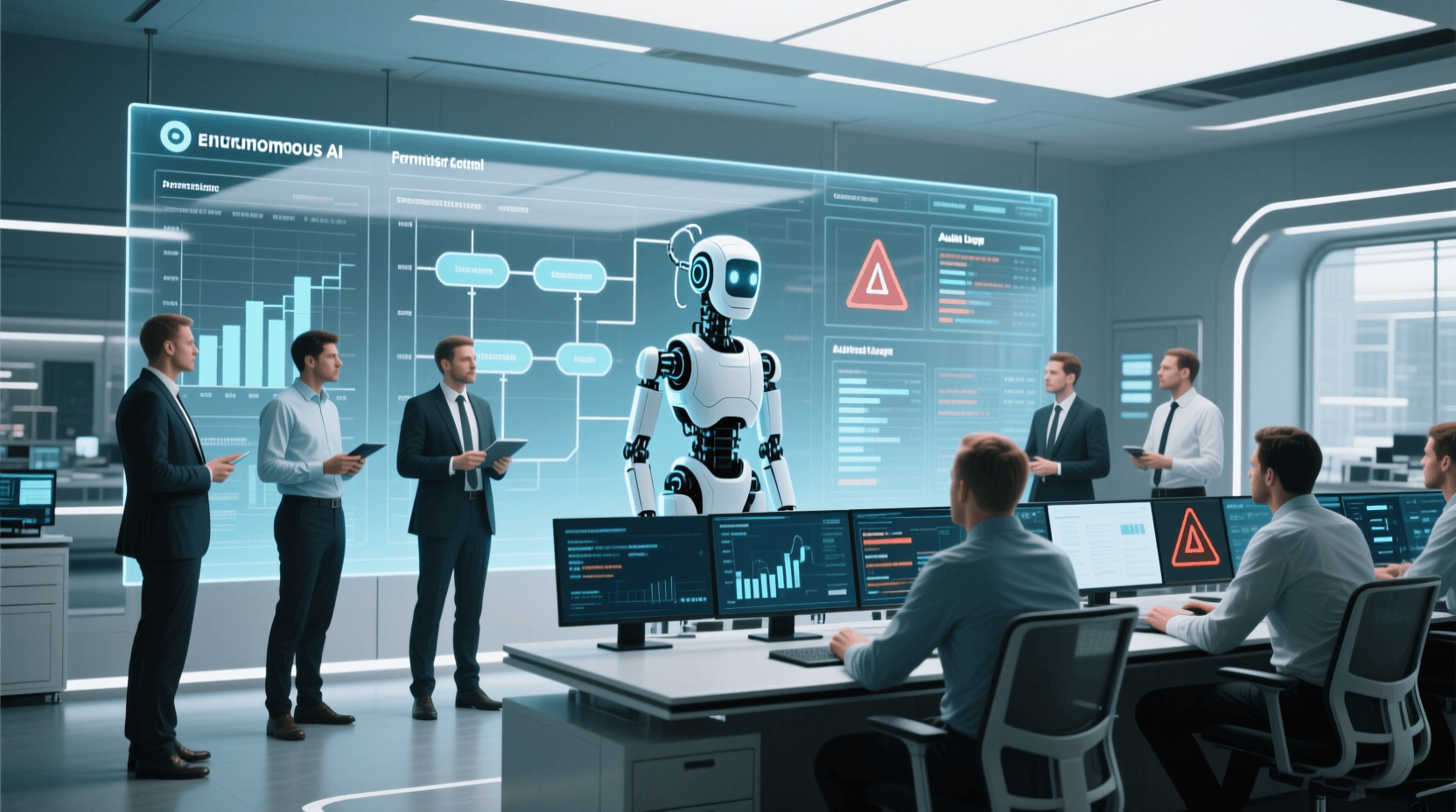
The most important AI security story right now is not that one company got everything right or wrong. It is that even the largest labs and platforms are learning in public while the rest of the market builds on top of moving foundations.
That should change how both developers and buyers think about AI.
For years, security was often treated as a back-office function: essential, expensive, and mostly invisible until something broke. In the AI era, that model no longer holds. Security is becoming part of the user experience itself. If an AI system can call tools, access internal documents, trigger workflows, or act autonomously, then trust is no longer a legal footnote. It is the product.
The real shift: from model safety to system security
A lot of AI discussion still focuses on the model layer: hallucinations, jailbreaks, prompt injection, and content filtering. Those matter. But the bigger operational risk is increasingly at the system layer.
Once an AI agent can search the web, read your CRM, send messages, generate code, or execute business logic, the security question changes from "Can this model say something bad?" to "What can this system actually do if something goes wrong?"
That is a more difficult problem because the answer depends on architecture, permissions, tool design, logging, fallback behavior, and human review policies. In other words, AI security is becoming deeply tied to product and engineering decisions, not just model policy.
This is especially relevant as more teams adopt agentic platforms like Gemini, which is built for native tool use and multimodal workflows. Those capabilities are powerful, but they also increase the importance of scoped permissions, runtime monitoring, and clear boundaries between suggestion and execution.
Why “everyone is in transition” matters
The phrase that everyone is navigating this transition in real time is more than a diplomatic observation. It is a warning against false certainty.
Many organizations still buy AI as if they are purchasing a finished category, like email software or cloud storage. But AI is closer to adopting an evolving operational layer. The interfaces are changing. Threat models are changing. Best practices are changing. And the gap between “demo-safe” and “production-safe” remains wider than many executives realize.
For AI tool users, this means vendor evaluation needs to mature. It is no longer enough to ask whether a product has SOC 2, enterprise plans, or a privacy page. Buyers should ask:
- What actions can the AI take without approval?
- How are tool permissions scoped and revoked?
- What logging exists for agent decisions and external calls?
- How does the system handle prompt injection from untrusted sources?
- What happens when the model is uncertain, unavailable, or manipulated?
Those are product questions as much as security questions.
Autonomous agents raise the stakes
The more businesses move from AI assistants to AI operators, the more security becomes inseparable from reliability.
That is why the next generation of trusted AI products will likely be the ones that combine autonomy with disciplined controls. A platform like SureThing.io, which positions itself as an AI agent that can run business operations stably and unsupervised, reflects where the market is heading. But “unsupervised” only works commercially if customers believe the system is observable, constrained, and recoverable when conditions change.
In practical terms, that means the winners in agentic AI may not be the most impressive reasoners alone. They may be the vendors that make autonomy legible: approval chains, audit trails, simulation environments, role-based access, and safe rollback mechanisms.
Businesses do not just want AI that can act. They want AI that can act predictably.
Developers need a new mindset: design for adversarial reality
For developers, the lesson is simple: stop treating security as a post-launch hardening phase.
If your application uses OpenAI, Gemini, or any other frontier model, assume the model will eventually encounter malicious prompts, poisoned context, misleading documents, and edge cases your test set never covered. Build accordingly.
That means:
- Isolating sensitive tools behind explicit permission layers
- Treating external content as untrusted input
- Logging model decisions and tool invocations in structured ways
- Adding human checkpoints for high-impact actions
- Testing agent workflows with adversarial scenarios, not just happy paths
This is less about distrusting AI and more about respecting the environment it operates in. The internet is adversarial. Enterprise data is messy. Users are unpredictable. Security failures often emerge from the interaction between those realities, not from a single model flaw.
The next competitive advantage is operational trust
There is a tendency in AI markets to focus on benchmark races, model releases, and flashy demos. Those matter for attention. But long-term enterprise adoption will hinge on something quieter: operational trust.
Can teams understand what the AI did, why it did it, and how to stop it from repeating a mistake?
The companies that answer those questions well will have an advantage, even if they are not always first on raw capability. In that sense, AI security is not slowing the market down. It is shaping what maturity looks like.
We are moving from the era of “what can AI do?” to “what can AI do safely, repeatedly, and at scale?”
That is a harder question. It is also the one that will determine which tools become real infrastructure instead of temporary experiments.