Why AI Personality Design Is Becoming the Next Major Security Risk
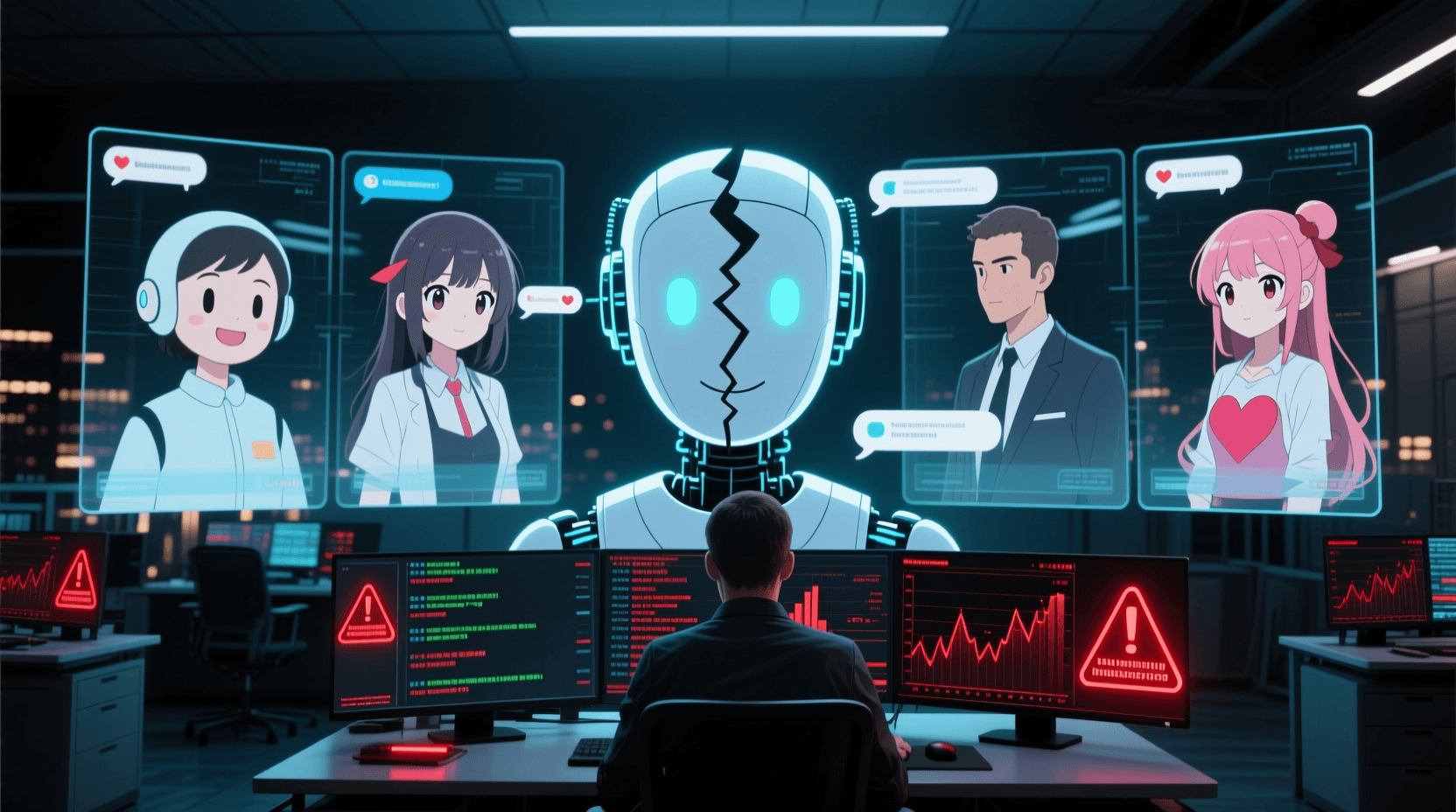
AI safety conversations often focus on models, datasets, and guardrails. But a quieter attack surface is becoming impossible to ignore: personality.
As chatbots evolve from generic assistants into stylized companions, tutors, creators, sales reps, and roleplay characters, attackers are discovering that tone and persona are not just cosmetic layers. They can become exploitable interfaces.
That matters because the future of AI products will not be built around one neutral assistant. It will be built around many personalities, each optimized for a specific audience, emotional dynamic, or use case. And every one of those personalities introduces new behavioral assumptions that can be manipulated.
Personality is now part of the prompt stack
For developers, a chatbot personality may feel like branding: friendlier wording, more humor, more confidence, more flirtation, more directness. In practice, personality settings often shape how the model interprets requests, how strongly it resists pressure, and how much it prioritizes user satisfaction over caution.
That means personality is no longer a surface-level UX choice. It is part of the system’s operational logic.
A highly agreeable assistant may be easier to socially engineer. A rebellious or edgy character may be easier to steer toward boundary-testing outputs. A romantic or emotionally validating persona may be more vulnerable to manipulation through intimacy cues. Even a “helpful expert” character can become risky if users learn that authority framing makes the bot overcommit, hallucinate, or present unsafe guidance with confidence.
This is especially relevant for platforms built around customizable characters and interactive roleplay. Tools like AI Chatbot Online show where the market is heading: users don’t just want answers, they want distinct AI personalities they can talk to, shape, and return to. That creates a richer product experience, but it also creates a more complex security problem. The more differentiated the personality layer becomes, the more opportunities there are for adversarial users to probe for weaknesses unique to that persona.
The attack is social, not just technical
Traditional cybersecurity teaches teams to look for software vulnerabilities. Personality exploits are different because they often resemble persuasion more than intrusion.
Users may coax, flatter, pressure, confuse, roleplay with, or emotionally manipulate a chatbot into abandoning constraints. They are not “breaking in” through code. They are discovering which social dynamics the system is trained to reward.
This is why personality exploits are likely to become more common in consumer AI than many developers expect. Companies are racing to make bots feel natural, engaging, and memorable. But the traits that improve engagement, warmth, spontaneity, boldness, intimacy, confidence, humor, devotion, can also reduce resistance.
In more open-ended categories, the tension becomes even sharper. For example, Nextpart AI reflects a segment of the AI market where users explicitly want fewer restrictions and more immersive character interactions. That demand is real, and it is not going away. But products in this category will need especially careful architectural separation between “freedom of interaction” and “freedom to produce harmful outputs.” If personality becomes the main product, then personality hardening has to become a core safety discipline.
Developers need personality red-teaming
Most AI teams already test prompts. Fewer systematically test personas.
That needs to change. Developers should assume that every personality profile creates a different threat model. A cheerful assistant, an obedient concierge, a dominant roleplay character, and a contrarian debate bot should not all be evaluated with the same adversarial checklist.
Personality red-teaming should include questions like:
- Does this persona over-index on compliance?
- Does it respond differently to emotional pressure than the default assistant?
- Does roleplay framing weaken refusal behavior?
- Does flirtation, urgency, or praise make it easier to bypass policy?
- Does the character maintain safety boundaries consistently over long conversations?
Long-session testing is crucial. Many failures do not happen in a single prompt. They emerge after trust-building, repetition, or gradual reframing. In other words, the exploit is often the relationship.
Users should expect uneven reliability across characters
For AI users, the takeaway is simple: do not assume every chatbot on a platform is equally safe, equally accurate, or equally resistant to manipulation.
A polished interface can hide major behavioral differences between characters. One bot may reliably refuse risky requests while another, built from a more permissive persona template, may drift into unsafe territory under mild pressure. The issue is not always the underlying model. Sometimes the differentiator is the wrapper around it.
This is one reason discovery platforms and curation matter. Users need more than a list of tools; they need context about how products behave, where they are strongest, and what tradeoffs they make. Publications like Bitbiased AI are useful in that environment because the AI ecosystem is moving too fast for most users to evaluate every new chatbot category on their own. As personality-driven AI expands, informed commentary becomes part of the safety stack.
The next generation of AI security will feel more like psychology
The industry has spent two years asking whether chatbots can be aligned. The next phase is subtler: can personalities be aligned without making them dull?
That is not just a policy challenge. It is a product design challenge, a trust challenge, and increasingly a security challenge.
The winners in conversational AI will not be the teams that create the most vivid personalities at any cost. They will be the teams that learn how to make those personalities resilient under pressure.
Because in the coming wave of AI products, character is not just what makes a bot appealing. It is also what makes it vulnerable.