GPT-4.1 is a new series of AI models by OpenAI, featuring significant improvements in coding, instruction following, and long-context understanding, available via API.
About GPT-4.1
Introducing GPT-4.1
GPT-4.1 is the latest advancement in OpenAI's series of generative pre-trained transformers, offering substantial improvements across various domains. This new family of models is designed to enhance performance in coding, instruction following, and long-context comprehension, making it a versatile tool for developers worldwide.
Key Features
- Enhanced Coding Capabilities: GPT-4.1 scores 54.6% on SWE-bench, a 21.4% improvement over its predecessor, making it a leading model for coding tasks.
- Improved Instruction Following: Achieves a 38.3% score on Scale's MultiChallenge benchmark, showcasing a 10.5% increase in instruction-following ability.
- Long-Context Understanding: Supports up to 1 million tokens of context, setting a new state-of-the-art result on the Video-MME benchmark with a 72.0% score.
- Cost and Latency Efficiency: Offers exceptional performance at a lower cost, with the GPT-4.1 mini reducing latency by nearly half and cost by 83% compared to previous models.
- Nano Model Availability: The GPT-4.1 nano model is optimized for tasks requiring low latency, such as classification or autocompletion.
Use Cases
GPT-4.1 is ideal for developers looking to build advanced AI applications. It is particularly beneficial for:
- Software engineering tasks
- Extracting insights from large documents
- Resolving customer requests with minimal intervention
- Developing intelligent agents that can perform tasks independently
Unique Selling Points
GPT-4.1 stands out with its ability to handle extensive context windows and its superior performance in coding and instruction-following tasks. Its nano model offers unmatched speed and efficiency for specific applications.
Technical Details
- Platforms: Available exclusively via the OpenAI API
- Integrations: Compatible with the Responses API for building intelligent agents
- Knowledge Cutoff: Updated to June 2024
"GPT-4.1 models push performance forward at every point on the latency curve, offering exceptional performance at a lower cost."
Structured Reviews
Reviews
No reviews yet
Share your experience and help others discover if this tool is right for them.
Write a Review
Please sign in to leave a review
Frequently Asked Questions about GPT-4.1
Similar Tools
AI-powered matching
GPTDetect
GPTDetect is a reliable AI validator for detecting AI-generated content from models like ChatGPT, Grok, Llama, and Claude with superior accuracy.

GPT Image 1.5
Create stunning images with GPT Image 1.5, OpenAI's latest AI image generation model. Generate photorealistic photos, infographics, logos, UI mockups, and more with advanced text rendering and style transfer capabilities.

GPT Image 2
GPT Image 2 is an AI image generator and editor for creating on-brand campaigns with 4K visuals and multilingual text, offering free credits for faster project execution.

GPT Image 2
GPT Image 2 is a free online AI image generator and editor that allows users to create, edit, upscale, and transform images using text prompts and reference images.

GPT Image 2
GPT Image 2 is an AI-powered image generator and editor that creates stunning 2K visuals in seconds without requiring login, watermarks, or limits.

ChatGPT
ChatGPT is a versatile AI tool that helps with writing, learning, brainstorming, and productivity. It is free and easy to use, offering quick answers and inspiration.
Related Tools
View all
Einstein 1 Platform
Einstein 1 Platform by Salesforce is the world's first generative AI for CRM, offering advanced AI and automation capabilities to enhance customer relationship management.
MongoDB MCP Server
MongoDB Community and Atlas MCP server for database access and management.
Synero
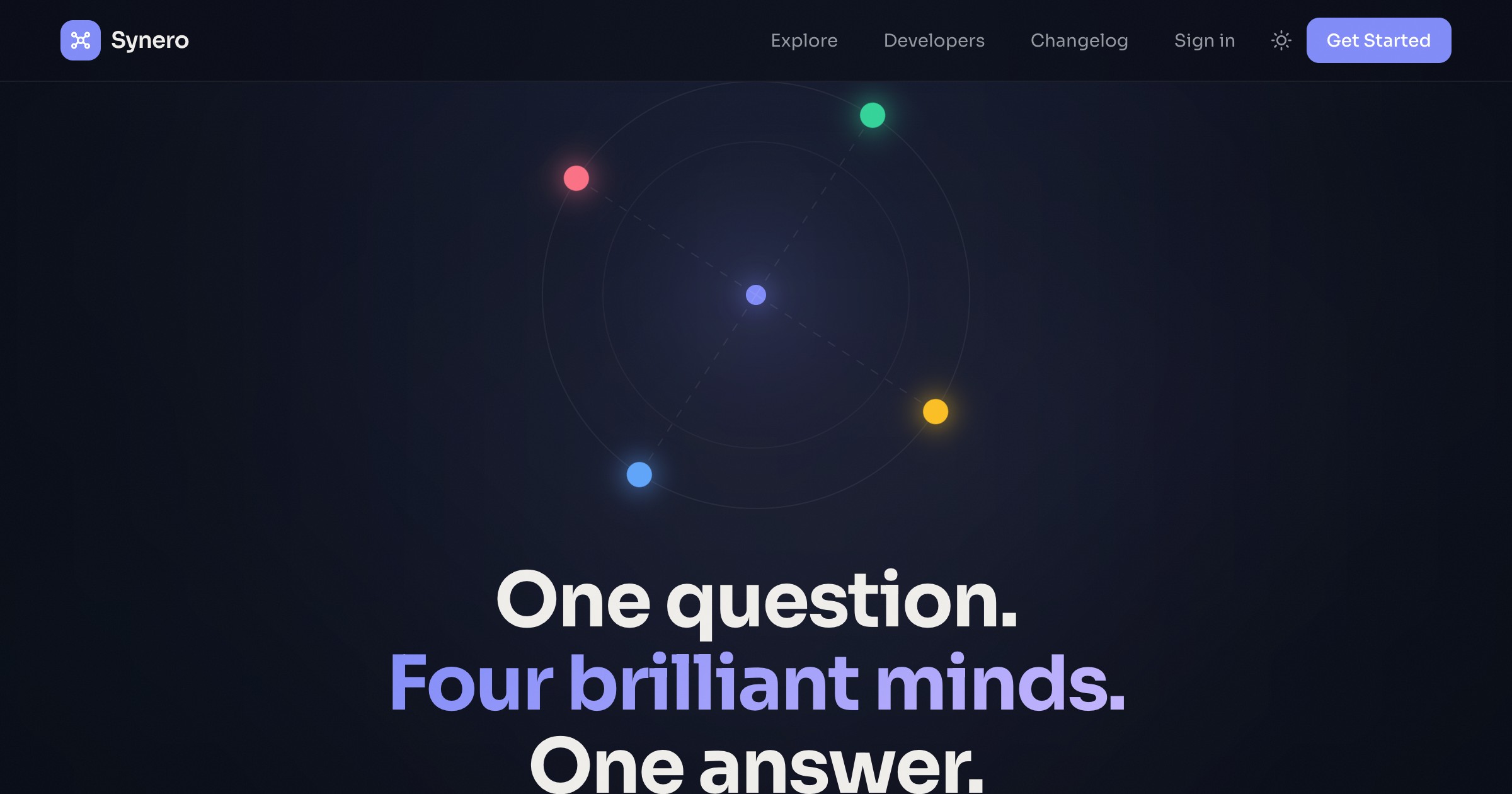
Synero synthesizes insights from multiple leading AI models into one unified response, offering better answers through collective AI intelligence.
Toolplay
Toolplay is an all-in-one platform providing access to a wide range of AI tools for text, image, video, and music generation, all in one place with a unified credit system.