AI Dating, Trust, and the Coming Battle Over Human Verification
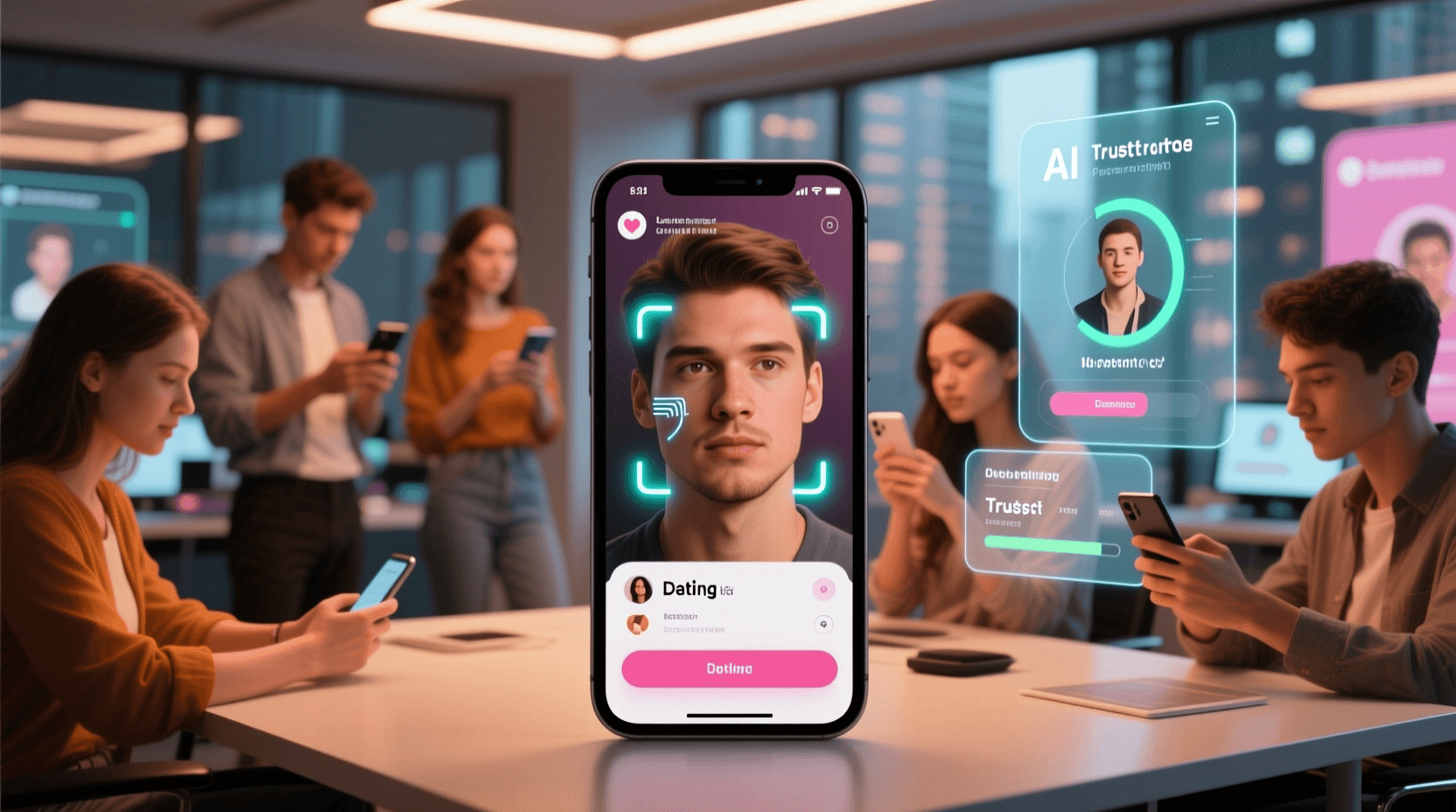
The next big AI platform war may not be about models, search, or agents. It may be about proving you’re a real person.
That’s why the idea of a large-scale human verification network moving into dating is more important than it first appears. Dating apps sit at the intersection of identity, trust, fraud, privacy, and algorithmic matching. They are also one of the clearest examples of where generative AI is creating both value and chaos at the same time.
When a verification layer enters that ecosystem, it does more than reduce bots. It starts to reshape the product itself.
Dating apps are becoming identity marketplaces
For years, dating platforms optimized for growth metrics: more signups, more swipes, more engagement. But AI has changed the economics of deception. Fake photos are easier to create. Scam conversations are easier to automate. Catfishing can now be scaled. Even legitimate users are increasingly using AI to polish their profiles, rewrite bios, and generate better images.
That creates a strange new environment where everyone is partly authentic, partly enhanced, and increasingly unsure who they are talking to.
A verification system promises to solve that trust gap. But the real shift is deeper: once a platform can distinguish verified humans from unverified accounts, it can create entirely new tiers of access, ranking, safety controls, and reputation systems. In other words, “proof of personhood” becomes a product feature, not just a security check.
For users, that could mean fewer scams and more confidence. For developers, it means identity infrastructure is becoming as strategically important as recommendation models.
The dating stack is splitting into three layers
I think the AI dating ecosystem is rapidly dividing into three separate layers.
First, there is presentation: how users look and sound online. Tools like DatePhotos.AI fit squarely here, helping users generate polished dating images optimized for platforms like Tinder, Bumble, and Hinge. Whether people love that idea or hate it, the market is real. Users want to compete in attention-driven environments, and AI is becoming their stylist, photographer, and profile consultant.
Second, there is compatibility: how platforms create more meaningful interactions. That’s where products like Equal Dating App point to a different future. Instead of making attraction purely visual and immediate, it emphasizes personality compatibility and conversation before photos are revealed. That approach matters because it reduces some of the incentives that make visual deception so powerful in the first place.
Third, there is verification: proving the person behind the profile is real, unique, and compliant with platform rules. That’s where identity-focused tools and infrastructure become critical. Outside dating, solutions like X-faces show how AI-powered KYC and AML workflows are already normalizing fast verification for web apps. Dating may not need the exact same compliance stack as fintech, but the direction is obvious: trust systems are moving from optional to foundational.
Verification is useful, but it is not neutral
The most important thing developers should understand is that verification systems are not just technical tools. They encode power.
Who gets verified easily? What biometric or device data is collected? Can users participate anonymously but still prove uniqueness? What happens when verification fails? Can people appeal? Is verification required for all features, or only premium visibility?
These questions matter because dating apps are unusually personal products. Users are not simply logging in to buy a product or read a feed. They are exposing vulnerability, desire, and identity. A verification flow that feels acceptable in banking may feel invasive in romance.
That tension creates an opportunity for startups. The winners may not be the platforms with the strongest biometric moat, but the ones that offer the best trust design: enough verification to reduce fraud, enough privacy to preserve dignity, and enough flexibility to avoid excluding legitimate users.
AI users will demand authenticity, but not friction
There is also a practical lesson here for AI tool builders. Users increasingly want two things that are often in conflict: authenticity and convenience.
They want to know the profile is real. They do not want a painful onboarding process.
They want safer conversations. They do not want to hand over excessive biometric data.
They want better profile photos and better matching. They do not want to feel like every interaction is synthetic.
This is why the future likely belongs to layered trust systems rather than one giant identity gate. Think lightweight signals, progressive verification, behavioral analysis, optional photo checks, and context-specific proof of humanity. A dating app might verify that you are a unique human without forcing your full real-world identity into every interaction.
That distinction will matter far beyond dating. Social apps, marketplaces, creator platforms, and community products are all heading toward the same question: how do you preserve openness in an internet filled with AI-generated personas?
What developers should watch next
If you build AI products, don’t treat this as a niche dating story. Treat it as an early signal.
The next generation of consumer apps will likely combine generative AI, recommendation systems, and human verification into a single stack. One model helps users present themselves. Another helps match or rank them. A third layer confirms they are real enough to trust.
That stack creates huge opportunities, but also a new responsibility. Developers won’t just be building features. They’ll be designing the terms of digital legitimacy.
And for users, that may become the defining internet question of the next few years: not whether AI is everywhere, but whether the person on the other side of the screen actually exists.