AI-Designed Cars Won’t Just Look Different — They’ll Change How Products Get Made
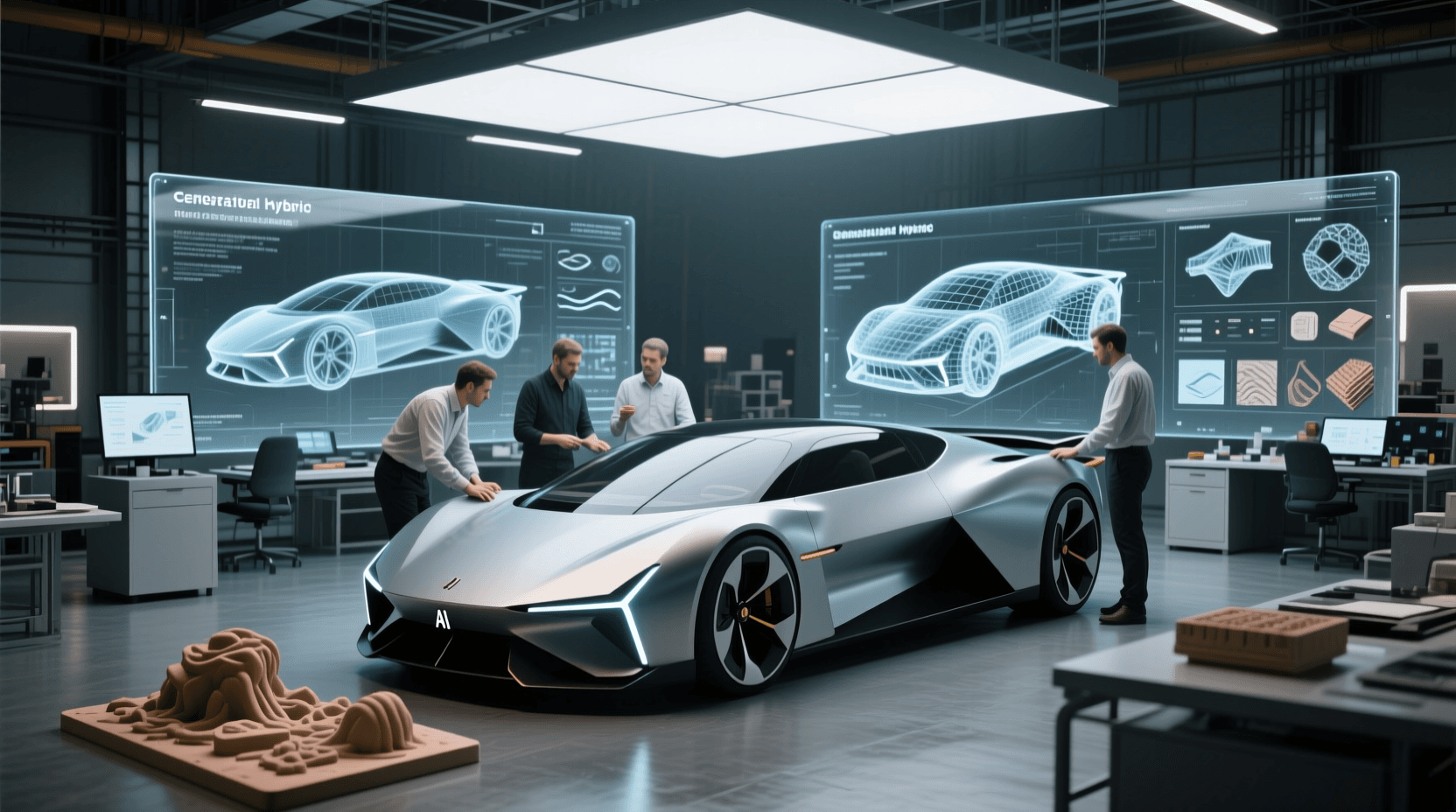
The most interesting thing about an AI-designed car is not the grille, the headlights, or whether it looks futuristic enough for a concept video. It’s the process behind it.
For decades, car design has been constrained by slow feedback loops. Designers sketch, engineers revise, marketers weigh in, regulators intervene, manufacturing pushes back, and by the time a vehicle reaches the road, it often reflects assumptions from years earlier. AI has the potential to compress that cycle dramatically. That matters not just for automakers, but for every company building physical products.
The real shift is from static design to living design
When people imagine AI in automotive design, they often picture software generating a sleek body shape in seconds. That’s flashy, but it misses the deeper transformation: AI can turn design from a one-time decision into a continuously updated system.
A car company could test thousands of variations of cabin layouts, dashboard interfaces, exterior surfaces, and material choices against changing constraints in near real time. What if fuel prices spike? What if urban buyers suddenly prefer smaller vehicles? What if a new safety rule changes front-end geometry? Instead of restarting the process manually, teams could adapt quickly using AI-assisted simulation, generative design, and multimodal workflows.
That means the “AI-designed car” may not have one signature look. It may be the first vehicle category shaped by constant iteration rather than long-cycle consensus.
AI will blur the line between industrial design and content creation
This is where AI tool users should pay attention. The future of product development is starting to resemble the future of media production.
Designers, engineers, marketers, and executives are all becoming participants in the same generative loop. A concept no longer lives only in CAD software. It appears as images, narrated walkthroughs, 3D scenes, internal reports, launch videos, and consumer testing assets almost instantly.
That’s why tools outside traditional automotive software are becoming more relevant. A platform like Hi-AI points toward this convergence. If one system can support video creation, reports, image generation, 3D mesh generation, search, and voice interaction, it starts to resemble the kind of cross-functional workspace modern product teams actually need. The next generation of design isn’t just about making shapes; it’s about translating ideas across formats fast enough for teams to act on them.
In practice, the winner may not be the company with the best single AI model. It may be the company that best connects visual ideation, simulation, documentation, and storytelling.
The automotive industry is a preview for every physical brand
Cars are a high-stakes example, but the lesson extends much further. Fashion, consumer electronics, furniture, home goods, and accessories all face similar problems: long development cycles, expensive prototyping, and uncertainty about what customers will want by launch time.
That’s why AI-generated visual prototyping is becoming strategically important. Consider The New Black AI, which helps create AI models for clothing, jewelry, and accessories without relying on traditional e-commerce photoshoots. On the surface, that sounds far removed from automotive design. But the underlying principle is the same: use AI to shorten the distance between concept and market-ready presentation while keeping creative control.
The companies that benefit most from AI won’t be the ones that automate creativity away. They’ll be the ones that use AI to explore more options before committing capital.
AI-designed products will be judged by trust, not novelty
There’s a temptation to frame AI-designed cars as visually radical. But consumers rarely reward novelty alone. They reward products that feel coherent, useful, and trustworthy.
That creates a challenge for developers building AI systems for design workflows. Generating options is easy compared with generating options that respect manufacturing limits, brand identity, safety expectations, and customer psychology. A design that looks impressive in a render can fail in the factory, in regulation, or in the showroom.
So the next wave of AI tooling needs to become more constraint-aware. Developers should focus less on “infinite creativity” and more on structured creativity: systems that know when a design is manufacturable, when a surface is aerodynamically plausible, or when a layout conflicts with human behavior.
That’s also where communication tools matter. If an AI proposes a new vehicle concept, teams need fast ways to explain and validate that concept internally and externally. AI Vlog is a useful example of how generative video can help transform raw ideas into persuasive visual narratives. In product organizations, that matters because many decisions are not made from models alone. They’re made from presentations, demos, and stories.
What this means for AI builders right now
If you build AI tools, the opportunity is bigger than “design generation.” The real market is decision acceleration.
Users don’t just want a beautiful concept. They want to move from concept to alignment faster. They want to test more directions, generate stakeholder-ready assets, and reduce the cost of being wrong early.
For AI tool users, especially in startups and product teams, automotive design is a signal of where broader workflows are heading. The stack is converging: image generation, 3D, simulation, reporting, and video are becoming parts of one creative-operational pipeline.
The AI-designed car, then, is not just a new object. It’s a prototype for a new way of building things. And once that workflow proves itself in an industry as complex as automotive, every other category will feel pressure to adopt it.
The companies that adapt fastest won’t necessarily make the wildest-looking products. They’ll make products that reach the market while the original idea is still relevant.