Europe’s AI Infrastructure Era Is Here: Why Massive Data Center Bets Will Reshape the Tool Ecosystem
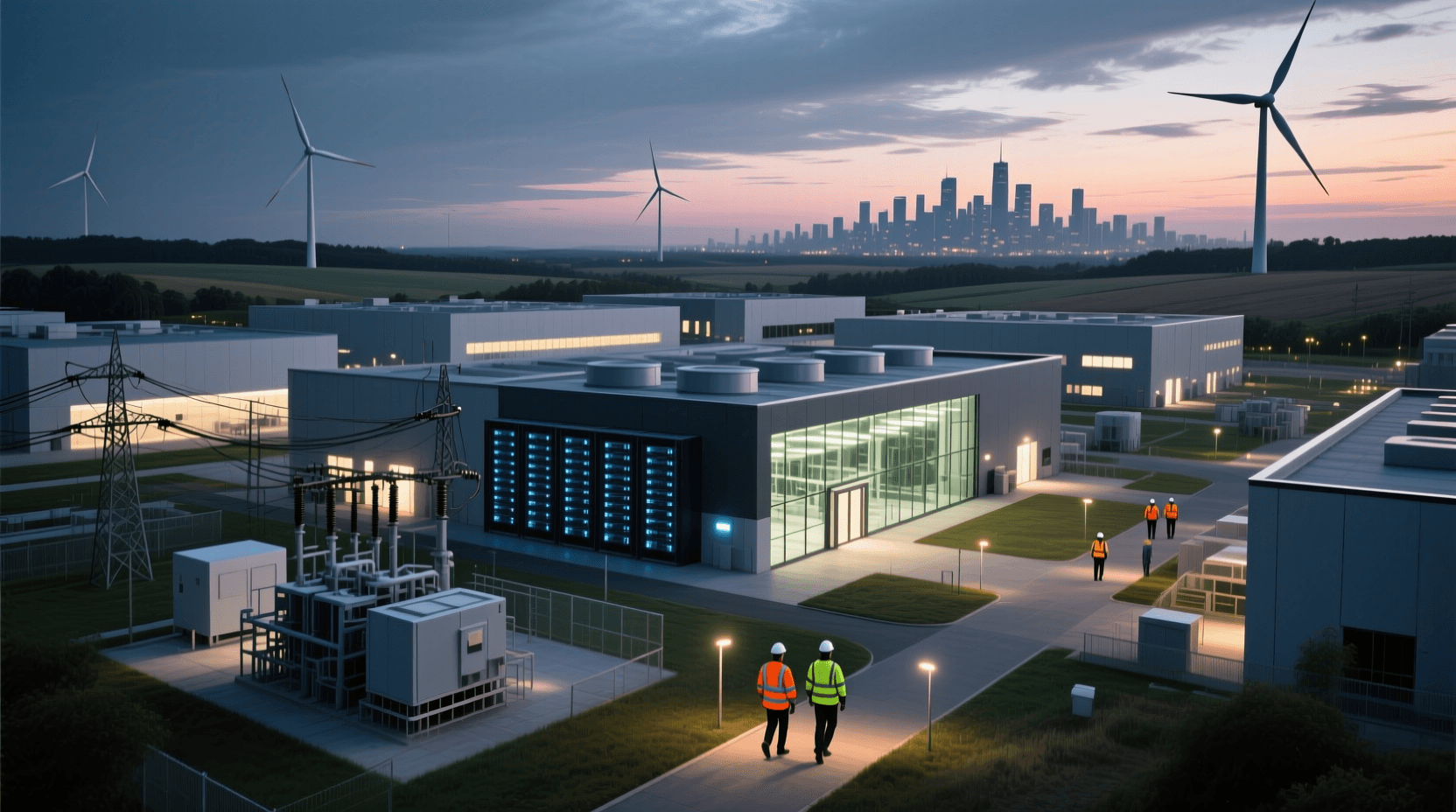
The next phase of AI competition will not be won by model demos alone. It will be won by whoever can secure enough power, cooling, networking, and operational reliability to run AI at industrial scale.
A major new commitment to build out data center capacity in France signals something bigger than one company’s expansion plan. It points to a structural shift in how AI will be built, deployed, and monetized across Europe. For AI startups, enterprise buyers, and tool builders, this matters far beyond real estate or energy policy. It changes where inference happens, how quickly products can scale, and which vendors will be trusted with mission-critical workloads.
AI is becoming an infrastructure business
For the last two years, much of the AI conversation has focused on models, copilots, and flashy product launches. But underneath all of that sits a harder truth: AI is now constrained by physical systems.
Training large models and serving high-volume inference are no longer abstract cloud activities. They depend on land acquisition, utility interconnects, transformer lead times, chip supply, liquid cooling, and regional regulation. In other words, AI is becoming an infrastructure business as much as a software business.
That has two immediate consequences.
First, compute access becomes a competitive moat. If you can guarantee capacity, you can launch products faster, offer better uptime, and avoid pricing shocks when demand spikes.
Second, geography matters again. Developers once assumed cloud made location irrelevant. AI reverses that assumption. Latency, data sovereignty, local compliance, and power availability now shape product architecture in very practical ways.
Why France and Europe suddenly look more strategic
Europe has often been framed as lagging in AI compared with the U.S. and China. That framing misses the next opportunity. Europe may not dominate frontier model creation, but it can become a highly valuable region for trusted AI deployment.
That distinction is important. Many enterprises do not need the world’s largest model; they need predictable, compliant, regionally hosted AI systems that can be audited and integrated into existing operations. If large-scale capacity comes online in France, Europe gains leverage in exactly that category.
For sectors like finance, healthcare, media, government, and industrial manufacturing, local infrastructure is not just a nice-to-have. It can be the deciding factor in whether an AI project moves from pilot to production.
This is where infrastructure investments become ecosystem investments. More regional capacity can attract model providers, API vendors, enterprise SaaS platforms, and edge inference specialists. It can also reduce the pressure on European companies to send every sensitive workload to non-European regions.
The winners won’t just be hyperscalers
Big announcements like this naturally spotlight giant investors and cloud operators. But the downstream winners may be more diverse.
Modular infrastructure providers stand to benefit because AI demand rarely arrives in neat, predictable phases. It comes in bursts. Enterprises want to start quickly, then expand without rebuilding from scratch. That makes flexible deployment models especially attractive.
Tools like ModulEdge fit neatly into this shift. As organizations look for scalable AI and edge capacity, modular data center approaches offer a practical bridge between centralized hyperscale facilities and localized compute needs. That matters for companies serving inference-heavy applications, private AI environments, or distributed industrial deployments.
The software layer benefits too. More compute capacity does not automatically create value; it enables more workflows to be automated reliably. In media, for example, better infrastructure can support faster content enrichment, multilingual publishing, archive analysis, and newsroom automation at scale. Platforms like FAYFO show how AI becomes useful when infrastructure and workflow software meet in the middle. The future of AI media operations will depend not only on model quality, but on having enough dependable backend capacity to run these systems continuously.
And then there is the broader SaaS ecosystem. As AI becomes embedded into everyday products, buyers will need help navigating which tools are truly productive versus merely AI-labeled. Directories and discovery platforms such as SaaS Field become more useful in a market where infrastructure growth unleashes a flood of new software offerings.
What developers should pay attention to now
If you build AI products, this kind of infrastructure expansion should change your roadmap thinking.
Do not assume U.S.-centric deployment forever. Start planning for regional architecture, especially if your customers care about residency or low-latency inference.
Do not treat compute as infinitely elastic. It may become more available, but demand will rise with it. Design products that can optimize inference costs, route workloads intelligently, and use smaller models where possible.
And do not separate product strategy from infrastructure strategy. The companies that win in the next cycle will understand both. They will know when to use centralized cloud, when to move to edge environments, and when to prioritize regional hosting as a sales advantage.
The real story is confidence
The most important signal in a massive data center commitment is not just capacity. It is confidence.
Confidence that AI demand will persist. Confidence that enterprises will keep moving from experimentation to deployment. Confidence that Europe is worth building for at scale.
That confidence has a self-reinforcing effect. Infrastructure attracts platforms. Platforms attract developers. Developers attract customers. Customers justify more infrastructure.
So while headlines focus on the size of the investment, the deeper story is that AI is entering a more mature phase. The market is shifting from speculative enthusiasm to physical buildout. For users of AI tools and developers of AI products, that is good news. It means the ecosystem is becoming more real, more durable, and much harder to dismiss as hype.