Free vs Paid Transcription AI: What You’re Really Buying in 2026
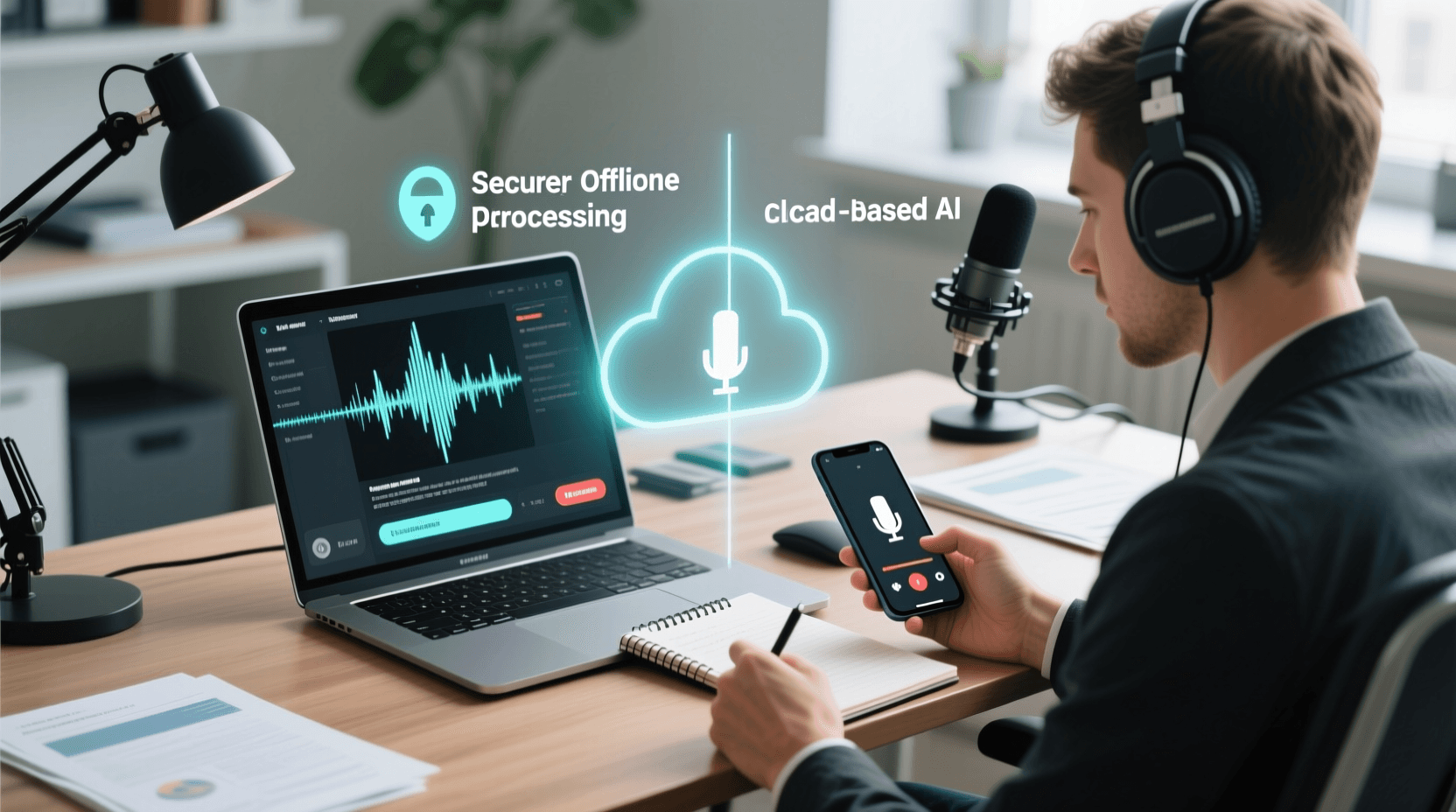
If you only judge transcription software by one question—“Does it turn speech into text?”—then a lot of paid products look overpriced.
That’s the trap.
The real decision isn’t whether transcription works. In 2026, it mostly does. The better question is: what layer on top of transcription are you paying for, and is that layer worth it for your workflow?
For AI tool users and developers, this distinction matters more than ever. Speech-to-text is quickly becoming a commodity. The products that survive won’t win because they can transcribe an interview. They’ll win because they solve the messy, expensive, human parts around transcription: privacy, latency, formatting, collaboration, automation, and trust.
Transcription itself is no longer the premium feature
Open models, local inference, and increasingly capable APIs have changed the economics of speech recognition. The baseline quality gap between free and paid tools has narrowed dramatically, especially for clean audio, common accents, and standard meeting environments.
That means many users are overpaying if their needs are simple. If you occasionally transcribe a podcast clip, lecture, or voice memo, the premium subscription may not be buying you meaningfully better words on the page.
But this doesn’t mean paid tools are a bad deal. It means the value proposition has shifted.
Today, the premium isn’t “AI transcription.” It’s:
- instant capture inside your workflow
- speaker separation that doesn’t fall apart in group conversations
- reliable formatting for notes, summaries, and action items
- integrations with docs, CRMs, project tools, and meeting platforms
- privacy guarantees for sensitive recordings
- offline or on-device performance when cloud upload is a nonstarter
If a product can’t clearly justify one of those layers, it risks becoming interchangeable.
Privacy is becoming the deciding factor
One of the biggest reasons to pay is no longer accuracy. It’s control.
A lot of users are waking up to the fact that “free” transcription often means trading away certainty about where audio goes, how long it’s stored, and whether it can be used to improve future models. For journalists, therapists, lawyers, researchers, healthcare teams, and enterprise users, that tradeoff is often unacceptable.
This is where offline and privacy-first tools become more interesting than flashy cloud dashboards. Murmur, for example, leans into a simple but increasingly powerful promise: just speak, offline speech-to-text. That’s not just a convenience feature. It’s a policy decision. It reduces compliance headaches and lowers the emotional friction of recording sensitive ideas.
Similarly, Vowen points toward a broader future for voice interfaces: private, offline, voice-first productivity across dictation, AI workflows, meeting notes, and voice control. That matters because users don’t just want transcripts. They want to do something immediately with their voice—without sending every spoken thought to a remote server.
In other words, the next battleground isn’t just who transcribes best. It’s who earns the right to listen.
Developers should assume transcription is a feature, not a product
For builders, this market is a warning. If your app’s only differentiator is “we transcribe audio with AI,” you are standing on rapidly collapsing margins.
Developers should think of transcription the way companies once thought about OCR or spellcheck: essential, useful, but not enough on its own to sustain premium pricing unless bundled into a larger workflow.
A stronger strategy is to build around specific jobs:
- sales call intelligence
- multilingual customer support archives
- legal deposition review
- creator editing workflows
- field reporting and research capture
- accessibility and compliance documentation
Take a tool like NitroScribe. Its appeal isn’t just that it uses Whisper-based transcription. It’s that it supports 98+ languages, speaker recognition, and secure data handling. That package is far more defensible than generic “upload audio, get text.” It speaks to real production use cases where language coverage, diarization, and trust actually affect outcomes.
The takeaway for developers is simple: users will pay for reduced friction, reduced risk, and reduced cleanup. They won’t pay forever for raw transcription alone.
The hidden cost of free tools is cleanup time
There’s another point that gets missed in the free-versus-paid debate: labor.
A free transcript that requires 20 minutes of correction, relabeling, formatting, and copying into the right system may be more expensive than a paid tool that gets you 90% of the way to a usable deliverable in seconds.
This is especially true for teams. Once multiple people rely on transcripts for decisions, the cost of inconsistency rises fast. Poor speaker labeling can break meeting notes. Weak formatting can make summaries unusable. Unclear retention policies can block procurement entirely.
So the practical question isn’t “Can I get this for free?”
It’s “How much post-processing am I signing myself up for?”
What users should do before subscribing
Before paying for any transcription app, test it against your real-world audio, not polished demos. Use overlapping speakers, background noise, mixed accents, and the file types you actually produce. Then ask four questions:
- Does it save me time after the transcript is created?
- Can I trust it with sensitive material?
- Does it fit where I already work?
- If I stopped paying, what capability would I truly miss?
If the answer to the last question is “not much,” stick with free or local options.
But if your work depends on speed, privacy, multilingual support, or turning speech directly into action, then paid transcription software may still be a bargain—just not for the reason vendors used to claim.
The future of this category belongs to tools that understand a simple truth: nobody wants a transcript. They want the next step, with less effort and less risk.