Google’s AI Platform Play Is Bigger Than Search—and Developers Should Pay Attention
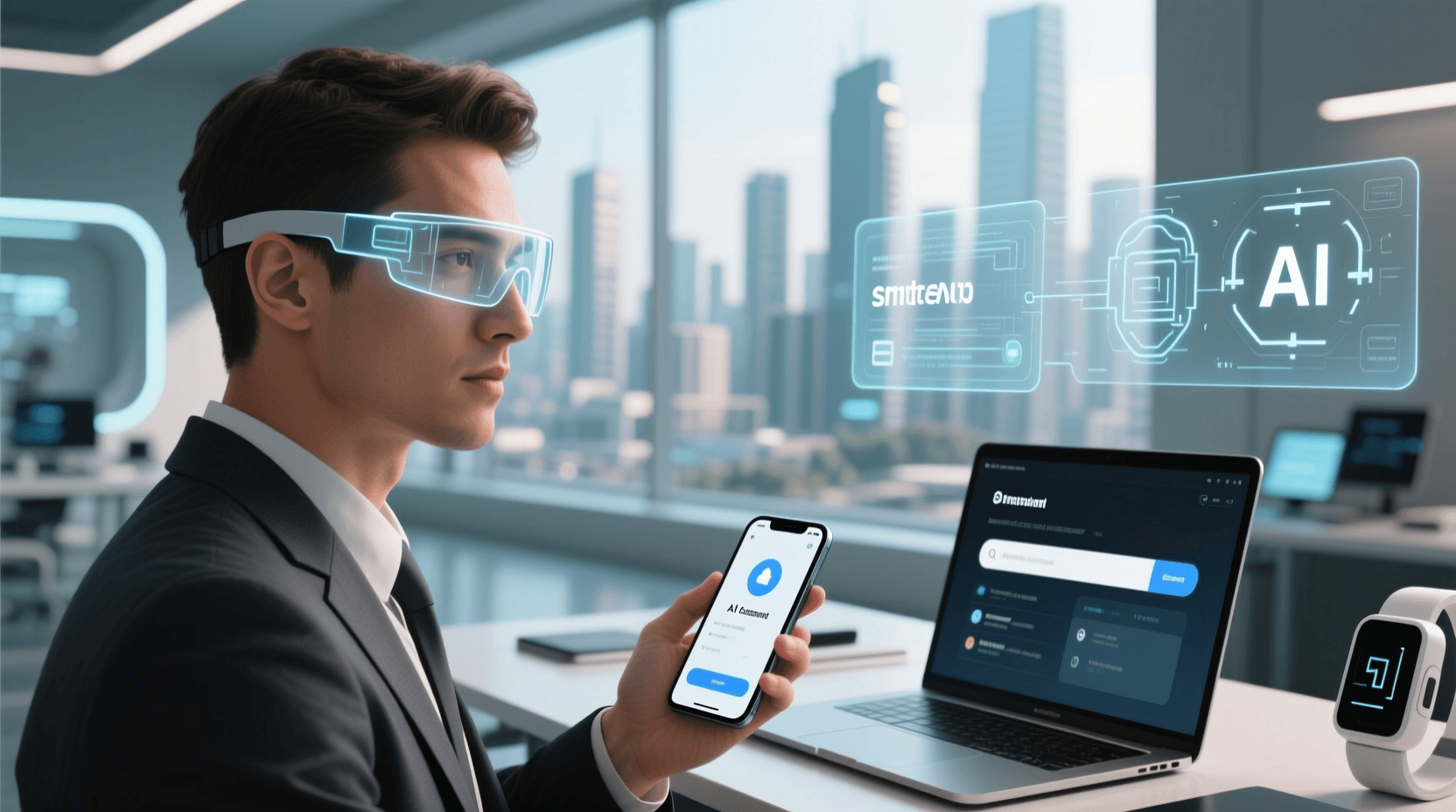
Google’s latest wave of announcements signals something more important than a routine model upgrade cycle. The real story is that Google is trying to turn AI from a destination into a default layer across devices, interfaces, and workflows. That shift matters for anyone building AI products, optimizing digital visibility, or deciding which tools to adopt in 2026.
The headline features—new Gemini capabilities, a reworked search experience, and smart glasses—may look like separate product updates. They’re not. Together, they point to a future where AI is expected to observe context, take action, and follow users across screens and environments.
The new battleground is ambient AI
For the last two years, most AI products have lived in chat boxes. Useful, yes—but still bounded. What Google appears to be pushing toward is ambient AI: systems that are present in search, productivity tools, mobile devices, and wearables at the same time.
That changes user expectations. People won’t just ask an assistant for answers; they’ll expect it to see what they see, understand intent from partial context, and complete tasks without forcing them to switch apps. In that world, the value of a model is no longer just benchmark performance. It’s orchestration.
That’s why tools like Gemini matter beyond the usual model-comparison conversation. Google DeepMind’s push toward native tool use, multimodal interaction, and speech generation is aligned with this broader trend: AI that doesn’t merely respond, but operates.
For developers, this means the winning products may be the ones that treat models as runtime infrastructure rather than as chatbot personalities. If your app still assumes the user will manually paste prompts into a text window, you may already be designing for the previous generation of AI UX.
Search is becoming a negotiation, not a results page
Google’s search changes are especially significant because they affect discovery economics across the web. Traditional SEO was built around ranking pages. AI-shaped search is increasingly about being selected, cited, synthesized, and acted upon.
That creates a new challenge for businesses: your brand may be visible in classic search results but absent in AI-mediated answers. Or worse, represented inaccurately. As AI systems become the first interface between users and information, monitoring that layer becomes essential.
This is where a tool like quickseo.ai becomes strategically useful. It reflects a growing need to track brand presence not just in Google Search, but across AI chat surfaces like ChatGPT, Claude, and Gemini. Unified visibility analytics will likely become a standard part of growth strategy, because “ranking” no longer captures the full picture of how users discover products.
For AI tool makers, the implication is equally important: distribution will increasingly depend on whether assistants can find, trust, and recommend your product. Documentation quality, structured content, API clarity, and brand consistency may matter as much as paid acquisition.
Smart glasses are not a gadget story—they’re an interface story
The most underestimated part of Google’s direction may be smart glasses. Many people still evaluate wearables like consumer electronics bets: stylish or awkward, useful or niche. But from an AI perspective, glasses are a test of whether assistants can become continuous companions.
If AI can see, hear, translate, remind, navigate, and guide in real time, the interface itself starts to disappear. That’s a major leap from opening an app. It also creates a new design challenge: AI responses must become faster, lighter, more situationally aware, and less intrusive.
Developers should read this as a cue to rethink modality. Voice, glanceable output, contextual triggers, and low-friction actions will matter more. The old pattern of long text responses may be poorly suited for wearable computing.
This is also where customizable assistant layers become valuable. A tool like Gemini shows the market demand for assistants that can be tailored with workflow automation and specialized skills. As AI becomes embedded in more environments, generic intelligence won’t be enough. Users and teams will want assistants shaped around their tasks, policies, and preferred tools.
The real opportunity is in agent-ready products
The biggest takeaway from Google’s announcements is not that one company has better demos. It’s that the industry is converging on agent-ready software.
An agent-ready product is easy for AI systems to query, understand, and use. It has clean APIs, predictable actions, structured outputs, and clear permission boundaries. It can be invoked inside a search flow, a mobile assistant, or a wearable interface without breaking the experience.
That should influence product roadmaps now. If you’re building an AI tool, ask:
- Can an assistant discover what my product does?
- Can it trigger useful actions safely?
- Can it explain my value clearly in search and chat contexts?
- Can users interact with it through voice, mobile, and lightweight interfaces?
The companies that answer yes will be better positioned than those still optimizing for standalone web traffic alone.
What AI users should do next
For users, this platform shift means choosing tools that fit into a broader workflow, not just tools that produce impressive outputs. Look for systems with strong integrations, multimodal capabilities, and customization options. The future AI stack will be less about one perfect model and more about how models, assistants, analytics, and automation work together.
Google’s latest moves suggest we’re entering the phase where AI stops being a feature and starts becoming the operating layer of digital life. That will create winners beyond the biggest model labs—especially among developers building useful, agent-friendly tools and businesses learning how to stay visible when AI becomes the front door to the internet.