Google’s Shift to AI Monitoring Agents Could Change How We Discover Everything
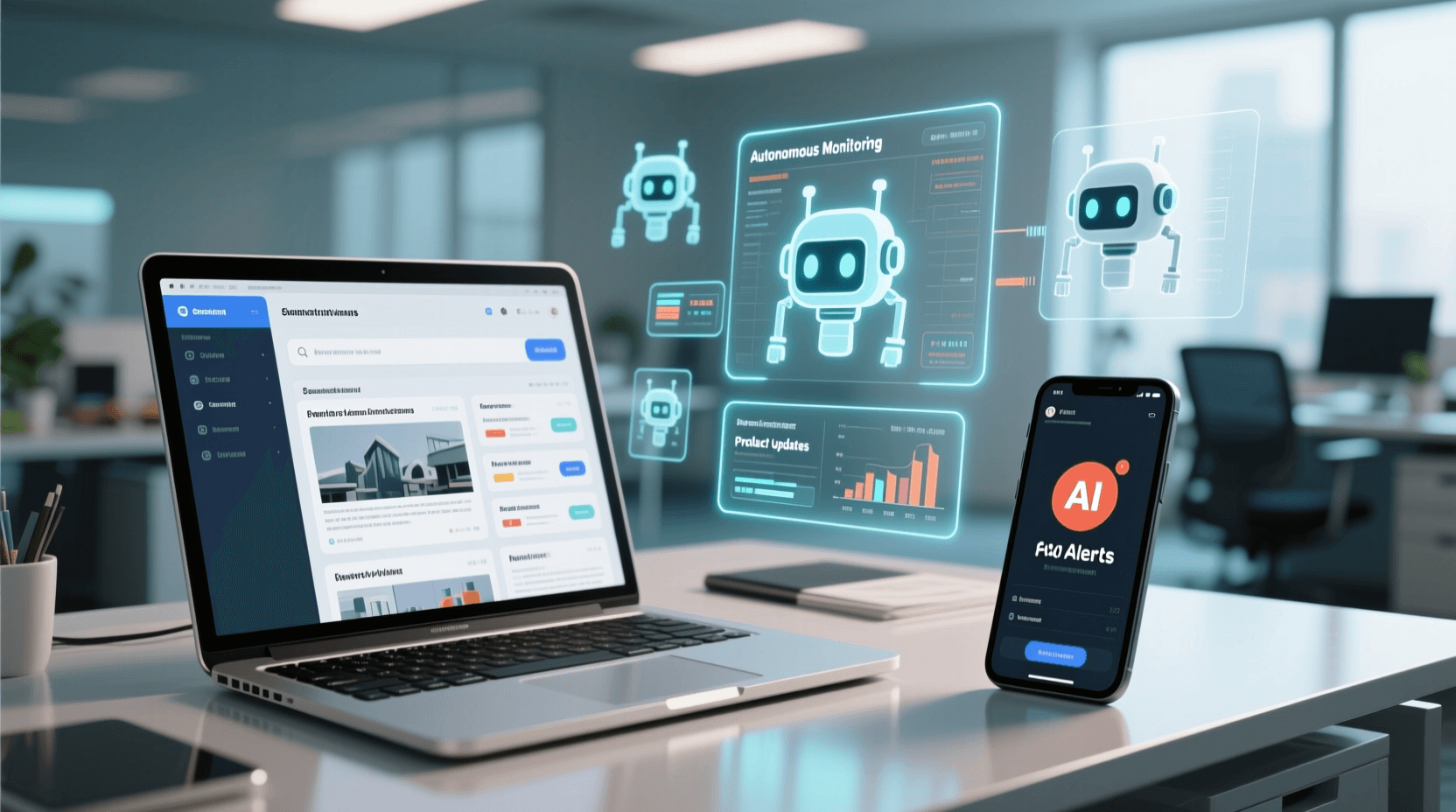
Google’s latest move toward AI-powered information agents signals something bigger than a search feature upgrade. It points to a new model for how people will interact with the web: less typing, less hunting, and far more delegation.
For years, search has been built around a simple loop. A user has a question, enters keywords, scans results, compares sources, and maybe repeats the process later. AI agents break that loop. Instead of asking the same question over and over, users can assign an ongoing objective: watch this topic, track changes, and tell me when something important happens.
That sounds convenient on the surface. But for AI tool users, marketers, and developers, it represents a meaningful shift in how attention, visibility, and trust will be won online.
Search is becoming a standing task, not a one-time action
The most important implication of background information agents is that search is starting to behave more like software automation.
In the old model, discovery happened when a person decided to look. In the agent model, discovery happens continuously. The user defines intent once, and the system keeps working in the background.
That changes the value of being “search optimized.” It may no longer be enough to rank well for a keyword at a single moment. Increasingly, content and products may need to be structured so agents can monitor them, compare them, detect updates, and decide whether they are worth surfacing proactively.
This is a subtle but major transition. Websites have long been designed for crawlers and human readers. Now they also need to be legible to monitoring agents that are trying to determine what changed, why it matters, and whether it deserves an interruption.
The real competition is becoming agent eligibility
As AI agents become intermediaries, the battle shifts from “Can I appear in search?” to “Will the agent choose me as a relevant update?”
That creates a new layer of competition. If an AI system is monitoring electric vehicle prices, AI model launches, software vulnerabilities, or changes in product documentation, it will need signals that help it identify meaningful deltas. Pages with vague timestamps, inconsistent metadata, buried updates, or unclear authority may be ignored even if the information is useful.
For developers, this means product documentation, changelogs, release notes, pricing pages, and support content become more strategic assets. They are no longer static reference pages. They are machine-readable event streams.
For companies trying to remain discoverable, this is where tools that track AI visibility become increasingly valuable. A platform like quickseo.ai is especially relevant in this environment because brands will need to understand not just their Google rankings, but how they appear across AI assistants and answer engines. If agents are the new gatekeepers, unified visibility analytics stop being a nice-to-have and start becoming operational intelligence.
AI agents will reward structured, trustworthy publishers
There is also a quality consequence here. Background agents can reduce repetitive searching, but they can also amplify whatever sources they trust most. That likely benefits publishers and platforms that maintain clean structure, clear update histories, and strong topical authority.
In practice, this could push the web toward better information hygiene. Expect more emphasis on canonical pages, transparent revisions, schema markup, and concise summaries of what changed. Teams that publish thoughtful updates in a format machines can parse will likely have an advantage over those that rely on cluttered pages or engagement tricks.
That’s good news for serious builders, but it raises the bar. If your product, API, or tool changes often, you may need to think like a newsroom and a developer-relations team at the same time.
Users will expect agents everywhere, not just in search
Once people get used to assigning ongoing research tasks, they will want that behavior across many workflows. Product scouting, competitor monitoring, lead generation, compliance tracking, job hunting, pricing intelligence, and technical research all map naturally to persistent AI agents.
That creates an opportunity far beyond Google. Users will increasingly look for specialized agents tuned to specific domains and tasks, not just general-purpose assistants. That’s why directories and discovery platforms matter more now than they did a year ago. If you want to see where this ecosystem is heading, the AI Agents Marketplace offers a useful view into how fast agent-based tools are diversifying.
The broader lesson is that users are not merely adopting AI chat. They are learning to manage fleets of AI workers, each assigned to watch, filter, summarize, or act.
Developers should design for “agent-native” experiences
The smartest product teams will not treat this as a search trend. They will treat it as an interface trend.
Agent-native products should expose clean updates, stable endpoints, transparent change logs, and clear signals of importance. They should assume that a non-human decision-maker may be the first layer of discovery. If your app, database, or API is difficult for an agent to interpret, you may lose visibility before a human ever sees your offering.
There is also a strategic branding angle. As the AI landscape changes weekly, staying current matters. Tools like Latest AI Updates can help teams track the broader platform shifts that influence how agents behave, what ecosystems they support, and where new opportunities are emerging.
The next era of SEO may be AEO plus monitoring readiness
We’ve already seen the rise of answer engine optimization. Now we may be entering something even more specific: optimization for proactive retrieval.
That means preparing your content and product information not just to answer a question, but to trigger an alert, justify a recommendation, or survive a machine-driven comparison.
Google’s new information agents matter because they make one thing clear: the future of discovery is not only conversational. It is continuous. The winners will be the companies, creators, and developers who learn how to be noticed by systems that are always watching on behalf of users.