Mobile Vibe Coding Changes the Real Battleground for AI App Builders
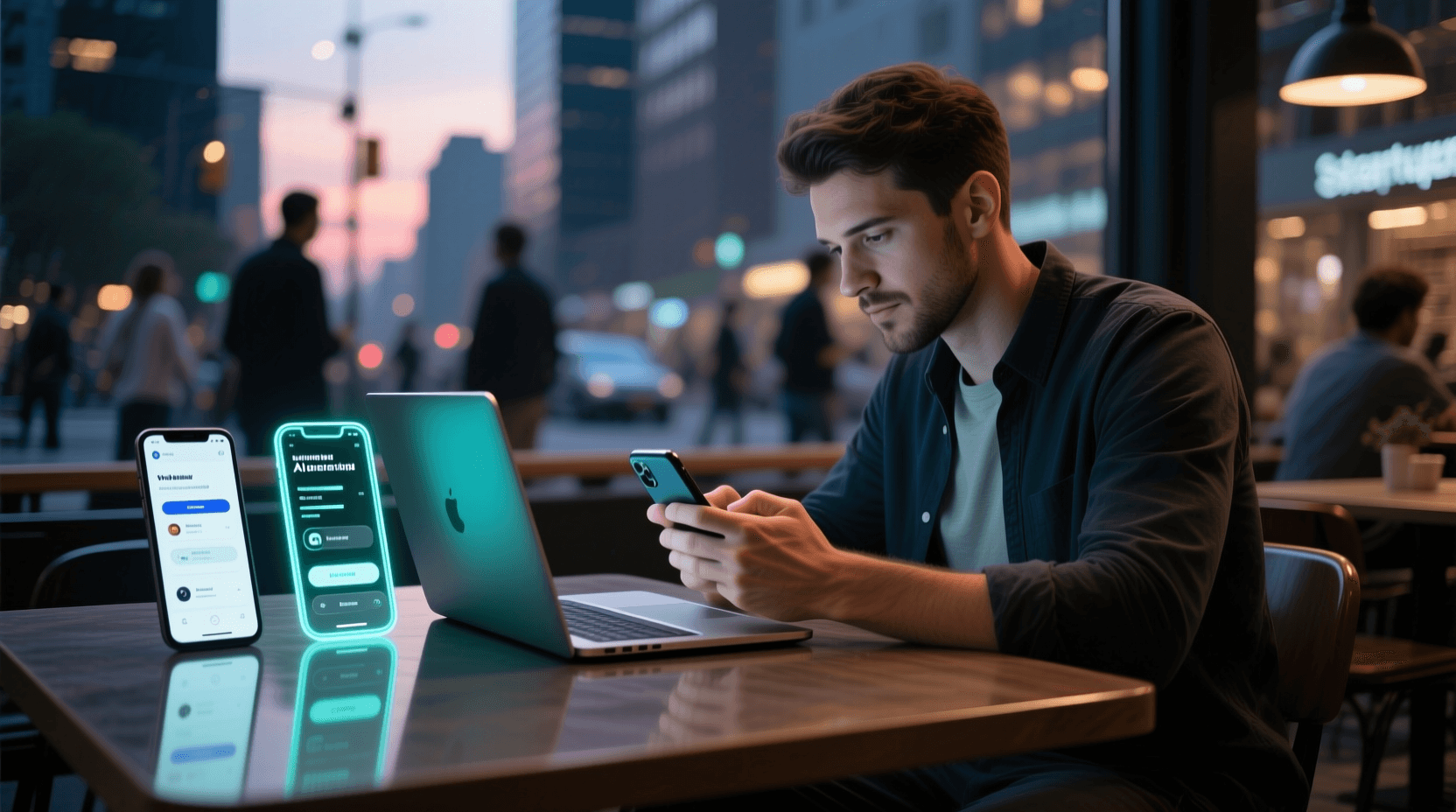
The arrival of mobile-first vibe coding is more important than it looks.
When an AI app builder moves from the desktop browser to iOS and Android, this is not just a convenience update. It signals a shift in where software gets imagined, validated, and increasingly assembled. If building with AI can happen from a phone, then product development starts to look less like a scheduled engineering task and more like an always-on creative workflow.
That matters for founders, indie hackers, agencies, and even non-technical operators who are trying to turn ideas into products before the moment passes.
The phone is where ideas actually happen
For years, software creation has been trapped inside the rituals of "real work": open the laptop, launch the IDE, clear an afternoon, and enter builder mode. But most product ideas do not arrive in that setting. They show up in line at a coffee shop, during a commute, after a customer call, or halfway through a conversation.
A mobile vibe-coding app compresses the distance between inspiration and execution. Instead of writing a note to revisit later, a user can start shaping the product immediately: generate a landing page, sketch a workflow, test copy, or scaffold a prototype while the idea is still fresh.
That sounds small, but it changes behavior. The easier it is to act on an idea in the moment, the more experiments get launched. And in AI product development, volume matters. The teams that win are often the ones that test 20 concepts while everyone else debates one.
Tools like Lovable are pushing this shift forward by making software creation feel conversational rather than procedural. On mobile, that conversational model becomes even more natural. You are not "starting a dev session" so much as continuing a thought.
Vibe coding is becoming a capture layer for product intuition
The phrase "vibe coding" gets dismissed sometimes, usually by people focusing on whether AI-generated code is perfect. That misses the point.
Vibe coding is not just about replacing syntax. It is about capturing product intuition at high speed. The founder who knows the customer pain point but cannot code fluently. The marketer who understands conversion but not frameworks. The operator who can describe a workflow bottleneck in exact detail. AI turns that intuition into a draft product.
On mobile, this becomes even more powerful because the device is already embedded in daily life. You can capture a bug report from a client call and immediately turn it into a prototype fix. You can see a broken form on a competitor's site and spin up an alternative flow before you get back to your desk. You can test messaging, interaction patterns, and micro-products in the same environment where users discover and consume them.
That creates a new kind of builder: someone who ships from context, not from ceremony.
The next opportunity is not just building apps, but trading them
As AI lowers the friction to create software, another market grows alongside it: discovery and distribution.
If more people can generate useful micro-SaaS tools, landing pages, internal dashboards, and niche web apps from their phones, then the bottleneck moves from creation to visibility. Builders will need places to list, sell, and acquire these projects efficiently.
That is why marketplaces like Vibe Coded are worth paying attention to. A world of mobile-native AI builders will produce a flood of small, highly specific software products. Some will be side projects. Some will be lead magnets. Some will quietly become real businesses. The ability to discover and transact around AI-assisted projects may end up being just as important as the ability to generate them.
In other words, mobile vibe coding does not just expand who can build. It expands who can participate in the software economy.
Expect more personal, persistent AI product workflows
There is also a subtler effect here: mobile AI tools tend to become more personal than desktop tools.
Phones are where people journal, message, brainstorm, and reflect. As creation tools move there, product development starts blending with personal cognition. Builders will increasingly use AI not only to generate interfaces, but to maintain momentum, capture emotional context, and stay aligned with what they are trying to make.
That is where companion-style tools like VibeLoop hint at a broader trend. Journaling one vibe a day may sound separate from app development, but in practice, the future builder stack will include emotional and creative continuity tools alongside code generation. The next generation of founders may move fluidly between "here's how I'm thinking," "here's what users need," and "build this now" in one AI-assisted loop.
This is especially relevant for solo builders, who often lose speed not because they lack ideas, but because they lose clarity.
What developers should watch next
The real question is not whether mobile vibe coding can replace desktop development. It cannot, at least not fully. Complex debugging, architecture decisions, and production hardening still benefit from larger screens and deeper tooling.
The bigger question is what happens when mobile becomes the front door to software creation.
If that happens, we should expect:
- more prototype-first product teams
- more non-technical contributors initiating builds
- more disposable experiments with shorter lifecycles
- more demand for marketplaces, integrations, and handoff workflows
- more pressure on AI builders to support continuity between phone and desktop
For AI tool users, this is good news. Building becomes more ambient, less intimidating, and more responsive to real-world opportunities. For developers, it is a warning and an opportunity: the value is moving up the stack, away from raw implementation and toward orchestration, refinement, trust, and distribution.
The winners in this next phase will not just be the tools that can generate code anywhere. They will be the platforms that help people turn fleeting intent into durable products before the vibe disappears.