Tesla’s $25B Bet Signals a New AI Infrastructure Era for Industry
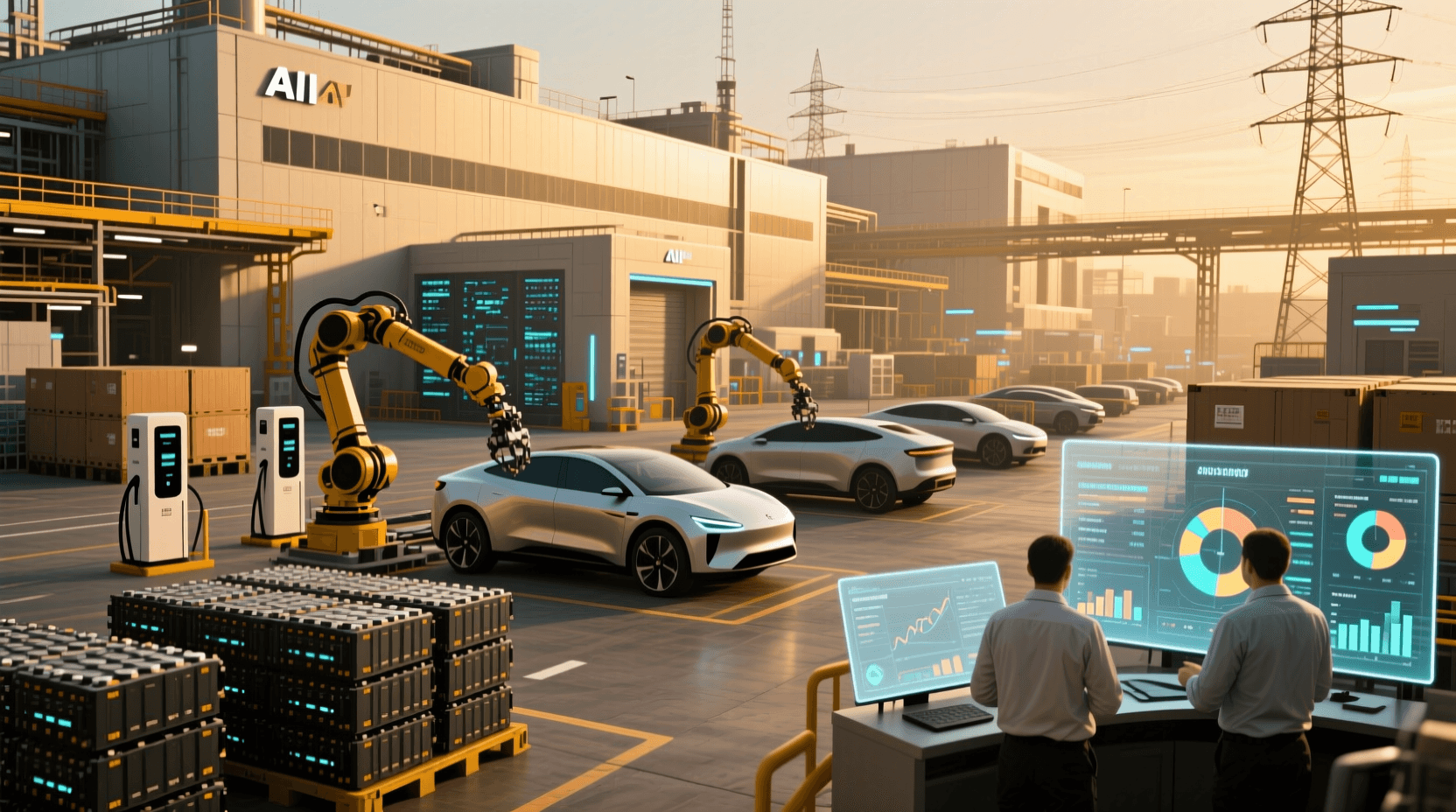
Tesla’s decision to sharply expand capital spending is more than a corporate finance story. It’s a signal that the next phase of AI competition won’t be defined only by model quality or flashy demos. It will be defined by who can afford to build, own, and operate real-world infrastructure at scale.
That matters far beyond Tesla.
When a company is willing to tolerate negative free cash flow in pursuit of a larger strategic position, it is making a statement: the future prize is big enough to justify near-term pain. For AI users, developers, and founders, this changes how we should think about the market. The winners may not just be the companies with the smartest software, but the ones that can connect software to factories, vehicles, energy systems, logistics, and data pipelines.
AI Is Leaving the Chat Window
For the last two years, much of the AI conversation has centered on assistants, copilots, and content generation. Useful, yes. But increasingly, the real value is moving into operational systems that touch the physical world.
Tesla’s spending surge highlights that shift. Building an AI-driven business in transportation, robotics, manufacturing, or energy requires enormous investment in assets that don’t fit the lightweight SaaS playbook. Compute clusters, specialized chips, factories, battery supply chains, sensor networks, and charging ecosystems all become part of the AI stack.
This is where many developers need to update their mental model. AI is no longer just an API call layered onto an app. In sectors like mobility and industrial automation, AI is becoming inseparable from capital allocation.
That same lesson applies to smaller companies, even if their budgets are nowhere near Tesla’s. If your product depends on forecasting demand, financing inventory, or managing long payback cycles, your AI strategy has to include financial discipline. Tools like finban are increasingly relevant because founders can’t improvise liquidity planning when infrastructure bets get larger. In a high-investment environment, cash timing becomes a product decision.
The New Competitive Moat: Operational Endurance
A lot of AI startups still talk as if speed alone is the moat. Ship fast, iterate fast, raise fast. But capital-heavy AI markets reward a different trait: endurance.
If a company is investing aggressively while accepting weaker short-term cash generation, it is effectively betting that slower, undercapitalized competitors will struggle to keep up. That logic won’t apply to every AI category, but it will dominate sectors where deployment requires hardware, compliance, field operations, or physical distribution.
For developers, this means the most attractive opportunities may be in tools that reduce friction around those expensive systems. Not every startup needs to build robots or EV platforms. Plenty of value will accrue to software that improves planning, utilization, maintenance, financing, and customer onboarding around those ecosystems.
Consider mobility and electrification. As EV adoption expands across emerging markets, the intelligence layer around purchasing, logistics, financing, and after-sales support becomes just as important as the vehicles themselves. Platforms like EV24.africa show how AI-adjacent opportunity often lives in market access and operational transparency, not just in autonomous driving headlines. In Africa especially, the future of EV growth will depend on practical systems that make vehicle acquisition and shipping easier, not on Silicon Valley narratives alone.
What This Means for AI Tool Users
For end users, especially businesses, Tesla’s spending move is a reminder to evaluate AI vendors differently. Ask not only whether a tool is impressive today, but whether the company behind it can sustain the infrastructure required to keep improving it.
This is particularly important in categories tied to finance, transport, and industrial operations. Reliability, deployment depth, and long-term support are becoming more valuable than novelty. A clever demo can win attention; durable infrastructure wins contracts.
Users should also expect more AI products to become financially opinionated. In other words, the best tools won’t just automate a task — they’ll help organizations decide what they can afford to do next. That’s why finance-focused AI is becoming foundational. A product like Fintrack speaks to this broader trend at the consumer level, using conversational AI to turn raw spending data into decisions. The enterprise version of that same shift is already underway: AI that helps organizations understand runway, risk, and resource allocation in real time.
The Hidden Message for Founders
The biggest takeaway from this moment is not “spend more.” It’s “align your AI ambition with your capital reality.”
Too many founders borrow the language of platform-scale disruption without understanding the financial structure required to survive it. If your market demands physical deployment, your roadmap should include financing strategy from day one. If your market is software-first, your advantage may come from helping capital-intensive customers operate more intelligently.
Either way, AI development is entering a phase where business model design matters as much as technical architecture.
Tesla’s spending escalation underscores a broader truth: the AI economy is maturing. We are moving from experimentation to industrialization. That transition will create huge opportunities, but it will also punish companies that confuse intelligence with inevitability.
The future belongs to teams that can combine AI capability, operational execution, and financial resilience. In the next wave of the market, those three things won’t be separate disciplines. They’ll be the same strategy.