The Real Shift in AI App Creation Isn’t No-Code — It’s User-Controlled Software
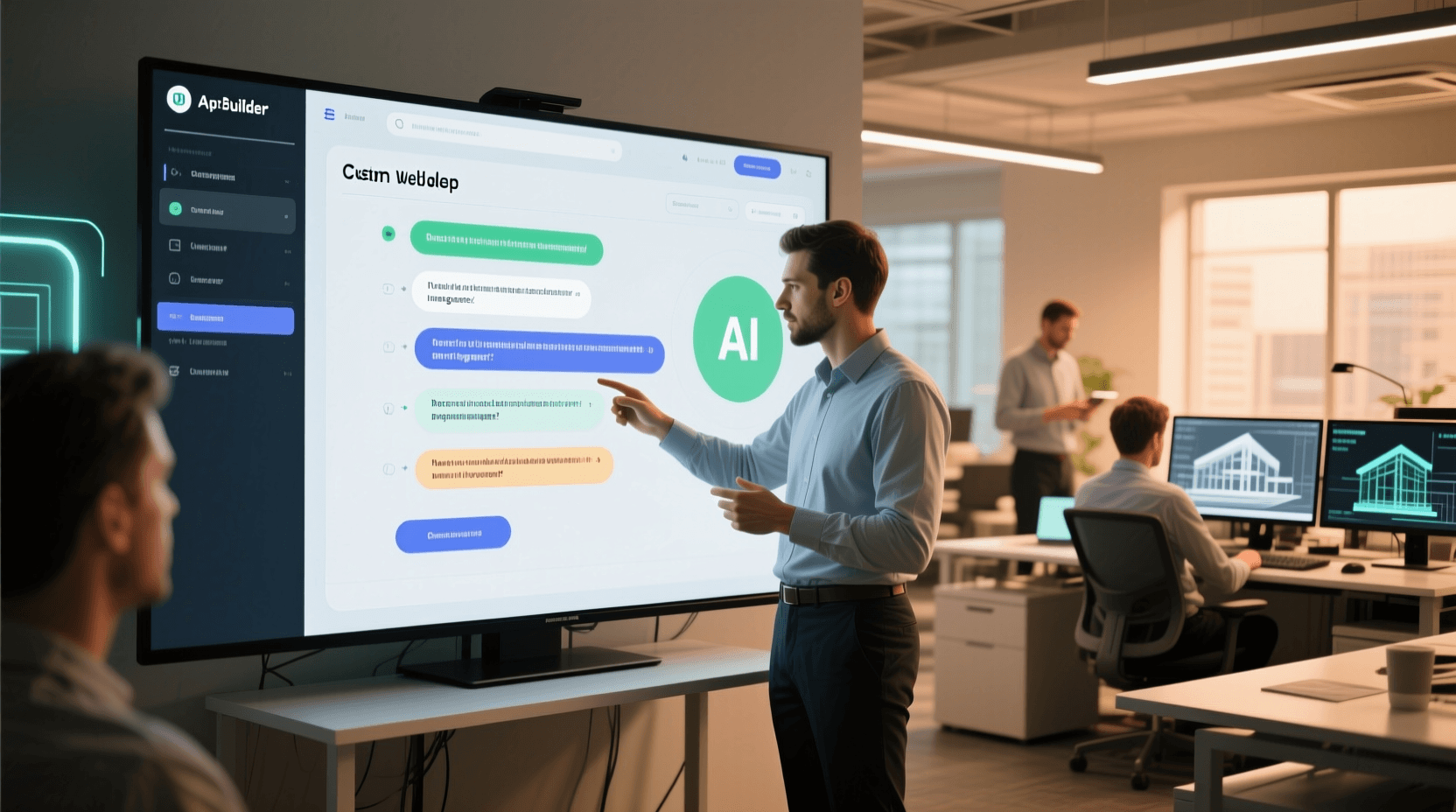
Software is entering a new phase: not just easier to build, but easier to bend around the people who actually use it.
For years, the promise of “no-code” was mostly about accessibility. That mattered, but it didn’t fully change the power structure of software. Most people still had to adapt their workflows to whatever a product team decided to ship. If the app almost fit your process, you were stuck with workarounds, spreadsheets, Slack threads, and human glue.
AI-generated software changes that equation in a more important way. It lowers the cost of making software specific.
The end of one-size-fits-all apps
The biggest implication of AI-assisted app building is not that everyone will suddenly become a founder or launch the next breakout SaaS product. It’s that small groups — clinics, legal teams, nonprofits, schools, agencies, churches, local businesses — can finally justify building software that matches how they already work.
That is a profound shift.
Historically, custom software was expensive because every request had to pass through specialists: product managers, designers, frontend developers, backend developers, QA, IT, procurement. Even modest internal tools became budget debates. So teams settled for generic software and changed their behavior to fit the tool.
Now the economics are flipping. If an operations manager can describe a workflow in plain English and get a working prototype in an afternoon, software stops being a fixed environment and starts becoming a negotiable layer.
That matters to users because “close enough” has been one of the hidden taxes of modern work.
AI app builders are creating a new kind of software buyer
We should expect a new class of buyer to emerge: people who are not developers, but who are capable of commissioning, shaping, and iterating software directly.
These users won’t necessarily want to think about infrastructure, frameworks, or deployment pipelines. They want to solve a bottleneck. They want intake forms that reflect their real process. They want dashboards that show the metrics they actually care about. They want approval flows that mirror their organization instead of forcing everyone into a generic template.
This is where tools like PolymorphApp become especially interesting. If someone can build a polished web application using natural language, the barrier between “I have an idea” and “I have a usable tool” shrinks dramatically. For many teams, that’s enough to unlock value immediately.
But the more mature opportunity is not just generating a first draft. It’s preserving control as the app evolves.
The winners will connect prompting, design, and real code
The next wave of AI app tools will be judged less by how magical the demo looks and more by how well they support iteration after version one.
That’s why platforms such as Dreamflow point toward an important model. The ability to prompt with AI, refine the UI visually, and then go deeper in code — without breaking continuity between those surfaces — is likely to define the most useful products in this category.
Because real software always gets messier over time.
A team starts with a simple internal tracker. Then they need role-based permissions. Then integrations. Then audit logs. Then mobile responsiveness. Then edge cases. Then somebody asks for export controls, approval routing, or a custom report for leadership.
In that environment, pure prompt-to-app generation is not enough. Users need a ladder: start simple, then gain precision without rebuilding from scratch. Developers need ownership, not a black box.
That hybrid future is where AI app generation becomes durable rather than gimmicky.
What this means for developers
Developers are not being removed from the picture. Their role is being redistributed.
Instead of spending all day building CRUD interfaces and repetitive internal dashboards, more developers will act as reviewers, systems architects, integration specialists, and quality gatekeepers. They’ll be pulled in later, when the stakes justify rigor.
That’s a healthier allocation of talent.
The low-value work gets compressed. The high-value work — security, scale, maintainability, compliance, data modeling — becomes more visible.
For independent developers and agencies, this also opens a new service market. Clients may arrive with an AI-generated prototype already in hand. The job becomes refining, hardening, extending, and connecting it to the rest of the business. In other words, AI may reduce greenfield labor while increasing demand for judgment.
The hidden challenge: software sprawl
There is, however, a real risk. If every team can spin up custom software, organizations may end up with dozens of semi-functional apps, inconsistent data models, and unclear governance.
We’ve seen this movie before with spreadsheets, shadow IT, and low-code automation.
The solution is not to resist AI app creation. It’s to build better discovery, standards, and review processes around it. Teams need to know which tools exist, which are trustworthy, and which fit their level of technical maturity. Curated directories like The App Tools become more useful in that world because the problem shifts from scarcity to selection.
When anyone can build, choosing well becomes the new bottleneck.
The bigger change is cultural
The most important thing happening here is not technical. It’s psychological.
People are starting to expect software to adapt to them.
That expectation will spread fast. Once a team sees a custom internal app built in days instead of quarters, it becomes much harder to accept rigid software that forces awkward compromises. AI is not just making app creation cheaper; it is raising the standard for how responsive software should be.
That’s the real disruption.
The future is not a world where every person becomes a programmer. It’s a world where more people can directly shape the software they depend on, and where developers step in where expertise truly matters.
For AI tool users, that means more leverage. For developers, it means a shift toward higher-trust, higher-impact work. And for software itself, it means the era of “take it or leave it” products may finally be starting to crack.