Ubuntu’s AI Turn Could Make the Operating System the Next Competitive Layer
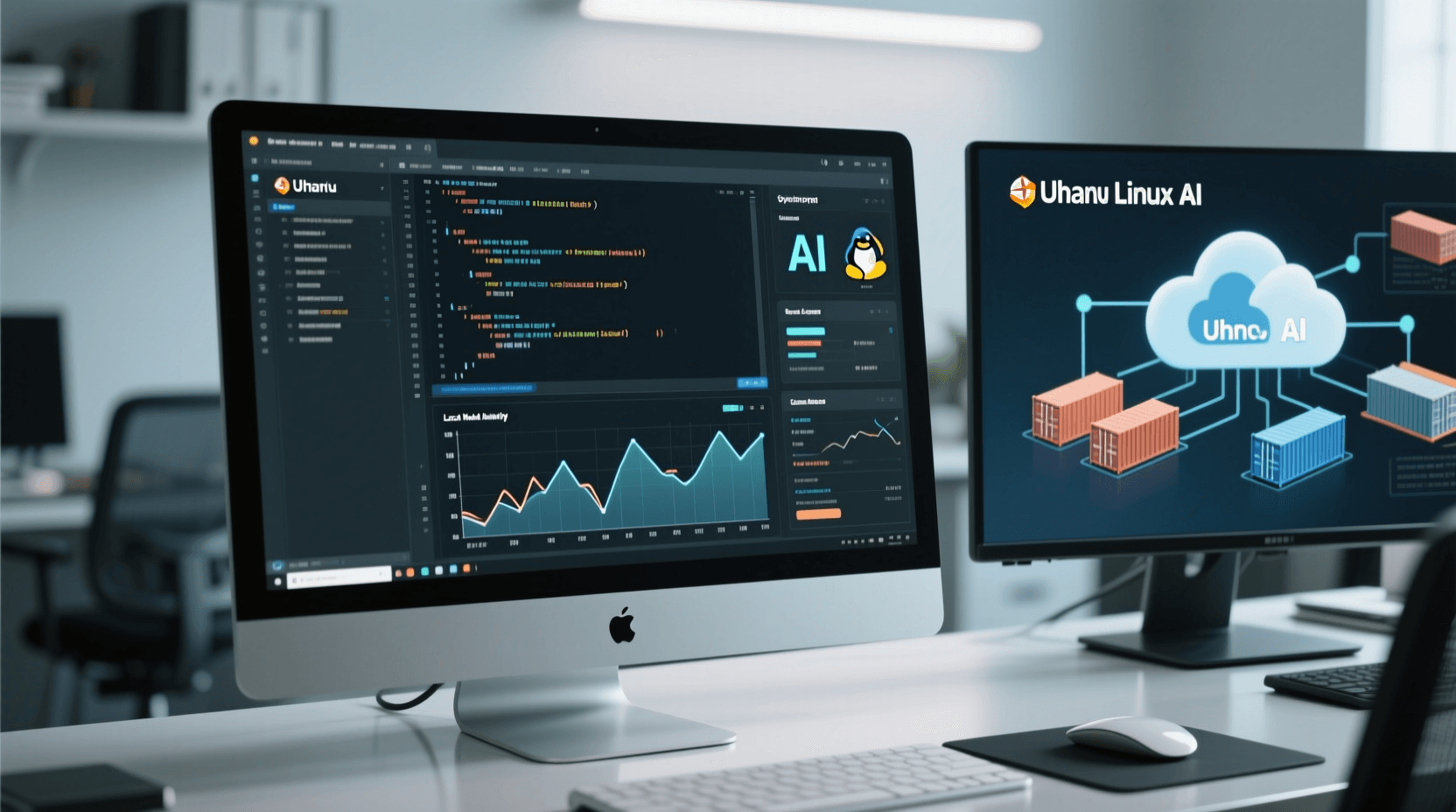
Ubuntu adding AI capabilities is more than a feature update story. It signals a shift in where AI competition is headed: down from the browser and app layer into the operating system itself.
For the past two years, most AI discussion has centered on chat interfaces, model benchmarks, and flashy productivity apps. But if Canonical follows through, Ubuntu could become part of a much more important trend: the OS becoming the orchestrator of local models, cloud models, permissions, automation, and developer workflows.
That matters because the operating system is where trust, performance, and default behavior are decided.
The next AI battleground is infrastructure you don’t notice
When AI tools first entered the mainstream, users chose them explicitly. You opened an app, pasted text, and got a result. Increasingly, that is not how AI will be consumed.
The next phase is ambient AI: background summarization, intelligent search, context-aware assistance, automated system tuning, code help, workflow suggestions, and natural-language control over your machine. Once those capabilities move into Ubuntu, AI stops being a destination and becomes part of the computing environment.
That changes user expectations. People will no longer ask, “Which AI app should I use?” They will ask, “Why doesn’t my system already do this?”
For Linux users, that’s especially interesting. Linux has long appealed to people who value transparency, control, and composability. AI systems often feel like the opposite: opaque, remote, and difficult to audit. Ubuntu now has a chance to define a more developer-friendly middle path, where AI is useful without becoming invisible surveillance.
Linux could become the best home for practical AI assistants
If Canonical gets the implementation right, Ubuntu could become one of the strongest platforms for AI power users. Not because Linux suddenly becomes “consumer AI friendly” in the same way as commercial desktop ecosystems, but because Linux is uniquely suited for modular AI stacks.
Developers already use Ubuntu for containers, GPUs, Python environments, inference servers, and edge deployments. Bringing AI deeper into the OS could reduce friction between experimentation and production. A local model for privacy-sensitive tasks, a hosted model for heavier reasoning, and system-level automation to connect them all is a compelling setup.
That also creates a natural bridge to providers like OpenAI, whose APIs remain central for teams that need state-of-the-art reasoning, coding, and multimodal capabilities without managing every layer themselves. In practice, the future won’t be purely local or purely cloud. It will be hybrid. Ubuntu’s role could be to make that hybrid model feel coherent instead of cobbled together.
For users and teams trying to keep pace with rapid platform changes, resources like Latest AI Updates become more important too. Once AI starts arriving at the OS level, the relevant news is no longer just “new model released.” It’s also changes in local tooling, permissions, packaging, hardware support, and workflow design.
The real opportunity is workflow, not gimmicks
The biggest risk in OS-level AI is shipping novelty instead of utility. Linux users do not need a mascot chatbot bolted onto system settings. They need AI that removes actual friction.
Think about where Ubuntu could create real value:
- smarter terminal assistance that understands system context
- local log analysis for debugging and security review
- package and dependency troubleshooting with explainable recommendations
- natural-language automation for repetitive admin tasks
- privacy-preserving document and code search across local files
- developer copilots that understand the machine, not just the editor
These are not glamorous demos, but they are high-frequency pain points. If Ubuntu can help users solve them safely, AI becomes part of the operating system’s practical identity.
That opens the door for lightweight deployment tools as well. Services like ClawOneClick point to another likely outcome of this shift: users will want their own always-on assistants running close to their workflows, without spending days configuring infrastructure. If Ubuntu becomes friendlier to AI-native environments, zero-code or near-zero-code assistant deployment becomes much more realistic for small teams and solo operators.
Trust will decide whether this works
Canonical’s technical roadmap matters, but governance matters more. Operating systems sit at a sensitive layer. They see files, processes, hardware, user behavior, and credentials. That means AI inside the OS raises questions that app-level AI can sometimes avoid.
Users will want clear answers:
- What runs locally versus remotely?
- What data leaves the machine?
- Can models be swapped out?
- Are recommendations explainable?
- Can admins disable features cleanly?
- How are permissions enforced for AI agents?
If Ubuntu handles these questions well, it could become the preferred environment for organizations that want AI capability without surrendering control. If it handles them poorly, Linux users will reject the features or strip them out.
This is why Canonical’s move matters beyond Ubuntu itself. It tests whether open ecosystems can integrate AI in a way that preserves user agency.
What developers should watch next
The most important signal won’t be whether Ubuntu announces AI features. It will be how deeply those features connect to the broader Linux toolchain.
Developers should watch for support around model management, local inference optimization, permission frameworks for agents, desktop and terminal integrations, and APIs that let third-party tools plug into system intelligence. If Canonical treats AI as a platform capability rather than a one-off feature set, Ubuntu could become a serious foundation for AI-native development.
That would be a meaningful shift. We may look back on this moment as the point when AI stopped being just software running on top of your computer and started becoming part of the computer’s operating logic.
And if that happens, choosing an OS will also mean choosing an AI philosophy.