Voice Cloning Is Becoming a Default AI Feature — and That Changes Everything
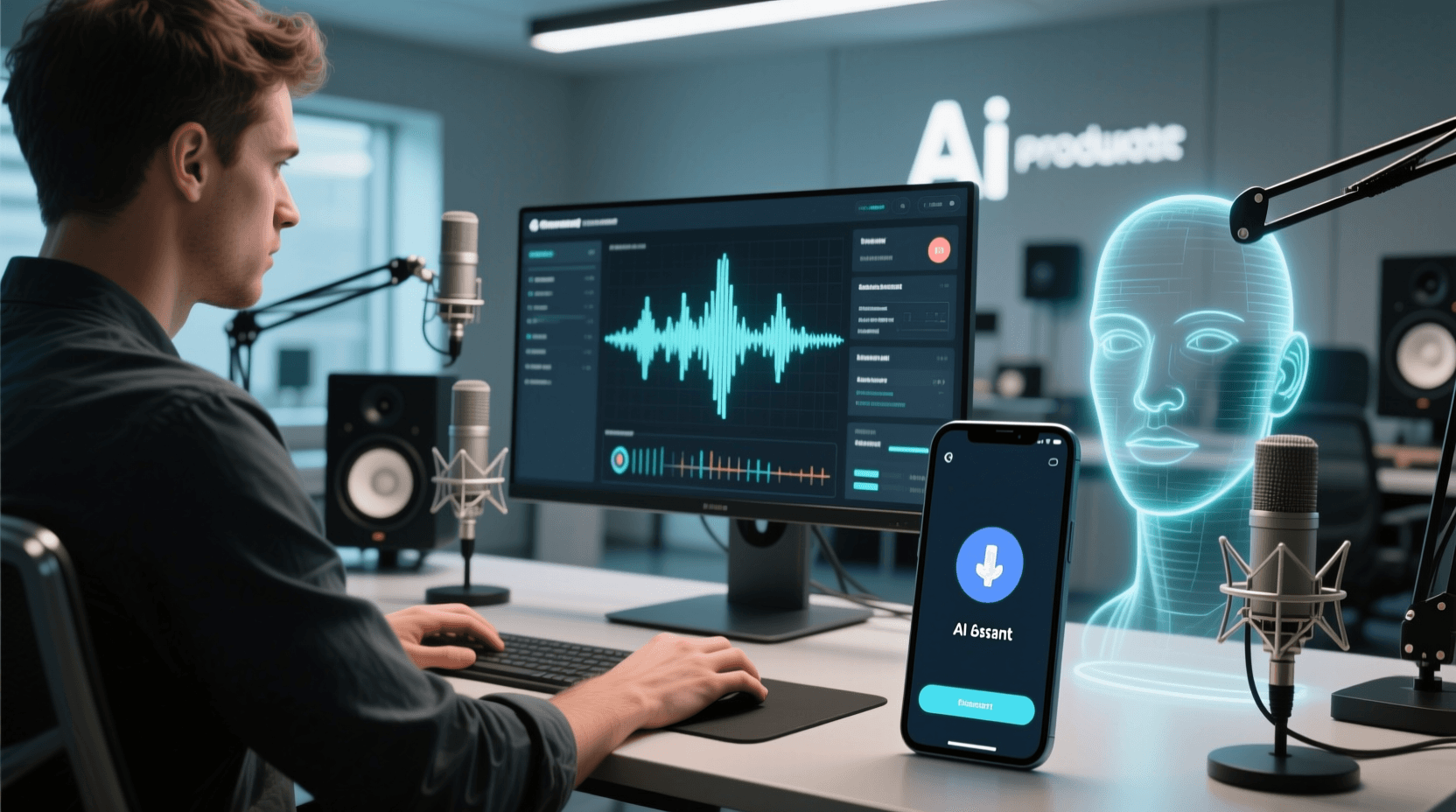
Voice cloning is rapidly shifting from a flashy demo into a standard product feature. That matters far beyond one company’s API roadmap. When a usable clone can be created from a tiny speech sample, the real story is not the novelty of hearing a synthetic version of yourself — it’s the collapse of friction.
For AI builders, reduced friction changes what gets built. For users, it changes what feels normal. And for the broader ecosystem of speech tools, it raises the stakes around trust, consent, and differentiation.
The new baseline for AI voice products
A few years ago, custom voice generation sounded expensive, slow, and specialized. It belonged to studios, research labs, or startups built entirely around synthetic media. Now the market is moving toward a different assumption: every major AI platform will eventually offer speech recognition, text-to-speech, and some form of personalized voice cloning.
That creates a new baseline. If custom voices become table stakes, then simply offering a clone is no longer enough. Developers will start asking harder questions:
- How natural is the output over long conversations?
- Can the voice handle emotion, pacing, interruption, and multilingual speech?
- What rights management exists around identity and consent?
- How fast can it be deployed into apps, games, support systems, and content workflows?
In other words, the center of gravity moves from “wow, it sounds like me” to “can I trust this in production?”
Why this is bigger than creator tools
Most people first think of voice cloning as a creator feature: podcasts, video dubbing, narration, character performances. Those use cases are real, but the more transformative applications are operational.
Businesses increasingly want branded voices for customer support, onboarding, internal training, accessibility, and conversational agents. A founder may want an AI assistant that speaks in their own voice. A media company may want continuity across thousands of clips. A game studio may want scalable character dialogue without re-recording every line.
That’s where low-friction cloning becomes economically meaningful. It turns voice from a one-time recording asset into programmable infrastructure.
This also increases demand for specialized tools. Some users will want celebrity-style entertainment experiences, which is where platforms like Celebrity AI fit naturally into the market with synthetic video and voice experiences centered on recognizable personas. Others will want broad experimentation with character-style TTS, making tools like cvoice.ai appealing for fast, free audio generation across a huge library of voices. And developers building products, not just content, may lean toward platforms like Stick Audio, which emphasizes custom voice generation and API access for deeper integration.
The voice stack is fragmenting into entertainment, experimentation, and infrastructure.
The real product challenge is identity verification
As voice cloning gets easier, the technical feat becomes less important than the governance layer around it. The hardest problem is no longer synthesis. It is authorization.
If a minute of audio is enough to generate a convincing clone, every platform needs a clear answer to a basic question: how do you know the person providing the sample has the right to create that voice?
This is where the next wave of competition will happen. The winners may not be the companies with the most lifelike output, but the ones with the strongest systems for:
- speaker verification
- consent capture
- audit logs
- watermarking or provenance
- abuse reporting and takedowns
- enterprise-grade permissions
Users are not just buying realism anymore. They are buying safety and legitimacy.
Developers should prepare for voice-native apps
For developers, easier cloning means voice should no longer be treated as a bolt-on feature. It’s becoming a native interface layer, especially for AI agents.
A year ago, many AI products shipped as text chat because it was simpler. Going forward, more products will launch with a voice-first assumption: speak to the assistant, hear a branded or personalized response, and maintain continuity across sessions.
That opens up new product design decisions. Should the assistant sound human or clearly synthetic? Should users be able to bring their own voice? Should teams create role-based voices for sales, support, and education? Should every AI workflow have a spoken mode for accessibility?
These are no longer speculative questions. They are roadmap questions.
Trust will define adoption
There’s an irony in the voice-cloning boom: the better the technology gets, the more important restraint becomes. A tool that can generate a convincing voice in seconds is powerful, but power without visible safeguards creates hesitation. Consumers worry about scams. Brands worry about liability. Platforms worry about misuse at scale.
That means the most successful voice tools will likely be the ones that make boundaries obvious. Clear labeling, explicit consent flows, and transparent voice ownership policies will become product advantages, not compliance burdens.
The market is heading toward a world where synthetic speech is everywhere — in apps, support channels, creator workflows, games, and digital companions. The question is no longer whether AI can sound like a person. It can. The question is which companies can make that capability useful without making it reckless.
For AI tool users and builders, that is the shift to watch. Voice cloning is becoming ordinary. The companies that win will be the ones that make ordinary feel trustworthy.