What Germany’s AI Image Ruling Could Change for Creators, Startups, and Design Tools
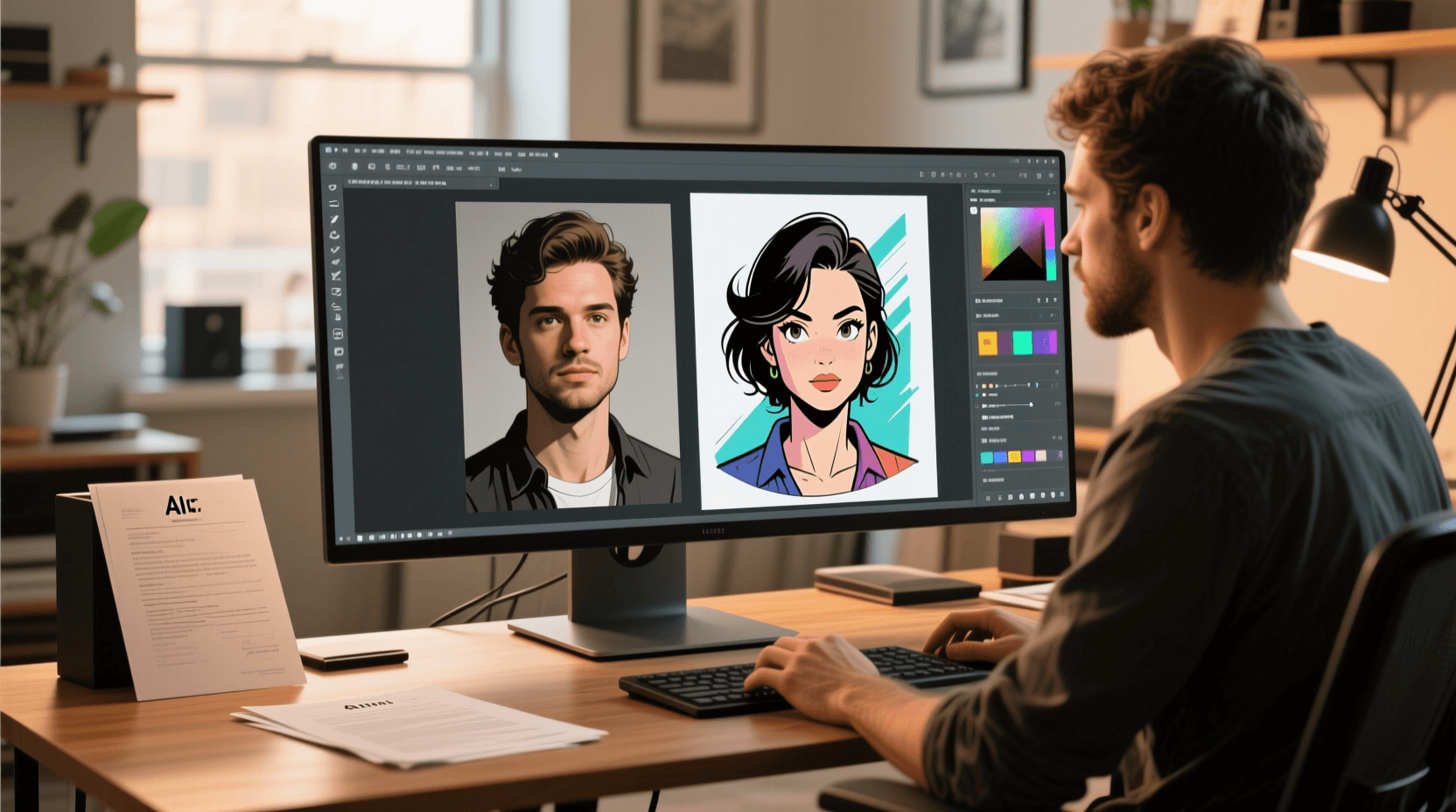
A German court decision on AI-generated comic-style images may end up being more important for product teams than for lawyers. The headline legal question is about copyright, but the practical takeaway is broader: courts are starting to separate style transformation from direct copying in ways that could shape how AI image tools are built, marketed, and used.
For AI users, that matters because the next generation of creative apps will increasingly depend on this distinction. For developers, it creates both an opportunity and a warning: transformation is not a free pass, but products that clearly help users create something meaningfully new may be on firmer ground than tools that merely reproduce protected works with a filter on top.
The real issue isn’t “AI art” — it’s distance from the source
The most useful way to think about this ruling is not as a culture-war moment over AI creativity. It’s a product design signal. Courts appear willing to ask a practical question: did the output reproduce the protected expression of the original work, or did it mainly reuse a general motif, idea, or subject matter while changing the visual expression?
That distinction is where many AI image products will live or die.
If your tool encourages users to upload an existing image and generate something substantially different in composition, mood, rendering, and purpose, that looks very different from a system designed to preserve the original’s expressive choices while swapping surface aesthetics. In other words, “turn this portrait into a comic” may be treated differently from “make this image look identical, just in another style.”
This is especially relevant for consumer-friendly tools that promise fast visual reinvention. A product like Image to Image AI sits right in the middle of this shift: users want to restyle photos, sketches, and concepts quickly, but the legal and commercial value will increasingly depend on how much true transformation the system enables.
Why this could be good news for AI tool builders
For startups, the ruling points toward a more defensible product strategy: build for creative divergence, not imitation.
That means emphasizing workflows such as:
- turning rough sketches into polished scenes
- converting portraits into stylized illustrations with new composition choices
- generating marketing visuals inspired by a concept rather than a specific copyrighted image
- helping users remix their own source materials into new assets
This is one reason lightweight tools with clear user intent may benefit. A playful app like Caricature, which transforms a user’s own photo into an exaggerated portrait, fits a use case that feels intuitively transformative to consumers. It is not about replacing the original photo in the market; it is about creating a new, humorous output for sharing and self-expression.
Likewise, tools such as Photostock - Free AI Image Generator may become even more attractive to marketers and publishers who want commercially usable visuals without navigating the gray zone of editing third-party copyrighted photos. If businesses can generate royalty-free images from scratch, they reduce legal uncertainty while speeding up content production.
But don’t mistake this for blanket permission
Developers should resist the temptation to oversell this kind of ruling as proof that “AI transformations are legal now.” That would be a mistake.
Copyright is still highly fact-specific. Different countries apply different tests. Judges may look at market substitution, recognizability, the amount of protected expression retained, and whether the output competes with the original. There is also a separate issue that many founders overlook: even if an output avoids copyright infringement, a product can still create risk through misleading marketing, weak moderation, or encouraging users to mimic living artists or licensed franchises.
The safest lesson is narrower and more useful: products should be designed to maximize user-authored change and minimize one-click replication of someone else’s protected work.
That has interface implications. AI companies should consider:
- prompts that steer toward reinterpretation rather than duplication
- warnings when users upload likely copyrighted material
- controls that alter composition, lighting, pose, and context instead of just texture
- audit logs showing how outputs were transformed
- commercial-use guidance written in plain English
A new competitive advantage: legal UX
One underappreciated trend in AI is that legal clarity is becoming part of user experience. The winners may not just be the models with the best output quality, but the platforms that help users understand what they can safely do.
For creators, agencies, and ecommerce teams, confidence matters. If one image tool offers beautiful results but vague rights, while another offers strong transformation features plus clear usage guidance, many professionals will choose the second option.
This opens a lane for directory-listed tools and smaller builders alike. The market increasingly rewards products that combine speed, creativity, and practical compliance. In that environment, image generation is no longer just a model problem. It is a workflow problem, a policy problem, and a trust problem.
The bigger picture for AI creativity
The German ruling suggests a future where AI-assisted creation is judged less by whether a machine touched the process and more by whether the result stands apart from the original work in meaningful ways.
That is a healthier direction than simplistic “AI good” or “AI bad” framing. It supports experimentation without automatically erasing creators’ rights. And it gives developers a roadmap: build tools that help people create new expression, not shortcuts for near-copying old expression.
For users, that means the most valuable AI image tools may be the ones that do more than apply a style. They help you move from source material to something with its own purpose, audience, and identity. If courts continue in that direction, the next wave of AI design products will be shaped as much by transformation depth as by generation quality.