What Meta’s Business AI Surge Means for the Future of AI-Powered Marketing
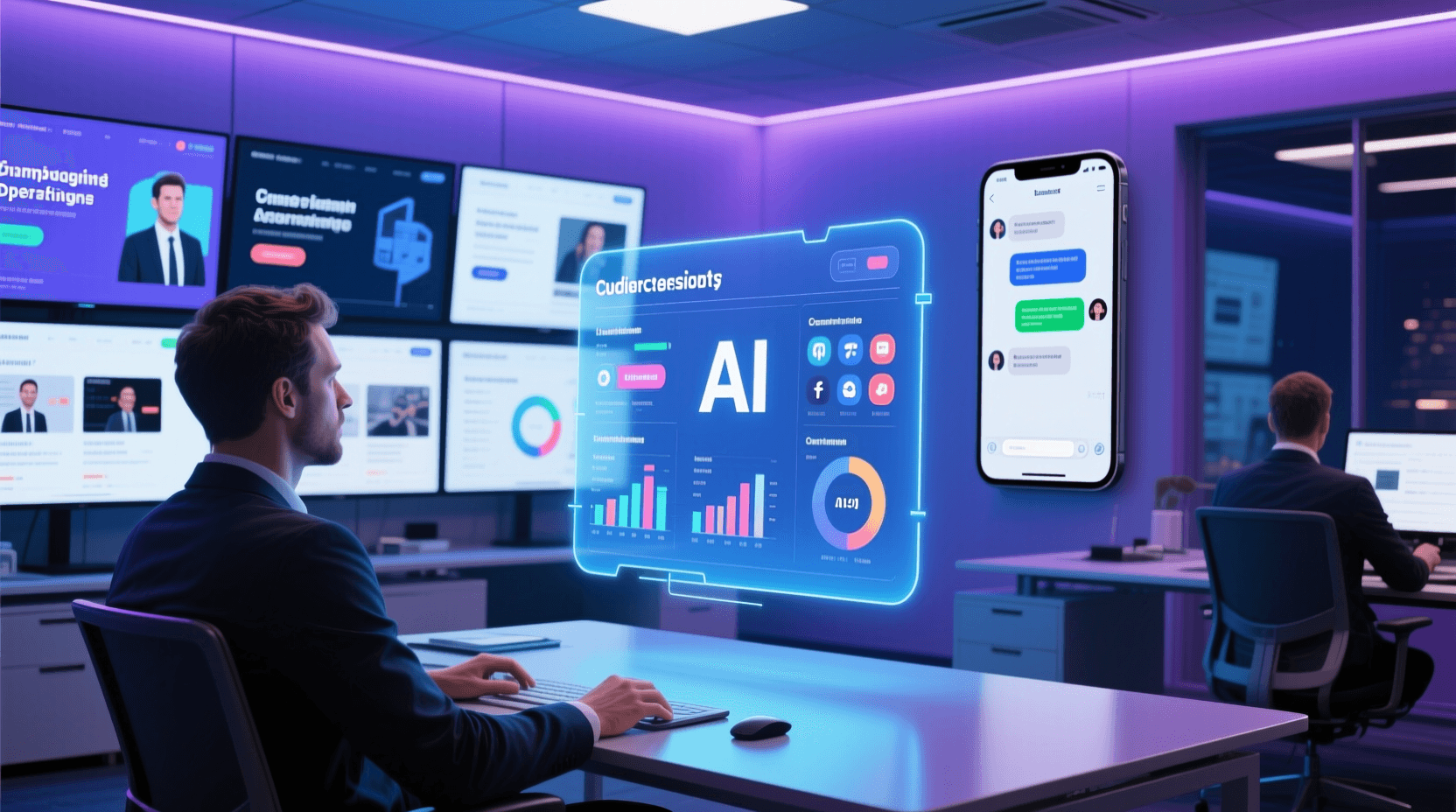
Meta’s latest business AI milestone is less interesting as a vanity metric than as a signal: conversational AI is becoming part of the default operating system for digital commerce.
When a platform at Meta’s scale says businesses are using AI conversations at massive volume, the real story is not just adoption. It’s workflow replacement. Tasks that used to require a media buyer, support rep, copywriter, and analyst are increasingly being compressed into AI-assisted loops that run inside the platforms where customers already spend time.
For AI tool users and developers, that changes the competitive landscape in a big way.
The interface is shifting from dashboards to dialogue
For years, marketing software competed on dashboards: more charts, cleaner attribution views, better campaign controls. But business users don’t wake up wanting a dashboard. They want answers, actions, and outcomes.
That’s why conversational AI matters. It turns ad ops and customer engagement into a promptable experience. Instead of digging through campaign settings, a marketer can ask what’s underperforming, request new creative variants, or launch a test audience in plain language.
This is a subtle but profound shift. The winning products in AI marketing may not be the ones with the most features. They may be the ones that reduce the number of decisions a human has to make before value appears.
That’s also why tools like Admanage AI are well-positioned. Speed is no longer a nice-to-have in paid acquisition. If AI can help teams launch across Meta, TikTok, Pinterest, Google, YouTube, Snapchat, and more from one workflow, it addresses the real bottleneck: execution drag. In a world where platforms themselves are becoming conversational, external tools need to be even better at collapsing complexity.
The real moat is no longer access to AI
One of the biggest misconceptions in the AI tool market is that access to generative models is itself defensible. It isn’t. Foundation models are increasingly available through APIs, open-source alternatives, and embedded platform features.
What matters now is context.
The next generation of marketing AI tools will win based on the quality of their integrations, the specificity of their recommendations, and the trustworthiness of their automation. A generic assistant can draft ad copy. A connected system can tell you why a campaign is stalling, which audience is fatiguing, and what budget shift is most likely to improve ROAS.
That is where products like Adswize fit into the stack. Direct connections to ad accounts matter because they turn AI from a content toy into an operating tool. Analysis in seconds is valuable not because it’s fast, but because it shortens the loop between signal and action. In performance marketing, delayed insight is often equivalent to wasted spend.
For developers building in this space, this should be the takeaway: don’t build another thin wrapper around text generation. Build systems that understand campaign state, business goals, and channel-specific constraints.
Platform-native AI will help adoption — and squeeze margins
There’s a second-order effect here that many startups should take seriously. As Meta and other major platforms normalize AI-assisted business workflows, they educate the market for everyone else. That’s good news. Buyers become more comfortable delegating campaign tasks to AI, and the perceived risk of automation drops.
But platform-native AI also creates pricing pressure. If basic creative generation, targeting suggestions, and customer messaging become standard inside major ad ecosystems, standalone tools can’t rely on simple convenience as their value proposition.
They’ll need to offer one of three things:
- Cross-platform orchestration
- Deeper analytics than the platform provides
- Outcome-based automation tied to profit, not just engagement
That’s why Didoo AI is an interesting example of where the market is headed. Turning a link into Meta ads is useful, but the more important promise is continuous optimization around profitable buyers. That language points toward the future: AI tools will increasingly be judged not by how much work they automate, but by whether they can automate toward business results.
Expect AI agents to merge support, sales, and media buying
The old org chart separated customer support, sales enablement, and paid media. AI does not respect those boundaries.
A business conversation can begin as product discovery, turn into objection handling, and end with a purchase recommendation or retargeting trigger. The systems that manage those touchpoints are starting to converge. This creates a new opportunity for developers: tools that connect conversational intent data with ad strategy and lifecycle marketing.
Imagine an AI stack that notices recurring pre-purchase questions in business chat, generates new ad creative to answer those objections, tests the messaging, and reallocates spend automatically based on conversion quality. That’s not science fiction anymore. It’s the logical endpoint of conversational business AI plus ad automation.
What AI tool users should do next
If you’re a marketer or operator, this is the moment to audit your stack. Ask a simple question: which parts of your workflow still require manual interpretation when they should be automated?
The best AI tools are not replacing strategy. They are replacing friction.
Look for products that do three things well: connect directly to your real data, act across multiple channels, and optimize for outcomes you actually care about. For many teams, that means combining execution tools like Admanage AI, analytics layers like Adswize, and creative-to-campaign automation like Didoo AI.
Meta’s momentum shows that business AI is no longer experimental. The bigger question now is who owns the workflow around it. Platforms will own more of the native interaction layer, but independent AI tools still have a major opening if they can become the intelligence layer that sits above fragmented channels.
The next battle in AI marketing won’t be about who has AI. It will be about who turns AI into measurable business leverage fastest.