What Microsoft’s Build 2026 Push Means for the Next Wave of AI Workflows
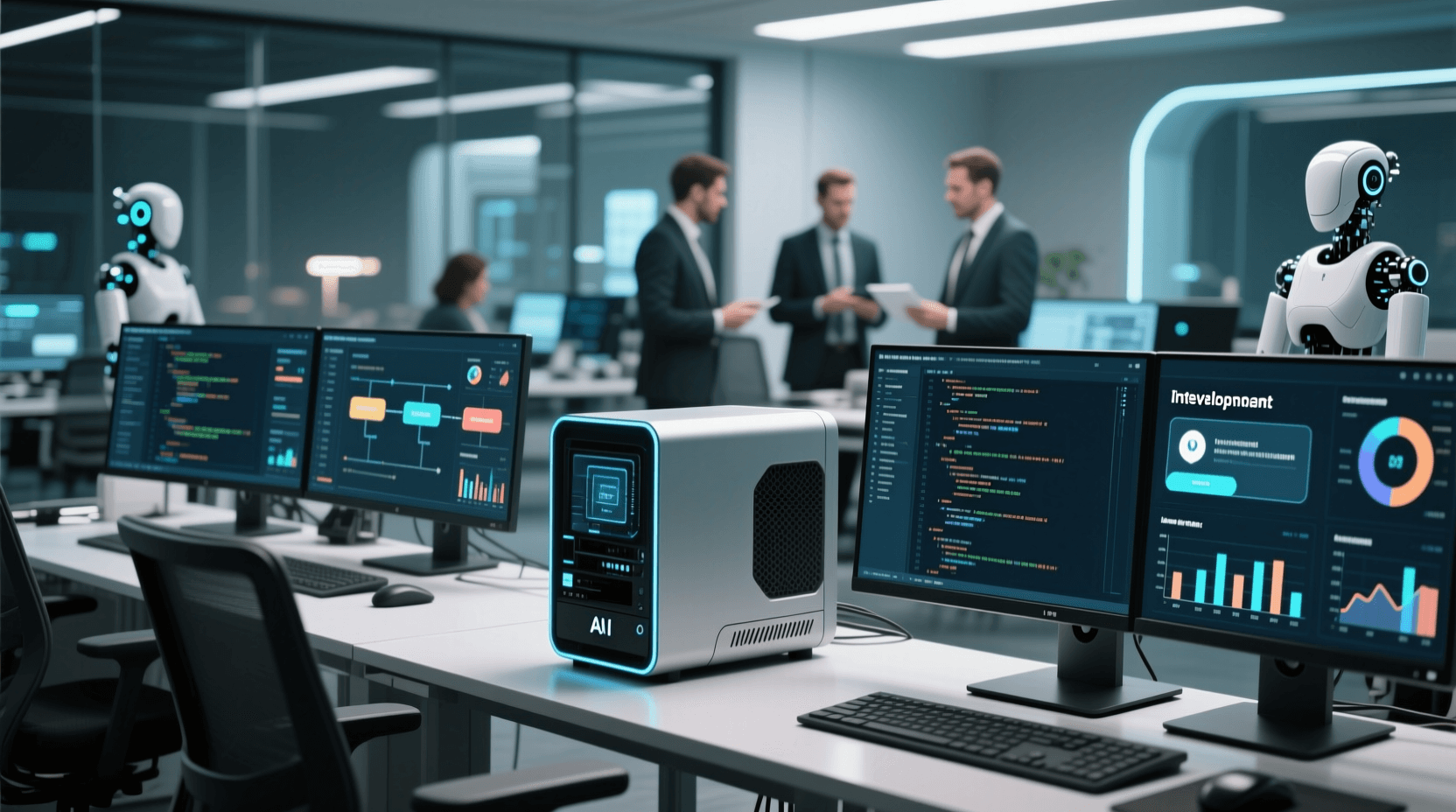
Microsoft’s latest Build event signals something bigger than a product refresh cycle. The real story is that AI is moving from being a cloud-only feature into a layered operating model: local devices for fast inference, enterprise copilots for workflow automation, and platform services that connect everything together.
For AI tool users and developers, that shift matters more than any single announcement. We’re watching the stack mature in a way that could change how teams buy, build, and govern AI over the next two years.
The new battleground is hybrid AI, not just bigger models
For the last couple of years, the industry conversation was dominated by model size, benchmark scores, and API pricing. That era isn’t over, but it’s no longer the whole game. Microsoft’s direction suggests the market is now competing on where AI runs, how quickly it responds, and how deeply it integrates into daily work.
The emergence of AI-focused developer hardware is especially important here. Local AI development machines are not just niche gadgets for enthusiasts. They point to a future where developers routinely test smaller models, agents, retrieval systems, and multimodal workflows on-device before pushing production workloads to the cloud.
That has practical implications:
- Lower latency for prototyping
- Better privacy for sensitive data experiments
- Reduced cloud costs during development
- More pressure on software vendors to support hybrid deployment
In other words, AI development is starting to look more like modern app development: local-first for iteration, cloud-scale for distribution.
Always-on assistants will force a redesign of software UX
One of the most meaningful trends coming out of Microsoft’s ecosystem is the idea of AI becoming ambient rather than explicitly invoked. Instead of opening a chatbot window and typing a request, users will increasingly expect assistance to be available across documents, meetings, operating systems, and business applications.
That changes the user experience model for software companies. If AI is always available, then the best products won’t simply “add a copilot.” They’ll redesign workflows around intent detection, context retention, and proactive execution.
This is where many teams will struggle. It’s easy to bolt on text generation. It’s much harder to build systems that know when to intervene, what context to use, and how to stay useful without becoming intrusive.
For organizations trying to make sense of this transition, resources like MasteringAI are increasingly valuable. The winners in this next phase won’t be the teams that experiment the most loudly; they’ll be the ones that can turn AI from scattered pilots into durable operating processes.
Enterprise AI is shifting from chat to action
The biggest commercial opportunity is no longer simple question-answering. It’s action-taking AI: systems that can summarize, route, classify, generate, approve, trigger, and monitor work across departments.
That means the value of AI is moving closer to automation, analytics, and orchestration. Enterprises don’t just want an assistant that sounds smart. They want one that reduces cycle time, improves consistency, and creates measurable business outcomes.
This is why platforms that combine AI with workflow and analytics capabilities are becoming more strategic. Tools like Saxon AI Assistant reflect where the enterprise market is heading: toward AI that is embedded in operations, not isolated in a demo environment. The future enterprise assistant is less a chatbot and more a connected execution layer.
Developers should take note. If you’re building AI products today, your roadmap should include:
- Permissions and role-aware actions
- Integrations with business systems
- Auditability and traceability
- Human-in-the-loop checkpoints
- Monitoring for output quality and business impact
Those are no longer “enterprise extras.” They are core product requirements.
Smaller, local, and specialized models are about to get more attention
A side effect of Microsoft’s broader strategy is that it validates a more diverse model ecosystem. Not every task needs a frontier model in the cloud. Many workloads are better served by smaller, fine-tuned, or on-device models that are cheaper and easier to control.
That’s good news for developers building vertical AI tools. If the infrastructure and hardware layer improves, specialized products for legal review, sales prep, support triage, internal search, and compliance automation become more viable.
The market may finally reward precision over spectacle. Users care less about whether a model can write poetry and more about whether it can reliably complete a task inside their actual workflow.
Tool discovery is becoming a competitive advantage
As major platforms expand their AI offerings, one new problem emerges: choice overload. Teams now have to evaluate native platform features, third-party tools, APIs, model providers, and agent frameworks all at once.
That makes AI discovery and ongoing market awareness surprisingly important. A resource like Latest AI Updates becomes useful not just for enthusiasts, but for product leaders and technical buyers who need to track fast-moving changes without rebuilding their strategy every week.
In this environment, staying informed is not optional. Platform shifts now happen quickly enough that a purchasing decision made six months ago can already look outdated.
The real takeaway: AI strategy is becoming infrastructure strategy
The deeper meaning of Build 2026 is that AI is no longer a feature category sitting on top of software. It is becoming part of the infrastructure layer of work itself: devices, operating systems, productivity apps, developer tooling, and enterprise process design.
For users, that means AI will feel less like a destination and more like an environment. For developers, it means the bar is rising. You’re not just designing prompts anymore. You’re designing systems that span local compute, cloud services, enterprise data, and human oversight.
The companies that win in this next phase will be the ones that understand AI as workflow architecture, not just model access. Microsoft’s announcements reinforce that direction. The bigger opportunity now is not asking what AI can say, but what AI can reliably do.