What Samsung’s Bonus Battle Signals for the Future of AI Talent and Worker Leverage
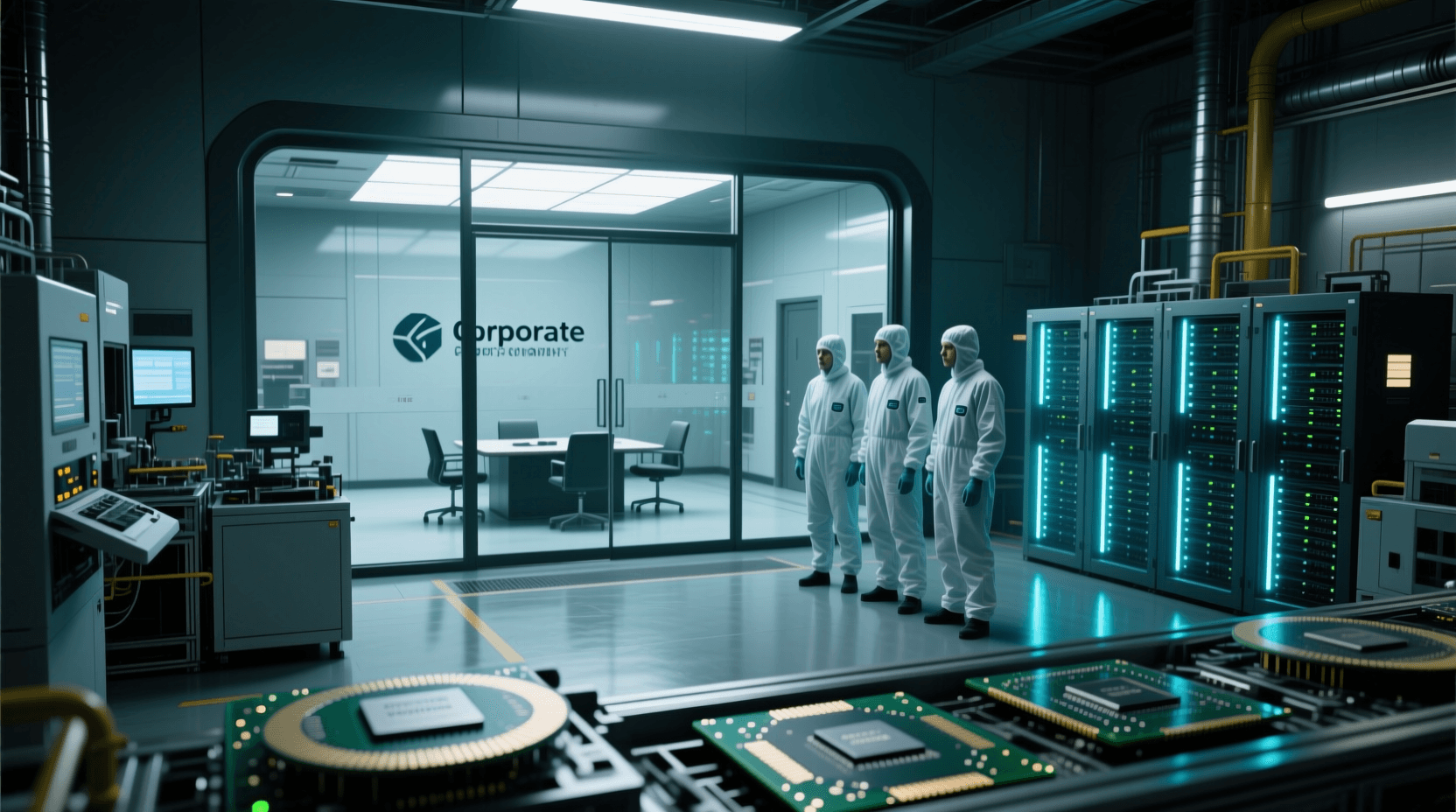
Samsung’s reported semiconductor bonus deal is about more than one company paying top employees more money. It’s a preview of what happens when the people closest to critical AI infrastructure realize just how much leverage they have.
In the AI economy, we tend to focus on flashy model launches, startup valuations, and GPU shortages. But underneath all of that is a more basic truth: AI runs on supply chains, fabrication expertise, memory, packaging, yield optimization, and the human labor needed to keep those systems moving. When workers in a strategically important hardware division push back on compensation structures, every AI builder should pay attention.
The AI stack is becoming a labor story
For the last two years, the dominant AI narrative has been compute scarcity. That framing is incomplete. Compute scarcity is also talent scarcity.
The people who design, manufacture, test, and scale memory chips are no longer hidden deep in the industrial background. They are now part of the competitive edge. If advanced memory and semiconductor output are essential to training and serving modern AI systems, then the workers who make that possible are no longer just employees in a legacy business unit. They are strategic infrastructure.
That changes compensation dynamics. It also changes negotiations.
A big lesson here is that AI’s bottlenecks are not only technical. They are organizational. If your business depends on a fragile chain of specialized labor, your compensation model becomes part of your product roadmap whether you like it or not.
Why this matters beyond Samsung
This is not just a story about one electronics giant or one unusually large bonus pool. It points to a broader shift in how value gets distributed across the AI ecosystem.
For years, software captured most of the glamour while hardware and operations absorbed much of the pressure. But AI has started to rebalance that equation. The closer a team is to a true bottleneck, the more bargaining power it can command.
That should influence how startups, enterprise buyers, and tool developers think about risk.
If you are building on top of AI APIs, model providers, or hardware-dependent cloud platforms, your exposure is not just to pricing changes or outages. You are also exposed to labor negotiations, retention battles, and compensation inflation at the infrastructure layer.
In practical terms, that means AI tool builders should stop treating hardware supply as a fixed assumption. It is a variable. And increasingly, it is a human variable.
The new premium: retaining people who can’t be replaced quickly
The most interesting part of this development is not the headline number. It’s what the number implies.
Companies do not stretch compensation frameworks this far unless replacement costs are even higher. In highly specialized semiconductor roles, replacing a team member is not like swapping one generalist software engineer for another. The institutional knowledge is deeper, the ramp time is longer, and the operational consequences of disruption are more severe.
That has a direct parallel in the AI tools market. The more specialized your people are, the less useful generic compensation logic becomes.
Developers building niche infrastructure, model optimization systems, or enterprise AI workflows should take note. If a role is hard to hire for, hard to train for, and tightly linked to revenue continuity, then compensation is no longer just an HR function. It is resilience planning.
And for workers, this moment reinforces the value of understanding your negotiating position. That applies whether you are in a chip fab, an AI startup, or a corporate innovation team facing restructuring. If you are navigating a layoff or trying to understand what fair leverage looks like in a changing market, tools like SimpleSeverance are part of a broader trend toward workers becoming more informed, data-driven negotiators.
AI buyers should expect cost ripple effects
There is also a downstream reality here: higher compensation at critical infrastructure firms does not stay neatly contained.
Eventually, those costs show up somewhere. Sometimes it is in component pricing. Sometimes in enterprise contracts. Sometimes in delayed capacity expansion. Sometimes in margin pressure that pushes companies to seek efficiency elsewhere.
For AI product teams, this means budgeting should get more realistic. The era of assuming that infrastructure costs will smoothly normalize may be overly optimistic. Labor power in key technical sectors could keep parts of the hardware stack expensive for longer than expected.
That creates openings too. Buyers become more price-sensitive when upstream costs rise. Curated savings platforms such as A Deal Sweden AB may seem far removed from semiconductor compensation, but the underlying lesson is similar: in tighter cost environments, smarter purchasing behavior becomes a competitive advantage.
The same principle applies to enterprise display and device rollouts. If your organization is investing in AI-powered retail, operations centers, or digital signage, procurement discipline matters. Providers like displaydetails.com fit into this conversation because every hardware decision now sits inside a broader climate of infrastructure cost scrutiny.
What developers and founders should do now
First, map your hidden dependencies. If your AI product relies on a handful of vendors sitting on scarce talent pools, treat that as strategic risk.
Second, revisit retention before you are forced to. If a team is mission-critical, waiting for a compensation crisis is the expensive path.
Third, diversify where possible. Multi-vendor infrastructure, flexible deployment strategies, and realistic contingency planning are no longer optional for serious AI businesses.
Finally, pay attention to labor signals as closely as you watch benchmark scores. The future of AI will not be shaped only by better models. It will also be shaped by who can keep the people, factories, and supply chains behind those models running.
Samsung’s bonus battle is a reminder that AI’s next major constraint may not be innovation itself. It may be the rising cost of keeping indispensable humans aligned with the systems everyone else depends on.