What Tesla’s Texas Robotaxi Push Signals for the Next Wave of AI Products
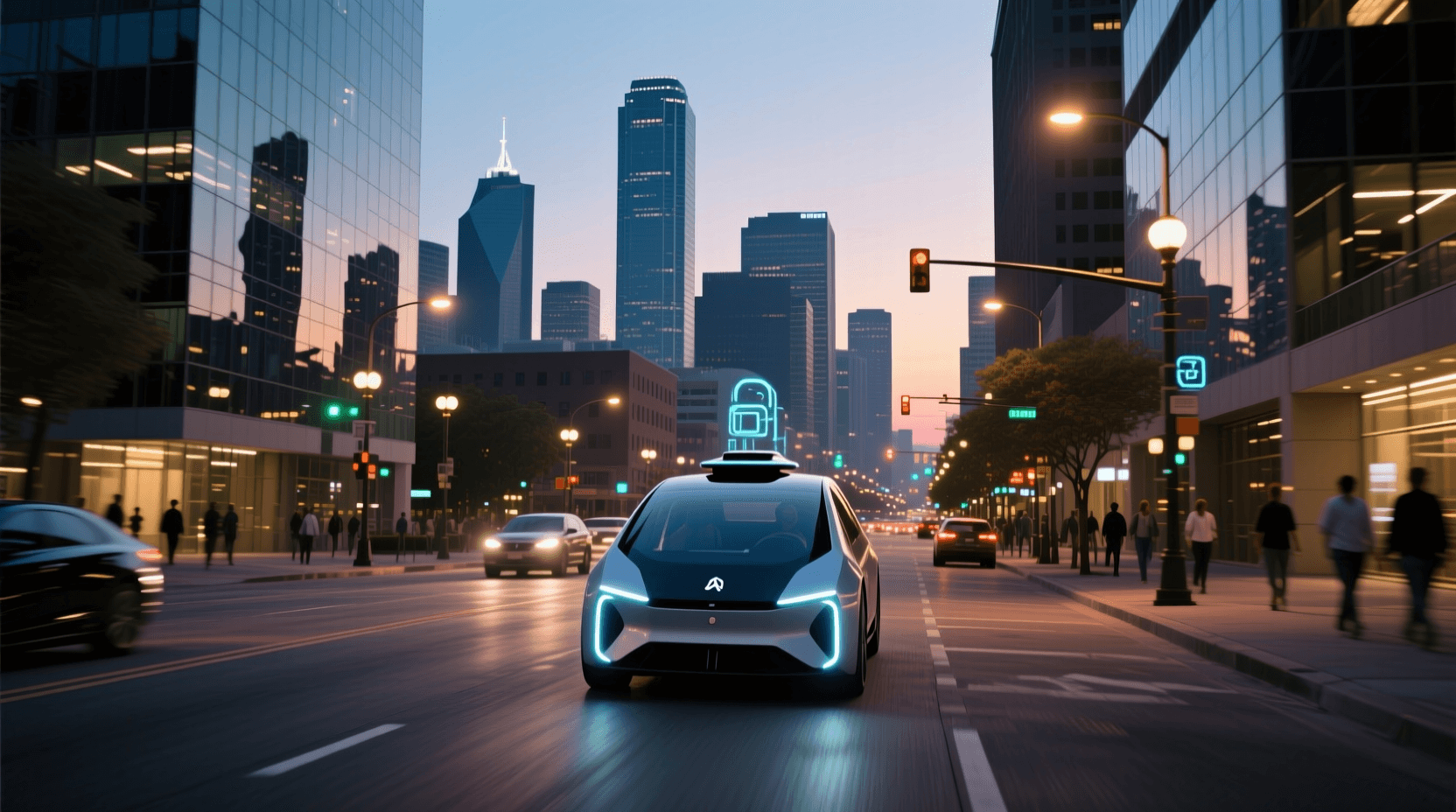
Tesla’s move into Dallas and Houston matters for more than transportation. It’s another sign that AI products are leaving the demo phase and entering the messy, high-stakes world of real operations.
That distinction is important. A chatbot can fail quietly. A video generator can produce a weird frame and nobody gets hurt. But when an autonomous vehicle shows up in a major metro area, AI is no longer just software you open in a browser. It becomes infrastructure. It has to handle edge cases, public trust, regulation, logistics, insurance, and nonstop real-world unpredictability.
For AI builders, this is the real story: the winners of the next cycle won’t just have impressive models. They’ll have systems that survive contact with reality.
AI is shifting from clever outputs to accountable outcomes
For the past two years, much of the AI market has been shaped by spectacle. We’ve had image models that wow, video tools that go viral, and copilots that promise to save everyone hours a week. But robotaxis raise the bar. Nobody cares if the underlying model is elegant if the service is unreliable, geographically limited, or difficult to trust.
That same pressure is coming for every category of AI tool.
Take finance operations. It’s easy to demo extraction from a single invoice PDF. It’s much harder to build a workflow that reliably handles messy email threads, inconsistent vendor formats, portal logins, and audit expectations. That’s why tools like Tailride are worth watching. AI-powered invoice and receipt automation is valuable not because it looks futuristic, but because it removes repetitive operational friction in environments where accuracy matters.
Robotaxis and back-office automation may seem unrelated, but they share the same product lesson: users pay for dependable outcomes, not model sophistication alone.
Texas is becoming a proving ground for applied AI
Dallas and Houston are not symbolic launches. They are practical ones. These are large, car-centric, economically important cities where transportation demand intersects with suburban sprawl, business travel, freight corridors, and varied road conditions. If AI mobility can work consistently there, it strengthens the case that autonomous systems can scale beyond tightly controlled pilot zones.
This matters for developers far outside the auto industry. Texas is increasingly acting as a test market for AI that touches the physical world. Logistics, fleet intelligence, smart energy, industrial automation, and urban mobility all benefit when there is a growing tolerance for AI-assisted infrastructure.
That creates second-order opportunities. As autonomous and electric transport become more visible, marketplaces and digital commerce layers around them become more important too. A platform like EV24.africa points to where this broader market is heading: users want transparent pricing, trusted inventory, and easier access to electric vehicles across fragmented markets. The long-term AI opportunity is not just in making vehicles autonomous, but in simplifying the entire ecosystem around buying, financing, shipping, and managing next-generation transport.
Distribution is becoming more important than novelty
One of the most underrated lessons from robotaxi expansion is that deployment strategy may matter more than raw technical leadership. In AI, many teams still believe the best model automatically wins. Increasingly, that looks false.
The products that break through are the ones that combine decent intelligence with distribution, operational discipline, and a narrow enough use case to build trust. That is true for autonomous vehicles, and it is also true for creative AI.
Consider video generation. The market is crowded, and model quality keeps improving across the board. But what creators and businesses actually need is speed, usability, and repeatable output. Tools like LTX 2.3 AI Video Generator fit that shift well: the value is not just generating flashy clips, but enabling teams to turn text and images into production-ready video fast enough to fit real content workflows.
In other words, AI products are maturing. The question is changing from “Can it generate something impressive?” to “Can it fit into a repeatable business process?”
The next AI moat is operational credibility
Tesla’s expansion also highlights a broader market truth: AI companies are entering an era where credibility compounds. If users believe a system works safely and consistently in one city, one workflow, or one department, adoption gets easier elsewhere. If they don’t, every expansion feels risky.
That means developers should think less like model labs and more like operators. Build monitoring. Build fallback systems. Design for exceptions. Expect regulation. Make the human handoff clean. The companies that do this well will create trust loops that are hard for competitors to copy.
For AI tool users, the takeaway is equally clear. Don’t evaluate products only on benchmark claims or launch-day demos. Ask whether the tool can handle your ugliest edge cases. Ask how it fails. Ask what happens when inputs are incomplete, contradictory, or late. In the coming market, resilience will matter more than raw intelligence.
Why this moment matters beyond Tesla
Tesla entering more Texas cities with robotaxis is not just another product rollout. It marks a transition in how the AI economy will be judged. We are moving from fascination to accountability.
That is good news for serious builders. It rewards companies solving real workflow problems, whether in mobility, finance automation, commerce, or media production. And it should push buyers to become more disciplined about what “AI-powered” actually means.
The next generation of winners won’t just generate. They’ll deliver.