What YouTube’s AI-Powered Feeds Mean for Creators, Discovery, and the Next Content Arms Race
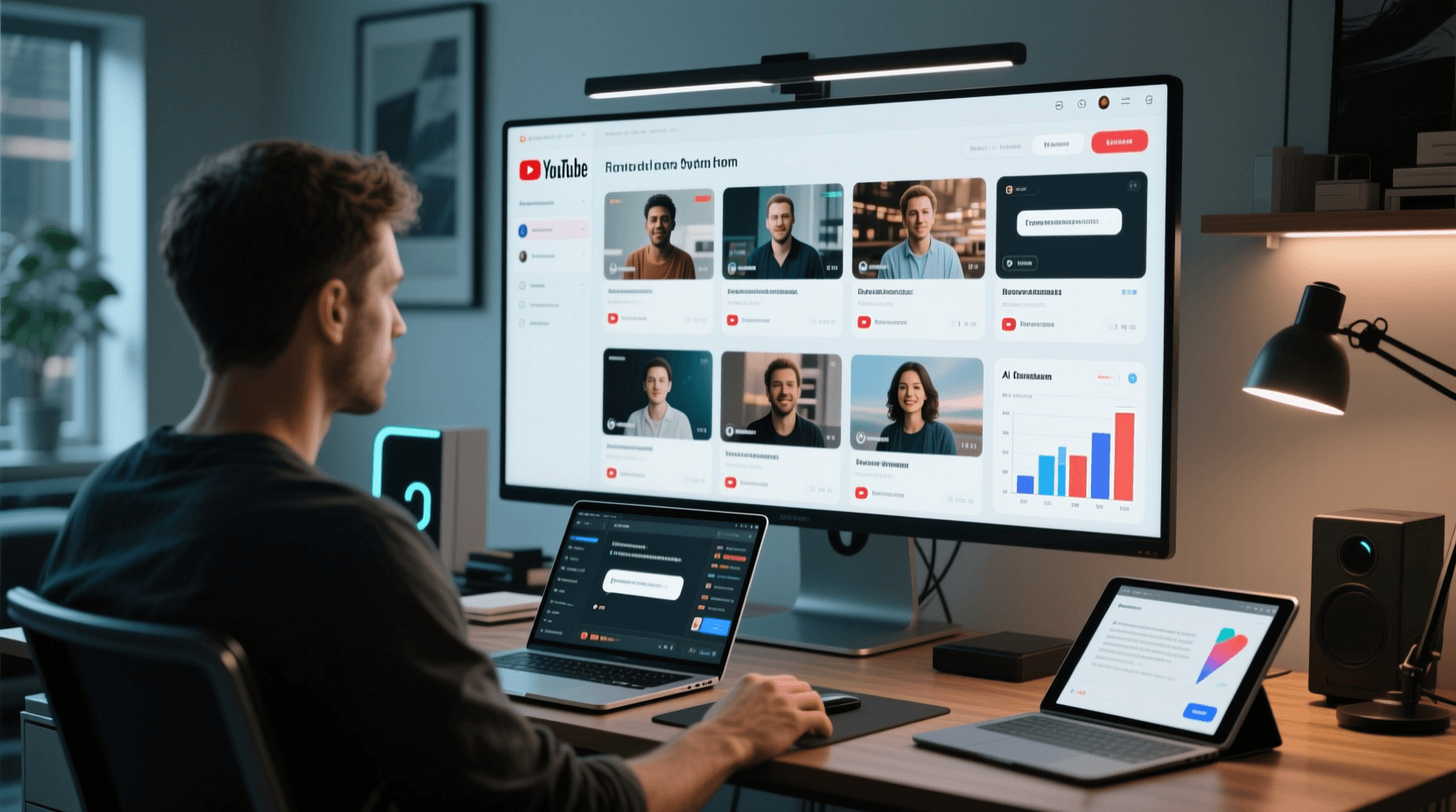
YouTube’s move toward AI-generated custom feeds is more than a convenience feature. It signals a deeper shift in how audiences will discover content, how creators will package it, and how AI tools will compete for attention inside increasingly personalized media environments.
For years, creators have optimized for a recommendation system they could only infer from outcomes: click-through rate, watch time, retention, comments, and topic relevance. But if users can now actively describe the kind of feed they want, discovery becomes less about broad algorithmic guessing and more about matching intent in real time.
That changes the game.
From passive recommendations to intent-driven viewing
Traditional recommendation systems are reactive. They look at what you watched yesterday and try to predict what you might click next. A promptable feed introduces a new layer: explicit audience intent.
That matters because intent is usually much richer than watch history. A person may want “calm startup analysis without hype,” “beginner-friendly Python videos under 10 minutes,” or “cinematic travel vlogs with no talking.” Those are not just categories. They are combinations of mood, format, pacing, and expectations.
For AI tool users, this is a major clue about where content is headed. The winning videos may no longer be the ones that fit the biggest category. They may be the ones that align best with highly specific viewing contexts.
In practical terms, creators and marketers should expect YouTube metadata, scripting, visual packaging, and niche positioning to become even more important. If the platform is translating prompts into feeds, it needs signals to understand which videos belong there.
The new SEO is vibe matching
Search engine optimization used to be about keywords. Social optimization became about hooks. In AI-curated feeds, a third layer is emerging: vibe matching.
That means creators will need to think beyond topic and ask:
- What mood does this video satisfy?
- What level of expertise is it for?
- Is it fast, relaxing, punchy, visual-first, or commentary-heavy?
- Would an AI system know where to place it when a user describes a feeling rather than a subject?
This is where creative tooling becomes strategic, not just convenient. Thumbnail design, format consistency, and rapid testing will matter more because AI-driven feed construction is likely to reward content that is legible both to humans and machines.
A tool like AI Thumbnail fits directly into this shift. If creators are competing inside custom feeds built around specific prompts and moods, thumbnails need to communicate niche relevance instantly. A generic thumbnail may lose to one that clearly signals tone, topic, and audience fit.
AI-generated content will benefit — but only if it feels deliberate
There is an obvious opportunity here for creators using automation. If users can request hyper-specific feeds, then AI-assisted production pipelines become more valuable because they let teams produce more variations for more micro-audiences.
But there is also a trap: low-effort AI content will likely become even easier to ignore.
Promptable feeds should increase demand for precision. Viewers asking for a certain kind of content are effectively pre-qualifying themselves. If they click into a video that feels generic, bloated, or mismatched, they will bounce quickly. In other words, AI can help scale output, but it cannot hide irrelevance.
That makes tools like AITuber especially interesting for creators building faceless channels around tightly defined content niches. The advantage is not just speed. It is the ability to rapidly produce videos tailored to distinct audience intents across YouTube, TikTok, and Reels. The channels that win will not be the ones publishing the most. They will be the ones testing the most precise formats.
Similarly, AI Video Maker points to a future where lightweight video prototyping becomes part of discovery strategy. If creators can quickly generate short visual concepts from text or images, they can test styles, topics, and hooks before committing to larger production cycles. In an AI-personalized feed ecosystem, that kind of fast iteration becomes a competitive advantage.
Developers should pay attention to structured content signals
For developers building AI media tools, YouTube’s direction offers a clear product lesson: unstructured creativity is not enough. Tools that help creators generate assets should also help them generate better signals.
That could mean:
- title and description suggestions aligned to audience intent
- visual templates tied to content mood
- automatic segmentation by viewer level or content style
- metadata enrichment for niche discoverability
- multi-variant testing for thumbnails, intros, and pacing
The platforms are getting better at understanding user requests. Tooling now has to get better at helping creators answer them clearly.
The homepage is becoming programmable
The most important long-term implication may be this: the YouTube homepage is starting to behave less like a fixed recommendation surface and more like a programmable interface.
Once users can shape feeds directly, every creator is effectively competing for placement inside thousands of personalized channels assembled on demand. That favors adaptable creators, modular content strategies, and AI-assisted production systems that can respond quickly to emerging audience patterns.
For users, this could make discovery feel more useful and less random. For creators, it raises the bar. For developers, it opens a new market for tools that help content become more findable in intent-rich environments.
The old question was, “Can the algorithm find my audience?”
The new question is, “Can my content describe itself well enough for AI to place it in the exact feed a viewer just asked for?”
That is a much more interesting challenge — and a much bigger opportunity.