When AI Music Becomes a Mirror: What Self-Generated Listening Says About Creativity
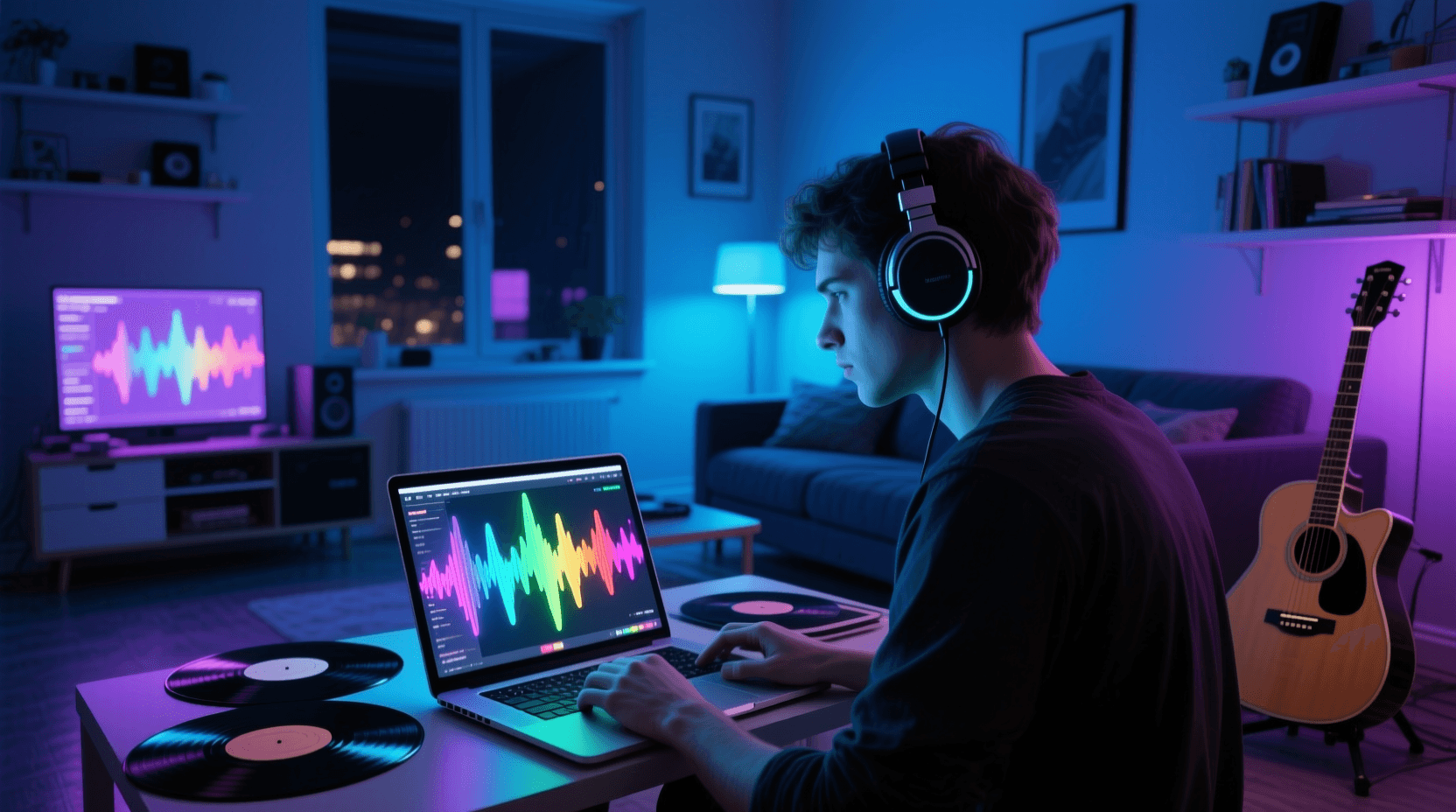
The strangest shift in AI music may not be the quality of the songs. It may be the audience.
We’re entering a phase where some users don’t just make AI music for fun, prototyping, or content production. They primarily listen to music they generated themselves. Not demos. Not experiments. Their actual daily soundtrack.
That matters, because it reveals something bigger than a debate about taste. It points to a new model of media consumption: hyper-personalized entertainment that is less about discovering culture and more about reflecting the self back to the listener.
AI music is moving from creation tool to emotional utility
For years, music software was mostly framed as a production layer. DAWs, plugins, stem splitters, mastering tools, sample packs—these helped people create music that might eventually reach an audience. Generative AI changes the center of gravity. Now the output can be instant, disposable, and tailored to a mood, joke, memory, or niche concept that no traditional artist would ever make.
That’s why tools like Song AI and GenSong are more significant than they first appear. On the surface, they’re song generators. In practice, they are on-demand emotional media engines. A user can create a breakup anthem about their actual week, a parody country track about office politics, or a cinematic pop song for a D&D campaign recap. The appeal is not just convenience. It’s relevance.
Traditional streaming gives you a giant catalog and asks you to search. AI music asks a different question: what if the catalog started with you?
The rise of “me-media”
Social platforms already trained people to consume personalized feeds. AI pushes that logic one step further. Instead of an algorithm selecting from existing content, the system can generate new content that matches your identity, preferences, and current mood in real time.
That creates what I’d call “me-media”: content optimized not for broad appeal, but for maximum personal resonance.
In that world, the value of a song is no longer tied to whether it advances a genre, introduces a new artistic voice, or connects strangers through shared culture. Its value may simply be that it feels uncannily specific to one person. If a generated track references your in-jokes, your preferred tempo, your favorite vocal tone, and the exact emotional blend you wanted at 11:42 p.m., it can outperform a professionally released song on one metric: immediate personal satisfaction.
For users, that is intoxicating. For developers, it is a product signal.
Why this is exciting—and a little dangerous
There is a genuinely empowering side to this trend. AI music lowers the barrier to creative participation. People who never wrote lyrics, arranged melodies, or recorded vocals can suddenly explore musical ideas. That’s not trivial. It can be playful, therapeutic, and creatively liberating.
It also opens practical workflows. Indie creators need royalty-conscious background tracks. Marketers need fast concept songs. YouTubers and TikTok creators want custom audio that won’t trigger licensing headaches. That’s where tools like GenSong, with its royalty-free positioning, become especially useful.
But there’s also a cultural risk when generation replaces discovery.
Music has historically been a bridge to other people’s perspectives. You listened to a song because an artist had something to say, or because a scene, city, subculture, or era produced a sound larger than any one listener. If AI music consumption becomes mostly self-referential, we may get more content but less shared culture.
The problem isn’t that people enjoy their own generated songs. The problem is when the feedback loop closes completely: prompt, generate, listen, repeat—without friction, surprise, or outside influence. That can flatten taste instead of expanding it.
The next competitive edge won’t be generation alone
For AI music startups, generating songs is quickly becoming table stakes. The more interesting product question is what happens after the song is made.
Developers should pay attention to tools that help users reflect, edit, and improve rather than just endlessly produce. For example, Song Lyrics Review points toward a more thoughtful layer in the stack: analysis. If users can examine themes, emotional consistency, and lyrical devices, they move from passive prompting to active authorship.
That distinction matters. The healthiest future for AI music is not one where users become infinite consumers of personalized output. It’s one where they become better collaborators with the machine.
In other words, the winning AI music products may not be the ones that generate the most songs. They may be the ones that help people develop taste.
What AI tool users should do next
If you use AI music tools regularly, it’s worth asking a simple question: are you using them to explore creativity, or to avoid discovery?
A good workflow might look like this:
- use Song AI to rapidly prototype a musical idea
- use Song Lyrics Review to refine the writing and understand what the lyrics are actually communicating
- use GenSong to create polished, usable tracks for content or distribution
- then compare your results against human-made music you admire
That last step is crucial. AI should expand your creative world, not shrink it into a personalized echo chamber.
The real story is not “AI slop”
It’s easy to dismiss self-generated listening as narcissism or low standards. That misses the point. What’s happening is that AI is turning media into a responsive system, one that can satisfy micro-needs with incredible speed. People are not only consuming songs; they are consuming versions of themselves.
That is powerful, and product builders should take it seriously.
But if AI music becomes only a mirror, it will eventually become boring. The most enduring tools will be the ones that balance personalization with challenge, speed with craft, and self-expression with genuine artistic discovery.
The future of AI music should not just help people hear what they already are. It should help them hear something they didn’t know they could become.