Why Adaptive Voice AI Changes the Rules for Agents, Avatars, and User Trust
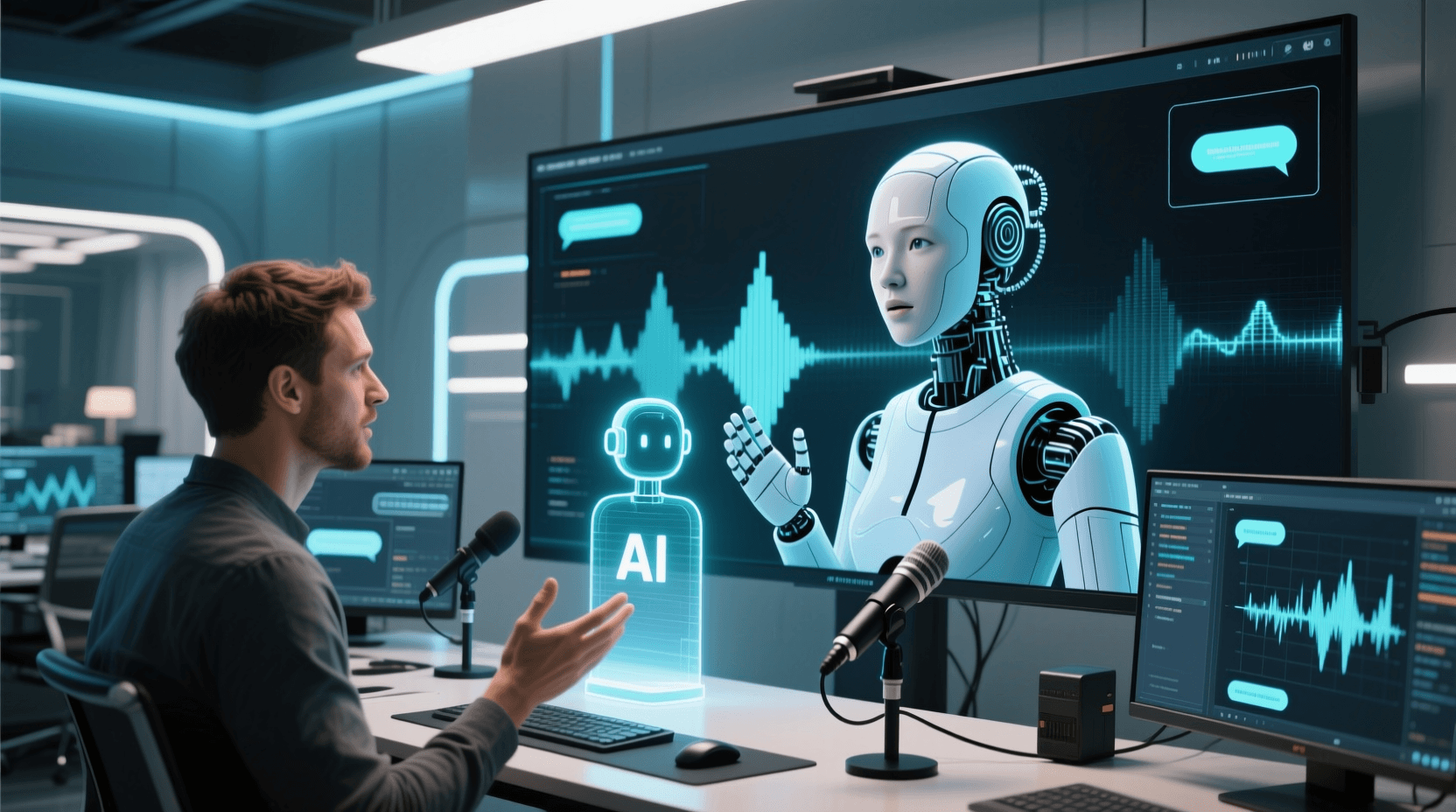
Voice AI is moving past the era of “good enough” speech output. The next battleground is responsiveness: can a system adjust not just what it says, but how it says it, in the moment, based on the flow of a real conversation?
That shift matters more than many product teams realize. For years, text-to-speech has been treated like the final rendering layer in an AI stack: generate text, send it to a voice model, play audio. But voice-first products don’t live or die on text quality alone. They succeed or fail on timing, emotional fit, interruption handling, pacing, and whether the system sounds like it actually understands the rhythm of a human exchange.
The real innovation is not “better voice” — it’s tighter feedback
A closed-loop voice model points to a bigger design philosophy in AI: stop treating speech as a one-way output channel.
In practical terms, this means voice systems are beginning to listen to the full context of an interaction, not just the written transcript. That includes pauses, hesitations, energy shifts, overlap, emphasis, and conversational momentum. For users, this can make an AI assistant feel less like a screen reader and more like a participant.
For developers, the implication is huge. If your product still pipes LLM text into a static TTS layer, you may already be building on an outdated interaction model. The future voice stack will be multimodal from the start, with speech generation tied directly to live conversational signals.
This is where tools like RealTime TTS become increasingly relevant. Real-time speech generation is no longer just a nice UX enhancement; it is becoming core infrastructure for assistants, support bots, AI tutors, and creator tools that need low-latency, natural delivery.
Why this matters for AI agent builders
Most AI agents today are optimized for correctness and task completion. But voice agents are judged by a different standard: do they feel interruptible, attentive, and socially competent?
That sounds soft, but it has hard business consequences. A customer support agent that responds too slowly, speaks in a flat cadence, or misses the user’s frustration will drive abandonment even if its answers are factually correct. A sales assistant with robotic timing can reduce trust. A wellness coach with unnatural pacing can break immersion.
Adaptive voice models could improve three things developers care about:
- Turn-taking: knowing when to speak, stop, or yield
- Prosody matching: adjusting tone and pacing to the user’s conversational style
- Recovery: handling interruptions and restarts without sounding broken
This creates a new competitive gap. Teams that design around conversational dynamics will outperform teams still thinking in request-response text blocks.
The avatar economy will benefit even more than chatbots
The biggest winners may not be enterprise voice bots. They may be avatar products, AI presenters, virtual influencers, and character-based experiences.
Once voice becomes more adaptive, visual AI characters become more believable too. Lip sync alone is no longer enough; the speech pattern has to match the emotional and temporal logic of the face on screen. That’s why avatar creators should pay close attention to advances in real-time voice modeling.
If you’re building talking video experiences, Infinite Talk AI and Infinite Talk AI point to where this category is headed: audio-driven video, precise lip sync, and long-form character output. As voice models become more context-aware, these avatar systems can evolve from animated presenters into interactive personalities that react more naturally to audience input.
That opens up new use cases in education, training, entertainment, and digital companionship. It also raises the bar. Users will expect avatars to sound emotionally coherent, not just visually polished.
Better voice UX will also create new trust problems
There is a less comfortable side to this progress: the more naturally an AI adapts to how people speak, the more persuasive and socially convincing it becomes.
That creates obvious upside for accessibility, customer experience, and engagement. But it also increases the risks around manipulation, impersonation, and false intimacy. A voice system that mirrors your cadence and emotional energy can feel unusually personal. Product teams should not mistake that for neutral UX.
Developers need to build safeguards now, not later:
- clear disclosure when users are speaking with AI
- visible controls for voice style and memory
- consent boundaries for voice adaptation and cloning
- audit logs for sensitive interactions
The market is rewarding realism, but trust will become the more durable differentiator.
What AI tool users should do next
If you use AI tools for content, support, education, or media production, this is the moment to rethink your stack.
Ask harder questions of any voice product:
- Can it respond in real time, or does it just stream pre-shaped output?
- Does it adapt to conversational context, or only read text naturally?
- Can it support interruption-heavy workflows like tutoring, coaching, or live assistance?
- Will it integrate cleanly with avatar, video, or agent frameworks?
The old benchmark was “does this sound human?” The new benchmark is “does this behave conversationally under pressure?”
That distinction will define the next generation of AI interfaces.
The bigger takeaway
Voice AI is becoming less like narration software and more like interaction infrastructure. That is a foundational shift.
For users, it means more fluid assistants and more believable digital characters. For developers, it means speech can no longer be an afterthought bolted onto an LLM workflow. And for the broader AI market, it signals that the winners in voice won’t just have the prettiest voices — they’ll have the best conversational control loops.
In the next year, expect a growing divide between products that merely speak and products that genuinely participate. That’s where the real value will be created.