Why Agent Infrastructure Is Becoming the Real AI Product
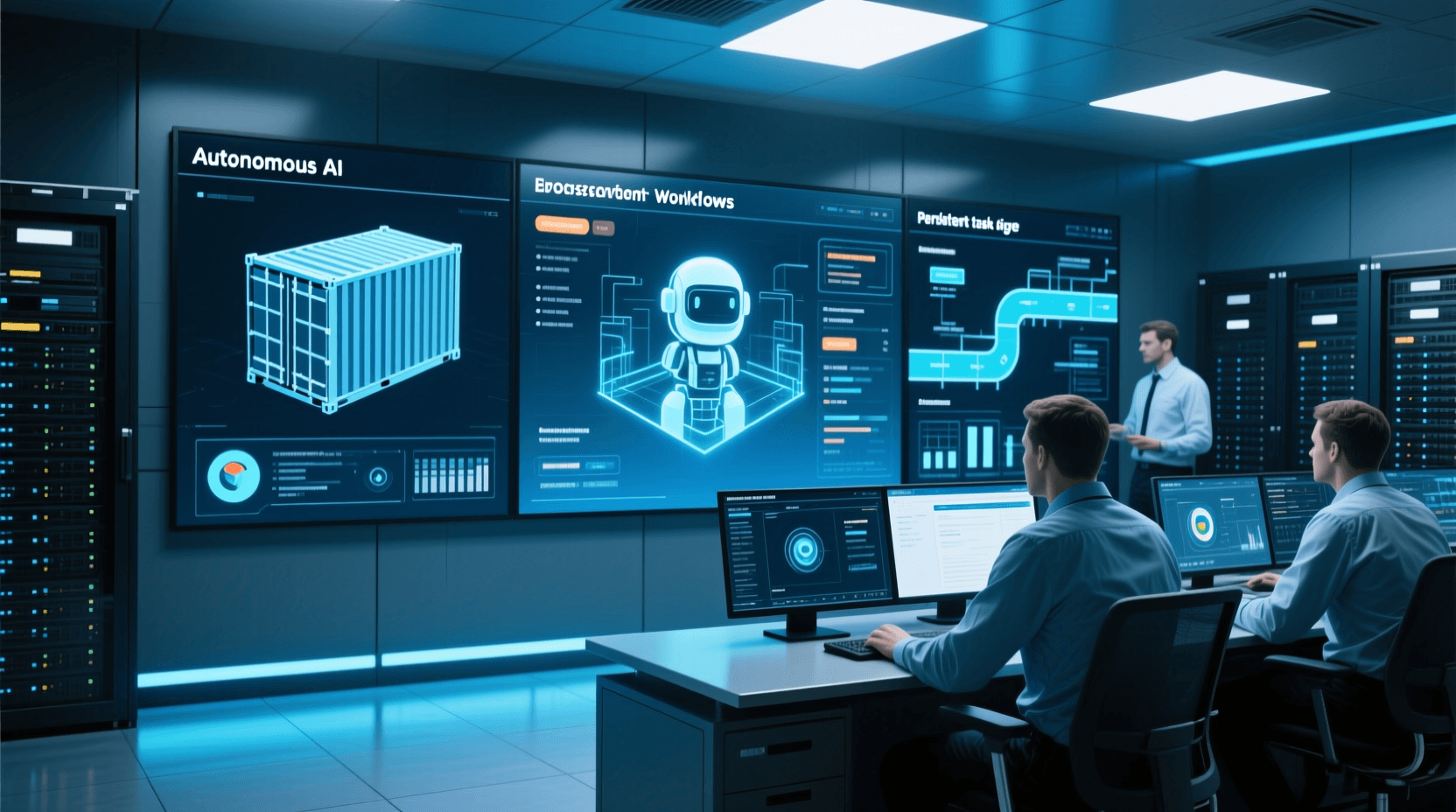
The next big shift in AI may not come from a smarter model. It may come from better plumbing.
For the past year, most teams have focused on prompts, model selection, and flashy demos. But once an AI agent leaves the notebook and starts doing real work for customers, a more painful reality appears: production agents are infrastructure problems disguised as product features.
That is why the growing interest in self-hosted, Kubernetes-based agent platforms matters. Not because every company suddenly wants to become an infrastructure company, but because reliable AI behavior increasingly depends on how execution environments are managed, isolated, observed, and resumed.
The agent era is exposing a new bottleneck
A chatbot can often get away with stateless requests. An agent cannot.
Agents accumulate context, call tools, browse websites, store intermediate artifacts, and sometimes run for long periods across multiple sessions. The moment you need persistence, sandboxing, and controlled execution, the old pattern of “just call an API from a serverless function” starts to break down.
This is the hidden challenge many AI teams are now running into. The hard part is no longer only choosing between GPT-4-class models, open-weight alternatives, or routing providers. The hard part is making sure one customer’s task does not leak into another customer’s environment, that sessions survive restarts, and that debugging an agent failure does not feel like digital archaeology.
In other words, the market is maturing. We are moving from model experimentation to operational discipline.
Why isolated sandboxes are more than a security feature
When people hear “isolated agent sandboxes,” they often think only about safety. That matters, but isolation is also about product quality.
An agent with its own environment is easier to reason about. It has clearer state boundaries, more predictable dependencies, and fewer strange cross-session side effects. That makes it easier to reproduce bugs, audit actions, and enforce policy controls.
For regulated industries, this is especially important. Enterprises do not just want agents that can act. They want agents that can act in ways that are inspectable, reversible, and constrained.
This becomes even more relevant for browser-based workflows. Tools like LLM Browser and LLM Browser point to where the ecosystem is going: agents that need robust web access, anti-detection capabilities, and CAPTCHA handling to complete real-world tasks. But once an agent can browse, click, log in, and extract data, the execution environment itself becomes part of the trust boundary. Browser automation without strong sandboxing is not just fragile; it is operationally risky.
Persistent sessions are the missing ingredient for useful agents
One of the biggest gaps in many agent stacks is memory that actually survives production conditions.
Not just vector memory. Session memory.
A useful enterprise agent should be able to pause and resume work, recover after infrastructure events, and maintain continuity across long-running tasks. That sounds obvious, but many current implementations still behave like short-lived experiments. If a pod restarts, a credential expires, or a tool call hangs, the “intelligent” workflow often collapses.
Persistent session management changes the economics of agent design. Developers can build agents that behave less like disposable scripts and more like durable workers. That opens the door to new categories of applications: procurement assistants that monitor vendor portals over days, support agents that revisit unresolved cases, and research agents that continuously gather updates from the open web.
Self-hosted agent infrastructure will appeal to serious builders
There is a growing split in the AI tooling market.
On one side are teams that want maximum convenience from hosted agent platforms. On the other are teams that need control over networking, compliance, cost visibility, and data residency. Self-hosted infrastructure is likely to win more of the second category, especially among companies that already run Kubernetes and have platform engineering talent.
This does not mean every startup should rush into operating its own agent runtime. For many, that would be premature complexity. But it does mean the center of gravity is shifting. The companies building durable AI products are starting to think like systems operators, not just prompt engineers.
That also raises the bar for observability and evaluation. If agents are now long-lived systems with stateful execution, teams need better ways to inspect prompt changes, compare runs, and understand failure modes. That is where a platform like Agenta fits naturally. Reliable AI apps are not created by intuition alone; they are built through evaluations, trace debugging, and team workflows that treat agent behavior as something measurable.
What this means for AI tool users
If you are buying AI tools rather than building them, expect a new wave of product claims around reliability, continuity, and control.
The best vendors will not just tell you their agents are powerful. They will explain how sessions persist, how environments are isolated, how actions are audited, and what happens when workflows fail halfway through. Those are not backend details anymore. They are core product features.
Users should also expect more specialized agent experiences. Once infrastructure improves, vendors can safely support more ambitious workflows involving web navigation, multi-step automation, and long-running tasks. That is where browser-native agent tools and hardened execution environments will become especially valuable.
The real competition is shifting below the model layer
The AI industry still loves to debate which model is best. But for production agents, the more important question may be: which infrastructure stack makes the model usable at scale?
That is where the next competitive moat is forming.
Model quality still matters. But if one platform can isolate workloads cleanly, persist sessions reliably, support browser-heavy tasks, and give developers strong debugging and evaluation workflows, it can create more business value than a marginal model improvement.
The future of agents will not be won by demos alone. It will be won by the teams that make autonomy operationally boring.
And in enterprise software, boring is often exactly what customers are willing to pay for.