Why AI Agent PCs Could Reshape the Next Decade of Enterprise Computing
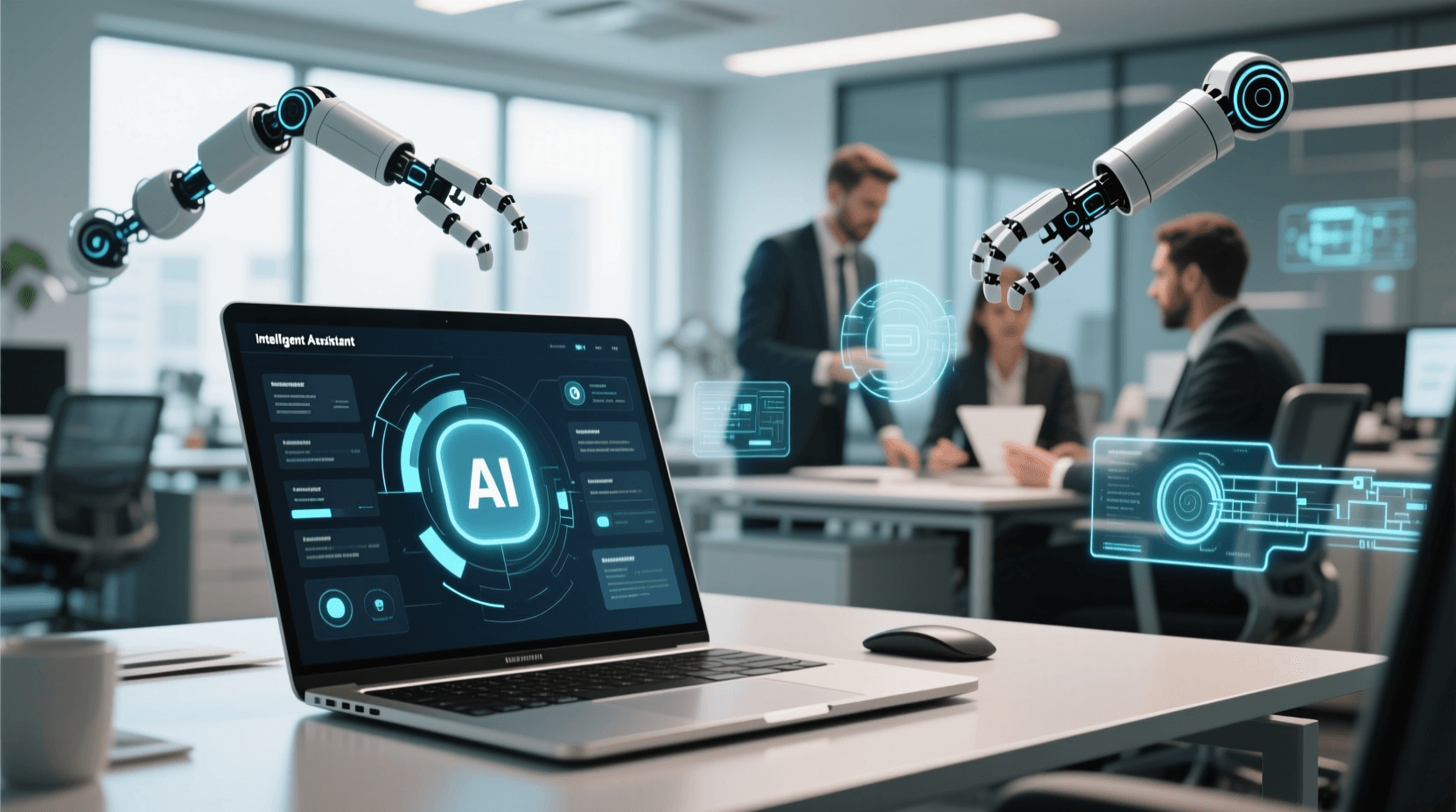
The next big AI battleground may not be the cloud. It may be the PC sitting on your desk.
For the last two years, most AI conversations have centered on giant models, hyperscale infrastructure, and the race to build ever-larger data centers. But a quieter shift is emerging: the idea that useful AI agents should live closer to the user, closer to company data, and closer to the workflows where decisions actually happen.
That is why the push toward AI agent PCs matters far beyond chip market share. If this category succeeds, it could change how businesses buy software, how employees interact with automation, and how developers build AI products.
The real opportunity is not “AI on a PC”
A lot of AI hardware marketing still sounds like a spec sheet contest: more TOPS, better inference, lower latency. Those things matter, but they are not the actual product.
The real product is a trusted execution environment for everyday automation.
Businesses do not need a laptop that can generate a prettier image offline. They need systems that can read a sales brief, cross-check CRM notes, summarize a procurement thread, draft a response, and trigger the next action without sending sensitive data across half a dozen external services. That is a very different value proposition.
If AI agent PCs become mainstream, the winning experience will not be “look what this model can do.” It will be “look what your work no longer requires you to do manually.”
That is where local and hybrid agents become compelling. A device-level agent can handle personal context, app state, and low-risk tasks on-device, while escalating heavier reasoning or organization-wide workflows to the cloud when needed. For regulated industries and cost-conscious IT teams, that hybrid model could be more attractive than an all-cloud future.
This could pressure SaaS vendors from below
One underappreciated consequence of AI agent PCs is that they may erode the stickiness of traditional SaaS interfaces.
Today, software vendors defend their position through dashboards, navigation, and workflow complexity. But if an AI agent becomes the primary interface layer, users may stop caring which software system they are technically inside. They will care whether the agent can complete the task.
That creates a dangerous moment for incumbents. If the agent handles the workflow, the underlying application risks becoming a database with billing attached.
For users, that is good news. It means more leverage. Businesses could start assembling their own automation stack from specialized agents instead of overpaying for bloated software suites. Tools like Agent Smith point in that direction by helping companies deploy AI agents to reduce operating costs and scale operations with automation. The more capable local and hybrid agent environments become, the easier it is for businesses to justify replacing repetitive human workflows with software that actually acts.
The new distribution war will be about agents, not apps
If PCs become agent-ready by default, distribution changes overnight.
Developers have spent years fighting for browser traffic, app installs, and API customers. But in an agent-first world, discoverability may shift toward marketplaces, orchestration layers, and trusted deployment channels. The question will no longer be “which app should I open?” but “which agent should handle this task?”
That is why directories and marketplaces will become strategically important. Businesses will need ways to evaluate role-specific agents, compare capabilities, and deploy them safely. Resources like the AI Agents Marketplace and TrillionAgent are early signals of where the ecosystem is heading: a world where organizations browse agents the way they once browsed SaaS tools or freelancers.
This has major implications for developers. Building a strong model wrapper will not be enough. Developers will need to think about agent identity, reliability, permissions, observability, and integration depth. In other words, the future marketplace winner may not be the smartest agent in a benchmark, but the one that is easiest for IT to trust and easiest for employees to delegate to.
Safety becomes a product feature, not just a policy issue
The phrase “AI agents for the masses” sounds exciting until you remember what agents actually do: click, read, decide, retrieve, send, and sometimes spend money.
That means the adoption curve for AI agent PCs will be determined by safeguards as much as performance. Enterprises will want granular permissions, local data boundaries, audit trails, rollback controls, and clear human approval thresholds. Consumers will want confidence that an assistant is not quietly overreaching.
This is where on-device capability could become a strategic advantage. Keeping more context and more actions local can reduce exposure, improve responsiveness, and make governance easier to explain. Not every task belongs in the cloud, especially when the task involves sensitive documents, internal communications, or proprietary workflows.
Developers who understand this early will win trust faster. The market is moving beyond “can your AI agent do it?” toward “can your AI agent do it predictably, privately, and with accountability?”
What AI tool users should watch next
For users, the biggest mistake would be treating AI agent PCs as just another hardware refresh cycle. The more important question is whether your organization is ready for agent-native work.
That means identifying repetitive knowledge tasks, mapping which actions require approval, and deciding where local agents make more sense than cloud-only tools. It also means experimenting with marketplaces and deployment platforms now, before the category matures and incumbents lock in default distribution.
For developers, the message is even clearer: build for orchestration, not just conversation. The next wave of AI value will come from agents that can operate across tools, devices, and business processes with minimal friction.
If AI agent PCs take off, they will not simply expand the hardware market. They will redefine the software stack around action instead of interface. And that is a much bigger story than chips.