Why AI Agents Are Making Software Engineering Bigger, Not Smaller
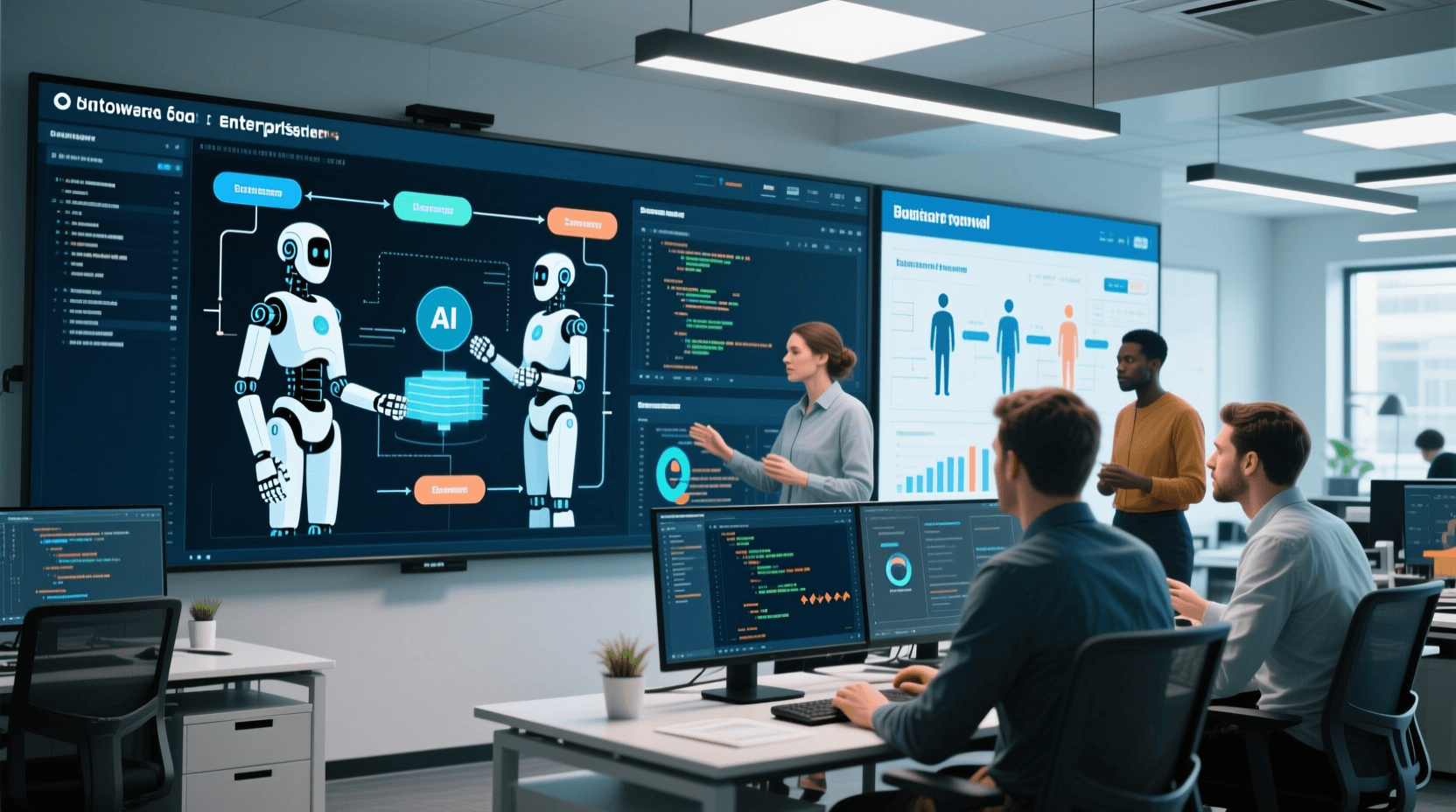
Software engineering is entering a phase that looks less like automation replacing people and more like the job description exploding in every direction.
That matters because the loudest narrative around AI agents has been simple: coding gets automated, developers become optional. But for teams actually building products, that framing already feels outdated. The real shift is that software creation is no longer confined to writing functions, fixing bugs, and shipping tickets. It now includes orchestrating agents, designing human oversight, managing toolchains, governing data access, and deciding which work should never be automated in the first place.
In other words, AI agents are not shrinking software engineering. They are turning it into a broader systems discipline.
The new bottleneck is not code generation
Code is becoming easier to produce. That does not mean useful software is becoming trivial.
As AI coding tools improve, the scarce skill moves upstream and downstream from implementation. Teams need people who can define workflows clearly, translate ambiguous business goals into reliable agent behavior, and build guardrails around systems that act with increasing autonomy. The challenge is less "Can the model write this module?" and more "Should this agent be allowed to trigger this workflow, use this data, or make this decision without review?"
That is a software engineering question, even if no one is typing raw code for part of the solution.
This is why businesses experimenting with AI agents often discover they need more engineering maturity, not less. The cost of a wrong answer in a chatbot is one thing. The cost of an agent that updates records, contacts customers, or touches financial systems is very different. Reliability, observability, permissions, rollback plans, and auditability suddenly become product features.
Developers are becoming workflow architects
The rise of agents is changing what technical teams are paid to do. The best engineers will increasingly act as workflow architects who connect models, APIs, business rules, and human approvals into systems that can operate safely at scale.
That shift also opens the door to a wider range of builders. Not every valuable automation will require a traditional engineering team. Platforms like Activepieces show how AI-driven workflow creation is becoming accessible to non-technical operators while still remaining extensible for developers. That combination is important: business users can prototype quickly, while engineering teams can step in to harden, govern, and integrate the automations that prove valuable.
This is likely to become the dominant pattern inside companies. Domain experts will define intent. No-code and low-code systems will accelerate experimentation. Engineers will own the architecture, security, and operational resilience needed to move from demo to production.
That is expansion, not replacement.
The biggest opportunity is operational, not just technical
A lot of AI discussion still centers on developer productivity. Faster coding matters, but it may end up being the least interesting part of the story.
The larger opportunity is redesigning operations around agentic systems. Businesses are starting to ask whether repetitive coordination work, internal support tasks, reporting loops, and cross-system admin tasks should be handled by people at all. This is where tools like Agent Smith are especially relevant, because the value proposition is not "write code faster" but "reduce operating costs and scale workflows with automation."
That distinction is crucial for software teams. If AI agents become part of how a company runs, engineering becomes tied much more directly to business process design. Developers will need to understand not just repositories and deployments, but service operations, compliance requirements, team handoffs, and failure modes across the organization.
The engineer of the next few years may spend less time crafting individual lines of code and more time deciding how an automated business function should behave when reality gets messy.
The agent economy will reward integration skills
As more companies adopt specialized agents, choosing the right ones will become its own strategic task. We are moving toward an environment where teams assemble capabilities from multiple providers rather than relying on one monolithic AI stack. That makes discovery and evaluation increasingly important, which is why resources like the AI Agents Marketplace will matter more over time.
For developers, this means integration skills become a competitive advantage. The winners will not just be people who can build models from scratch. They will be the ones who can evaluate agents, connect them to internal systems, benchmark outcomes, and maintain trust in production environments.
This is especially true in enterprises, where the challenge is rarely a lack of AI options. It is too many options, with unclear tradeoffs around control, security, and return on investment.
What AI tool users should expect next
For AI tool users, the takeaway is straightforward: expect software to feel less like a static product and more like a managed workforce of digital operators. Features will increasingly come in the form of agents that monitor, decide, escalate, and act.
For developers, the message is even more important: your role is not disappearing, but it is being pulled into new territory. The future belongs to engineers who can combine software judgment with operational thinking.
The market does not need fewer software engineers. It needs engineers who can design systems where code, agents, humans, and business rules all work together.
That is a much bigger job than programming alone, and probably a more valuable one too.