Why AI Is Becoming the Wrong Commencement Speech—and the Right Career Reality
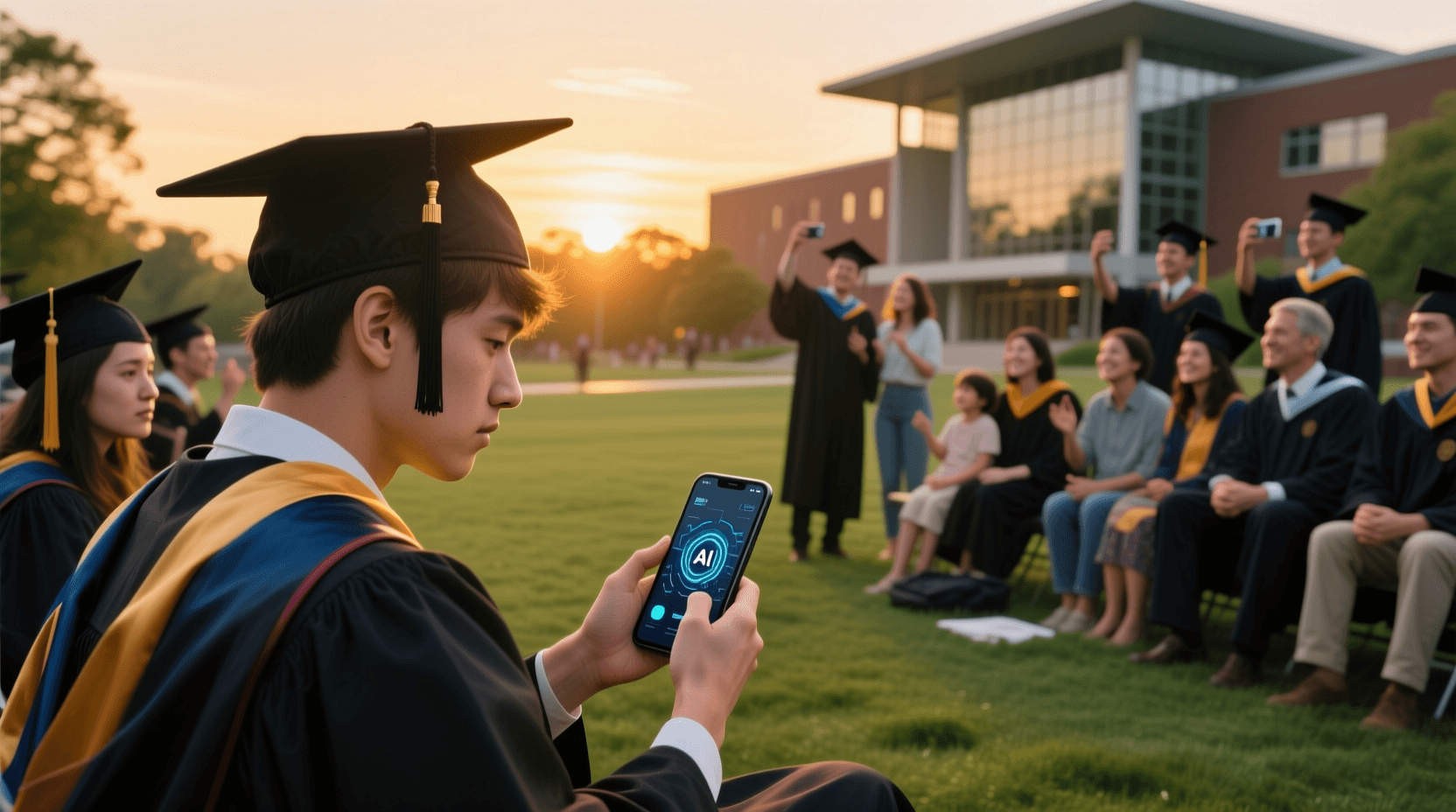
Graduation speeches are supposed to do two things at once: comfort people about the future and make that future sound exciting. AI makes both jobs harder.
By 2026, mentioning artificial intelligence in a commencement address may feel less like inspiration and more like reading the room badly. Not because AI is unimportant, but because it has become too real, too uneven, and too entangled with job anxiety to function as easy motivational rhetoric.
That shift matters far beyond campus ceremonies. It tells us something important about where AI adoption is headed next: away from abstract hype and toward practical, emotionally aware use.
The AI mood has changed
For a few years, AI was a convenient symbol of progress. Speakers could invoke it as shorthand for innovation, disruption, and limitless possibility. But students graduating now are entering a labor market where AI is not a distant frontier. It is already embedded in hiring filters, coding workflows, design pipelines, customer support, marketing, and knowledge work.
That changes the emotional meaning of the word.
To many graduates, AI no longer sounds like "the future you will build." It sounds like "the system you will compete with, adapt to, or be managed by." That is a very different message to hear while wearing a cap and gown.
This doesn’t mean young people are anti-technology. In many cases, they are the most fluent users of it. What they are rejecting is the lazy version of AI optimism—the version that treats automation as inherently empowering without acknowledging the instability it creates.
For AI product builders, this is a warning. Users are increasingly sensitive to tone. If your product messaging sounds like a keynote from 2023, you may be talking past the people you want to serve.
AI tools now need emotional intelligence, not just technical capability
The next wave of successful AI products will not win simply because they can generate, predict, or automate. They will win because they understand context: when people want acceleration, when they want control, and when they want technology to support a milestone rather than dominate it.
That is why some of the most durable AI use cases may be the ones tied to identity, memory, and personal creativity rather than pure replacement economics. A graduate may not want to hear a speech about AI transforming the workforce, but they may absolutely use an AI tool to celebrate their own story.
For example, AI Graduation Poster Maker and AI Graduation Poster Maker show a more grounded path for consumer AI. These tools take a meaningful life event and enhance it with cinematic visual storytelling—side-profile silhouettes, campus memories, keepsake art—without asking the user to buy into a grand ideological promise about the future. That’s a subtle but important distinction.
The product value is immediate, personal, and legible. It doesn’t ask users to admire AI. It asks them to make something memorable.
Developers should stop selling inevitability
One reason AI rhetoric is wearing thin is that too many companies still market their products as historical destiny. The message is often: this change is unstoppable, so adapt now. That framing may energize investors, but it rarely builds trust with end users.
Developers should consider a different posture: AI as optional leverage, not compulsory transformation.
That means building products with visible user control, clear boundaries, editable outputs, and transparent claims about what the system can and cannot do. It also means recognizing that not every workflow should be fully automated, especially in education, early-career work, and creative fields where learning itself is the product.
The broad macro story of AI is still massive—something tools like Super AI Boom capture well by exploring the scale and momentum of artificial intelligence’s expansion. But at the product level, scale is not enough. The winners in the next phase will translate that macro momentum into experiences that feel useful instead of extractive.
For users, the smart move is neither panic nor blind adoption
If AI talk feels exhausting, that may actually be a sign of market maturity. We are moving beyond the phase where every mention of AI implied magic. Now the real questions are more practical:
- Does this tool save meaningful time?
- Does it improve the quality of my work or life?
- Can I verify and edit the output?
- Am I gaining a skill, or outsourcing one I still need?
- Does the product respect the moment I’m using it in?
Those questions are much healthier than generalized excitement.
Graduates, in particular, should think of AI less as a worldview and more as a stack of instruments. Some will be useful. Some will be distracting. Some will become table stakes in certain professions. The goal is not to become "an AI person." The goal is to become someone who knows when AI helps and when it gets in the way.
The real lesson for 2026
If commencement speakers want to connect with students, they may need to stop using AI as a symbol and start treating it as a condition of modern life—powerful, uneven, unavoidable, and not always inspiring.
That may sound less uplifting, but it is more honest.
And honesty is probably what this moment needs. The graduates of 2026 do not need another sweeping speech about how technology will change everything. They already know that. What they need is a framework for staying human, adaptable, and intentional while it does.
For AI companies, that is the challenge too. Build tools that fit into real lives, not just trend cycles. The era of applause lines about AI may be fading. The era of useful AI is just getting started.