Why AI Labs Are Moving Into Biosecurity Before Regulators Catch Up
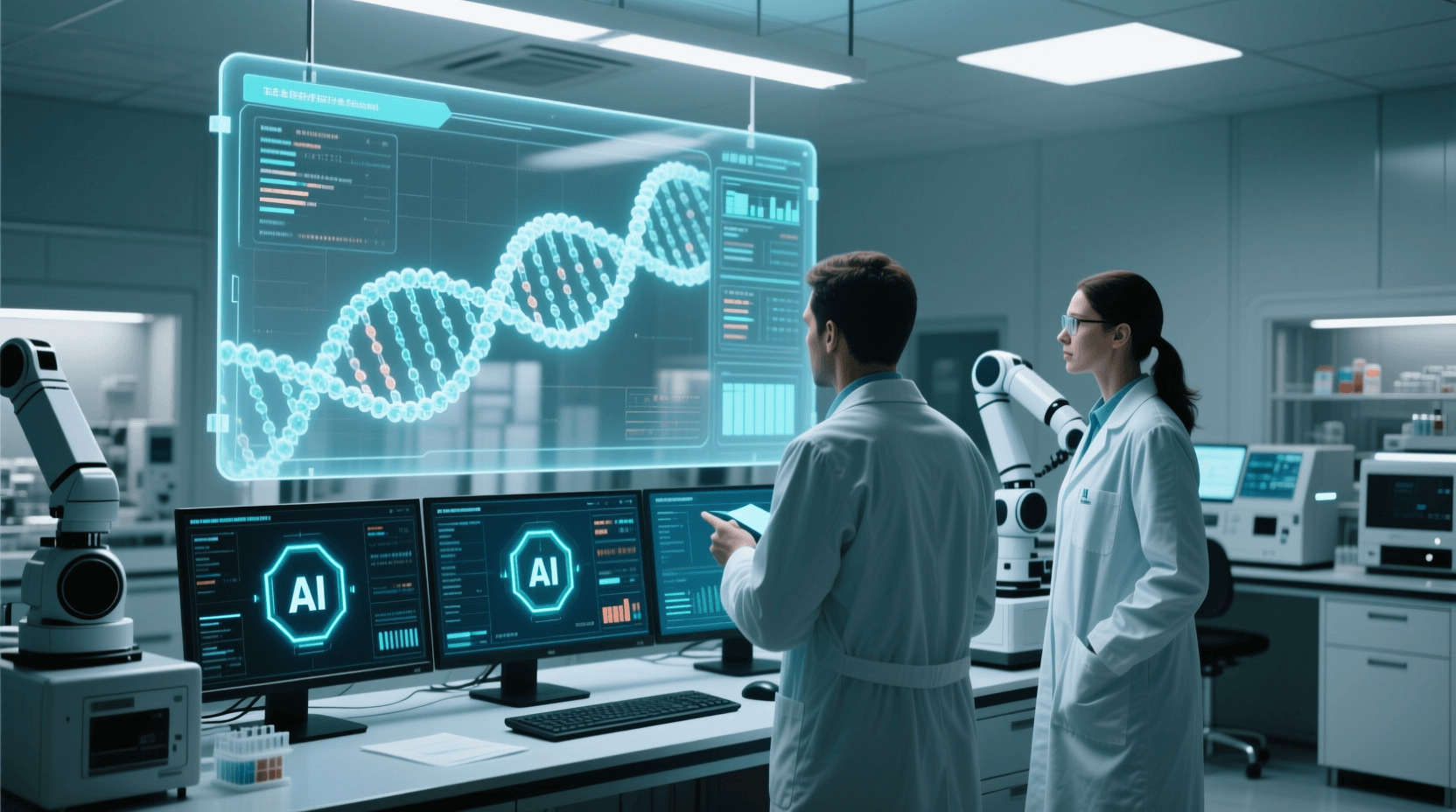
The latest push from major AI labs to strengthen synthetic DNA screening is notable for one reason above all: the frontier AI conversation is no longer just about chatbots, copyright, or model benchmarks. It is shifting toward real-world downstream risk.
That matters because biology is one of the first domains where advanced AI could compress expertise, accelerate experimentation, and lower the barriers to harmful capability in ways that are difficult to reverse once widely distributed. When companies like OpenAI and Anthropic publicly support stronger safeguards around DNA synthesis, they are signaling that model safety can’t stop at the API layer. It has to extend into the physical systems AI may influence.
The New AI Safety Debate Is About Interfaces, Not Just Models
For the past two years, much of the public discussion around AI safety has focused on what models say. Can they be jailbroken? Do they hallucinate? Are they politically biased? Those questions still matter, but they are increasingly incomplete.
The more important issue for developers is what happens when AI systems are connected to sensitive workflows: lab automation, cloud biology platforms, procurement systems, scientific search, and agentic software that can plan, iterate, and troubleshoot. In those settings, a capable model doesn’t need to “invent” a biological threat from scratch to be dangerous. It only needs to make specialized knowledge more accessible, searchable, and operational.
That’s why DNA screening is emerging as a practical policy battleground. It targets a chokepoint in the bioeconomy rather than trying to regulate intelligence itself. From a governance standpoint, that is a much more realistic move.
Why This Matters for AI Tool Builders
If you build AI products, this is a preview of how regulation will likely evolve across high-risk domains.
We are entering an era where policymakers will care less about abstract arguments over whether a model is “general purpose” and more about whether it can materially assist dangerous tasks when paired with external tools. Biology is simply one of the clearest examples.
That has several implications:
- Safety evaluations will become domain-specific.
- Access controls may need to vary by use case, not just by pricing tier.
- Logging, monitoring, and anomaly detection will become core product features.
- Partnerships with external infrastructure providers will matter as much as model alignment.
For startups, this raises the bar. Shipping a powerful model wrapper into scientific or industrial workflows without serious abuse prevention may soon look as irresponsible as launching a fintech product without fraud controls.
The labs that adapt fastest will treat safety as systems design, not public relations.
The Strategic Logic Behind Voluntary Action
There is also a business reality here. Leading labs likely understand that if they do not help shape biosecurity standards now, they may later face blunt restrictions written by lawmakers with little technical nuance.
Voluntary support for DNA screening gives AI companies a chance to advocate for targeted guardrails instead of broad panic-driven regulation. It is a way of saying: there are concrete interventions that reduce risk without freezing innovation.
That approach could become a template for other sectors. Expect similar debates in cybersecurity, autonomous agents, and critical infrastructure. The pattern will be familiar: identify a dangerous capability pathway, then regulate the interface where digital intelligence meets real-world execution.
In that sense, this is not just a biology story. It is a roadmap for AI governance.
What Users Should Watch Next
For AI tool users, especially researchers, biotech teams, and enterprise buyers, the key question is no longer whether vendors talk about safety. It is whether they can explain how safety works in practice.
Ask tougher questions:
- Does the provider restrict high-risk biological assistance?
- Are there audit trails for sensitive queries or workflows?
- What escalation path exists when misuse is suspected?
- How are external integrations reviewed?
- Are safeguards tested against expert-level misuse attempts?
This is where trusted providers may begin to separate from the field. Companies like Anthropic, which has emphasized steerability and interpretable systems, and OpenAI, which has invested heavily in deployment controls and policy frameworks, are both operating in a market that increasingly rewards credible governance, not just raw capability.
For buyers, that means “best model” may become a less useful procurement category than “best controlled model for this domain.”
Information Quality Will Matter More Than Ever
There is another overlooked angle: the AI ecosystem also needs better interpretation, not just better models. As policy, science, and commercial AI become more entangled, decision-makers need curated analysis that separates meaningful shifts from performative headlines.
That is one reason resources like Bitbiased AI are becoming more valuable. In a fast-moving environment, developers and operators need signal: which policy changes will actually affect deployment, which safety commitments are substantive, and which announcements are mostly theater.
The next phase of AI adoption will reward people who can connect technical capability, regulation, and operational risk in one frame.
The Bigger Picture
The most important takeaway is simple: advanced AI is forcing governance to become supply-chain aware.
If dangerous outcomes depend on a chain of components, then safety can’t live in one company’s model card. It has to be distributed across infrastructure, vendors, workflows, and compliance mechanisms. DNA synthesis screening is an early example of that logic becoming concrete.
For developers, that means building with the assumption that your product will eventually be judged by the real-world systems it can influence. For users, it means choosing AI vendors that understand responsibility as an engineering discipline.
The future of AI safety will not be decided only inside model labs. It will be decided at the points where models touch the physical world.