Why AI-Native Security Is Becoming the Next Must-Have Layer in Software Development
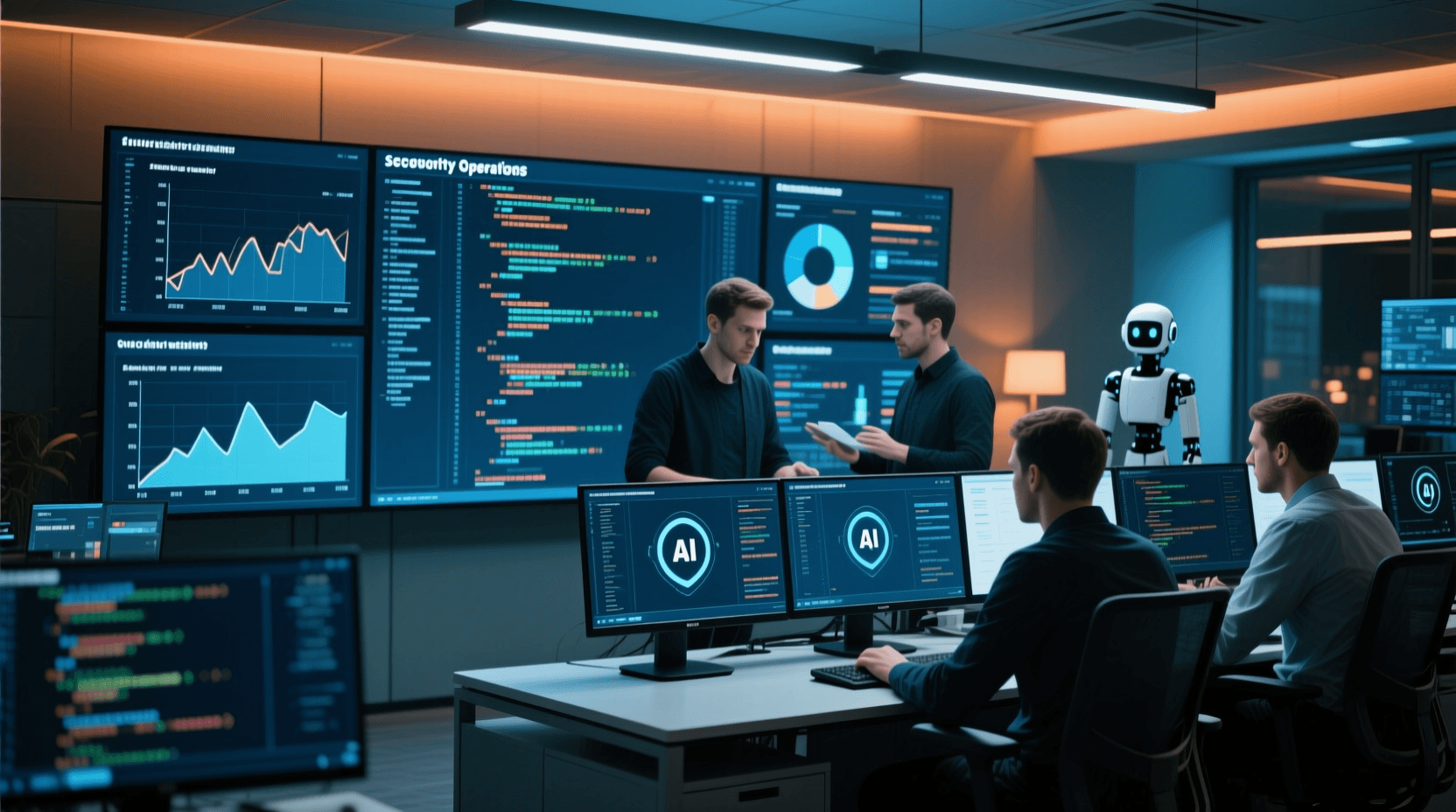
AI security is entering a new phase: not just helping teams write code faster, but actively participating in how vulnerabilities are discovered, tested, and fixed before they become production incidents.
That shift matters far beyond one product announcement. It signals a broader change in how developers, security teams, and platform leaders will think about software delivery in the AI era. The real story is not that AI can now spot bugs. It is that coding agents are starting to become part of the security control plane itself.
From code generation to code accountability
For the last two years, most discussion around AI in software has focused on productivity. Can a model generate boilerplate? Can it reduce time spent on repetitive tasks? Can it help junior developers move faster?
Those questions are still relevant, but they are no longer enough.
As AI-generated code becomes common, organizations need a second layer of AI that checks the first. If one model helps create software, another system must verify whether that software is safe, resilient, and patchable. This is where platforms like OpenAI are increasingly influential: not only as model providers, but as builders of agentic workflows that can reason across the full lifecycle of development and security.
The important implication for users is simple: speed without verification is now a liability. AI-assisted coding can compress development timelines, but it can also accelerate the introduction of insecure patterns, dependency issues, and subtle logic flaws. That makes automated validation no longer optional, especially for teams shipping frequently.
Security teams are becoming AI orchestration teams
The next wave of cybersecurity tooling will not be defined by isolated scanners. It will be defined by coordinated systems that can emulate attackers, inspect code changes, test exploitability, and confirm whether a patch actually closes the gap.
That is a much more useful model than the traditional "alert and forget" approach. Security teams do not need more dashboards full of theoretical findings. They need proof: Can this issue be exploited? What is the likely blast radius? Did the fix work? Did the fix introduce a new weakness somewhere else?
This is why offensive validation will become more important in AI-driven security stacks. Tools like Serversage point toward this future by emulating real adversaries rather than stopping at static analysis. That distinction matters. In practice, organizations increasingly want evidence-based security, where findings are tied to realistic attack paths and remediation is validated rather than assumed.
For developers, this could be a welcome shift. One of the biggest frustrations in AppSec has always been noisy tickets and low-confidence findings. If AI agents can narrow the list to issues that are demonstrably exploitable or materially risky, teams can spend more time fixing what matters and less time debating severity.
AI-generated code needs AI-specific controls
There is also a deeper structural issue that many companies are only beginning to confront: AI-generated code is not just more code. It is code produced through a different process, with different failure modes.
Traditional secure development practices were built around human authorship. But agent-generated code may include insecure defaults, over-permissive implementations, inconsistent error handling, or risky package usage patterns at machine speed and machine scale. Even when the code "works," it may not align with internal security policy.
That is why specialized controls for AI-produced software are becoming essential. Tools such as SecVibe reflect an emerging category focused specifically on protecting AI-generated code with real-time analysis and context-aware security checks. This is likely to become a core requirement for engineering organizations that rely heavily on coding assistants.
In other words, secure SDLC is evolving into secure AI-assisted SDLC.
Patch validation may become the most valuable step
One underappreciated trend in AI security is the growing importance of patch validation. Finding vulnerabilities is valuable, but proving that a remediation actually resolves the issue is where business value compounds.
Anyone who has worked in security knows the pattern: a fix is deployed, the ticket is closed, and weeks later the same weakness reappears in a slightly different form. AI agents could change this by continuously testing fixes against known exploit paths and adjacent code changes.
That would be a major operational improvement for enterprises, especially those with large legacy codebases or complex release pipelines. Instead of treating remediation as a one-time event, teams can treat it as a verifiable outcome.
This could also reshape compliance. Auditors and regulators are increasingly interested not just in whether controls exist, but whether they are effective. AI systems that provide immutable evidence, reproducible tests, and validated remediation trails may become highly valuable in regulated sectors.
What developers and buyers should watch next
The biggest question is not whether AI will be used in cybersecurity. That is already happening. The real question is which platforms can combine coding intelligence, exploit reasoning, and trustworthy validation into workflows teams will actually use.
Developers should look for solutions that integrate directly into CI/CD, reduce false positives, and explain why a finding matters in practical terms. Security leaders should prioritize tools that produce evidence, not just alerts. And platform buyers should ask whether their AI coding strategy includes a dedicated security layer designed for AI-authored software.
The market is moving toward a world where code generation, adversarial testing, and patch verification are all handled by cooperating agents. If that model matures, the most secure teams will not be the ones with the most manual reviews. They will be the ones with the best AI feedback loops.
That is the larger significance of this moment. AI is no longer just helping build software. It is starting to decide whether that software deserves to ship.