Why AI-Native Studios Are Poised to Reshape Niche Streaming Content
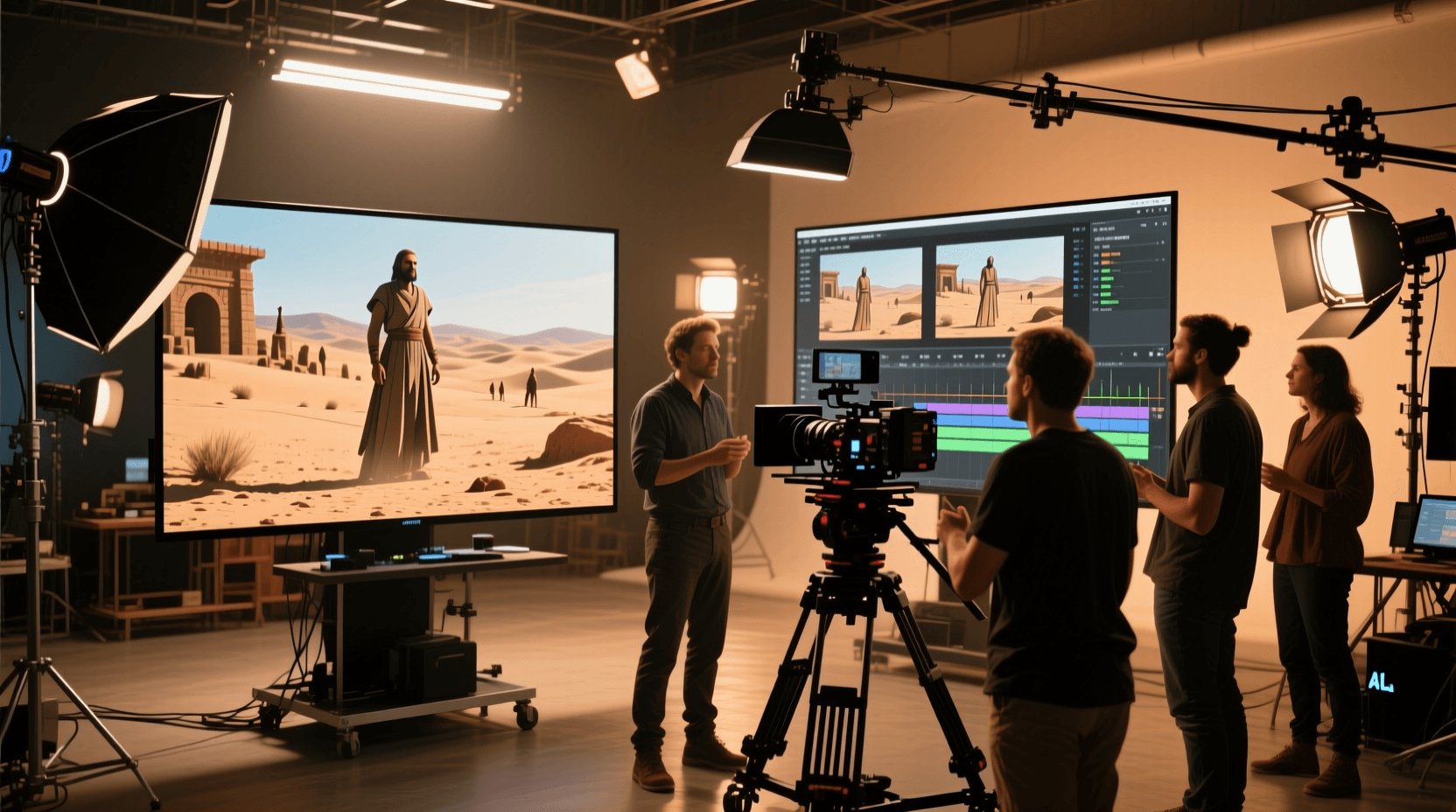
The launch of an AI-powered production studio built around a clearly defined audience is more than a Hollywood curiosity. It signals a shift in how media will be financed, produced, and distributed in the AI era.
For years, the AI conversation in entertainment has focused on spectacle: can models generate better visuals, de-age actors, or cut production costs? But the more important question may be simpler: who gets to make content profitably at all? AI-native studios are starting to answer that by targeting communities with strong identity, predictable demand, and underserved programming.
AI lowers the threshold for viable studios
Traditional film and TV production has always favored scale. If development is expensive, post-production is slow, and marketing requires massive spend, then only broad-audience bets make sense. That leaves many audience segments underfed, even when they are highly engaged.
AI changes that equation. Not because it replaces creative teams, but because it compresses the cost and time required to move from concept to screen. Storyboarding, previs, environment ideation, dubbing, localization, promotional asset generation, and versioning can all become faster and cheaper. Suddenly, a studio doesn’t need to behave like a legacy studio to compete.
That matters especially for values-driven or community-driven content. Faith-focused media, educational media, family-safe entertainment, and regional storytelling have often been treated as secondary markets. In an AI-assisted production environment, they start to look like smart beachheads.
Niche is becoming a strategy, not a limitation
The old media assumption was that niche content was inherently smaller and therefore less attractive. The AI-era assumption may be the opposite: niche audiences are easier to serve efficiently because they know what they want.
A clearly defined audience reduces creative ambiguity. It sharpens tone, visual language, distribution channels, and merchandising opportunities. It also makes AI systems more useful, because the model-assisted workflow has tighter guardrails. Teams can build repeatable pipelines for a known audience rather than trying to please everyone.
That repeatability is where the business case gets interesting. If a studio can produce multiple projects within a coherent style and audience framework, AI becomes less of a one-off novelty and more of an operating system for media production.
For creators and brand teams, this is similar to what tools like Flux2 Pro are doing in visual content creation. The real value isn’t just generating pretty images; it’s maintaining consistency across campaigns, scenes, and brand assets at speed. Studios will increasingly need that same consistency layer across trailers, posters, social cuts, episodic key art, and international variants.
The real disruption is workflow, not synthetic actors
Public debate around AI in entertainment often gets stuck on the most dramatic possibilities. But in practice, the biggest near-term impact is workflow orchestration.
Studios that win with AI won’t necessarily be the ones that generate entire films with a prompt. They’ll be the ones that redesign production around hybrid teams: writers, directors, editors, VFX artists, marketers, and AI operators working in tighter loops.
That means faster iteration on scenes, more efficient testing of alternate cuts, and more content outputs from the same core production. A single project no longer ends at the feature or episode. It expands into shorts, behind-the-scenes explainers, educational companions, vertical video, dubbed editions, and social-first teasers.
This is where production-ready video tools become strategically important. Something like Ltx 2.3 AI Video Generator points toward a future where studios can rapidly create polished supporting video assets in multiple formats, including portrait mode for mobile audiences. For streaming-era media companies, that’s not a side benefit. It’s part of the release strategy.
Faith-focused media may be an early proving ground
Faith-based entertainment is an especially revealing category for AI-native production. It has a committed audience, strong word-of-mouth dynamics, and demand for content that aligns with specific values. It also spans generations, which makes format diversification crucial.
That opens the door to a broader ecosystem around each title. A single production can support study guides, youth content, curriculum tie-ins, and organizational training materials. In other words, the content doesn’t just entertain; it becomes usable.
This is where AI learning infrastructure enters the picture. Platforms like Learniverse show how quickly organizations can turn source material into structured learning experiences. For studios and distributors, that suggests a major adjacent opportunity: transforming films and series into onboarding, education, or community engagement products without months of manual course development.
The studios that recognize this will think less like filmmakers alone and more like ecosystem builders.
What AI tool users and developers should watch next
For AI tool users, this moment is a reminder that the next wave of opportunity may come from verticalized media workflows rather than general-purpose generation alone. The winners will help teams produce, adapt, distribute, and monetize content for specific audiences with less friction.
For developers, the lesson is even sharper: entertainment customers do not just need models. They need end-to-end systems for rights management, style consistency, approvals, localization, compliance, and asset reuse. The market is moving toward integrated production stacks.
If AI-native studios succeed, they won’t just prove that AI can make content faster. They’ll prove that entirely new categories of studios can exist because AI makes focused audiences economically viable.
That is the bigger story. Not whether AI can imitate Hollywood, but whether it can make Hollywood’s old gatekeeping economics irrelevant.