Why AI Ordering Systems Signal a Much Bigger Shift in Everyday Automation
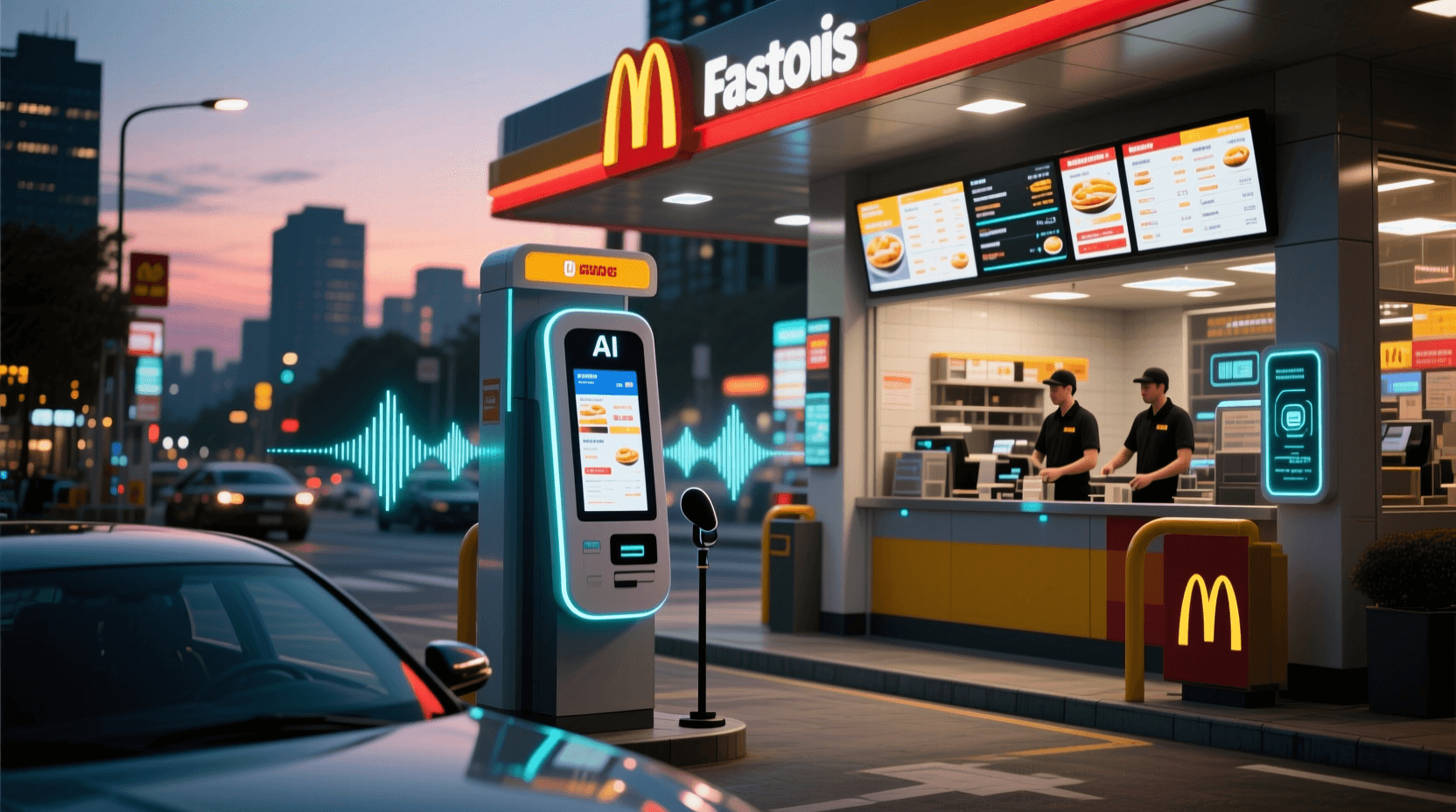
AI at the drive-thru sounds like a narrow convenience feature: faster orders, shorter lines, fewer misheard requests. But the real story is much bigger. Voice bots in fast food are an early, highly visible example of something more important happening across the economy: conversational AI is moving from novelty interface to operational infrastructure.
That distinction matters for both users and builders. We are no longer just talking about chatbots as digital assistants on websites. We are talking about AI becoming the layer that handles routine decisions, customer interactions, and transactional workflows in physical spaces. The drive-thru is just where many consumers are noticing it first.
The new AI battleground is not chat, but throughput
For years, AI products were judged mostly on how clever they sounded. Could they answer trivia? Write an email? Hold a decent conversation? Those use cases still matter, but businesses increasingly care about a different metric: can AI move work through a system faster and more cheaply without breaking the experience?
That is why food ordering is such an attractive proving ground. It is repetitive, high-volume, time-sensitive, and heavily structured. The menu is finite. The goal is measurable. Success is not whether the bot sounds charming; success is whether the line moves, the order is accurate, and the customer does not get frustrated.
This is a preview of where enterprise AI is heading. Expect similar deployments in pharmacies, hotel check-ins, retail returns, appointment booking, and roadside service. In each case, the winning AI will not be the one with the most personality. It will be the one that reduces friction in a narrow but economically meaningful workflow.
Voice is becoming the invisible interface
One reason drive-thru AI matters is that it normalizes voice as a default interface for transactions. That has huge implications. Once people get comfortable speaking naturally to systems in noisy, public, real-world settings, businesses will begin redesigning service experiences around spoken interaction rather than screens and forms.
This creates opportunity, but also raises the bar. Voice AI in the real world has to handle accents, interruptions, slang, background noise, indecision, and context switching. It also has to know when to hand off to a human. That handoff may be the most important product feature of all.
Developers building in this space should pay close attention to failure modes, not just demo performance. A chatbot that works 90 percent of the time in a controlled environment can still fail commercially if the remaining 10 percent happens during lunch rush, with impatient customers and complex customizations.
The future of AI products is hybrid, not fully autonomous
One of the biggest misconceptions in AI is that replacing humans is the ultimate goal. In practice, many of the most useful systems will be hybrid. AI handles the predictable middle of the workflow, while humans step in for edge cases, emotional situations, or exceptions.
That lesson applies beyond restaurants. Tools that combine AI speed with human oversight are often more valuable than fully autonomous systems that promise too much. It is also why consumer expectations need to mature. The best AI is not always the most magical. Often, it is the most reliable collaborator.
You can already see this hybrid model in adjacent consumer and professional tools. AI Chatbot Online shows how users are becoming comfortable interacting with a wide range of AI personalities and conversational formats, which helps normalize AI dialogue in everyday life. On the professional side, Interviews Chat reflects the same broader trend: people are not just asking AI for answers, they are using it as real-time support during high-pressure interactions. That behavioral shift matters. Once users trust AI in conversation-heavy moments, adoption in commerce and service becomes much easier.
Developers should think beyond the chatbot label
The term chatbot may soon become too limiting. What businesses are really buying is an AI operations layer: speech recognition, intent detection, policy enforcement, recommendation logic, memory, analytics, and escalation routing. The “bot” is just the visible tip of the stack.
For AI developers, this means the real value may not come from building another generic assistant. It may come from vertical specialization. A model tuned for restaurant ordering, insurance claims intake, or dental scheduling can outperform a more general system because it understands the domain constraints, vocabulary, and risk profile.
This is also where distribution matters. Builders who want to stay ahead of these shifts should follow curated sources that track both product launches and business implications. BitBiased AI Newsletter is useful here because it focuses on the intersection of AI news, tools, and market direction rather than just hype cycles.
What this means for users
For everyday users, the spread of transactional AI will likely feel gradual, then sudden. First it is ordering food. Then it is changing a reservation, disputing a charge, scheduling a repair, or checking in at a clinic. Consumers will increasingly interact with AI not as a destination, but as a built-in layer across ordinary services.
That shift will bring convenience, but also new expectations around transparency and control. Users will want to know when they are talking to AI, what data is being stored, and how to reach a human when needed. Companies that hide the system or make escalation difficult will create distrust fast.
The drive-thru matters because it is a simple, relatable example of a deeper transformation. AI is leaving the sandbox of novelty chat and entering the messy world of operational reality. That is where the next wave of winners will emerge: not the loudest demos, but the systems that quietly make everyday interactions faster, smoother, and more dependable.