Why AI’s Next Big Interface Might Be the Dinner Table
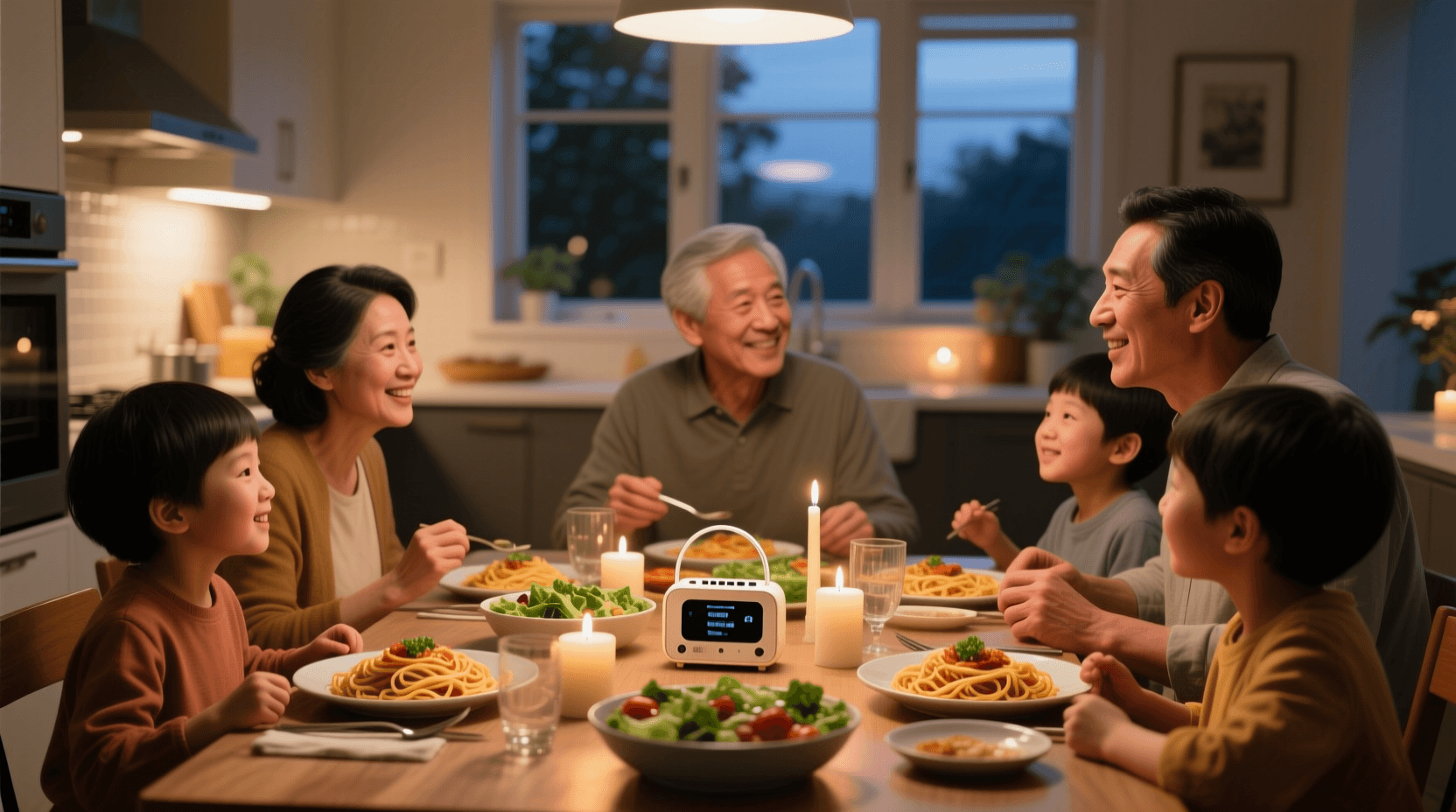
Family dinner has always been a kind of analog database: recipes passed down verbally, health updates shared between bites, arguments archived in memory, and little stories repeated until they become identity. What’s changing now is that companies are starting to treat the table not just as a place to eat, but as a place to capture data.
That shift matters far beyond novelty gadgets.
A device built to record dinner conversations may sound sentimental, even wholesome. But it also points to a bigger trend in AI: the race to structure everyday life into searchable, reusable, personalized context. And for users of AI tools, that means the next wave of assistants won’t just respond to prompts. They’ll be built from the ambient details of our routines, relationships, and habits.
From search box to life capture
For years, AI products have depended on explicit input. You typed a question, uploaded a file, or clicked a button. Increasingly, the value is moving upstream. The most useful systems are the ones that can gather context before you ask.
The dinner table is a surprisingly rich source of that context. It’s where families reveal food preferences, budget concerns, allergies, scheduling conflicts, emotional dynamics, and health worries in one unstructured stream. To a human, that’s conversation. To an AI system, it’s multimodal gold.
Imagine what happens when those fragments become organized memory. A casual comment like “we should eat less sodium” could shape future meal recommendations. A grandparent’s story about a traditional dish could become a preserved family recipe. A mention of a new diagnosis could connect food planning with care management.
This is where AI tool builders should pay attention: the real product opportunity isn’t the recorder itself. It’s the layer that turns family life into useful, permissioned, trustworthy intelligence.
Food AI is becoming family infrastructure
Meal planning apps used to be utility software. Now they’re inching toward becoming household operating systems.
Tools like Fond show what this looks like in practice. It’s not just a place to store recipes; it’s a system for importing meals, generating plans, and tracking calories with an AI cooking assistant. That becomes much more powerful when family conversations are part of the input. If a household naturally talks through what they liked, what was too expensive, or who’s trying to eat more protein, the assistant can become adaptive instead of generic.
Similarly, MealJar reflects another important direction: AI that reduces friction in real domestic decisions. Planning meals in seconds and preserving family recipes is already useful. But the deeper value comes when the software understands that meal planning is not just nutritional math. It’s negotiation. It’s memory. It’s culture. The future winner in this category may not be the app with the biggest recipe database, but the one that best translates family context into action without making users feel surveilled.
That last point is critical. Consumers will tolerate convenience. They will not tolerate creepiness for long.
The privacy challenge is the whole story
Any AI system that listens in intimate spaces faces a trust test, not just a product test.
Recording dinner conversations sounds charming until users ask obvious questions: Where is this stored? Who can access it? Is it used for model training? Can a child’s voice be deleted later? What happens when a family member doesn’t consent? Can emotional moments be surfaced out of context?
Developers often underestimate how different “home data” feels from other data categories. A shopping cart is transactional. A dinner conversation is relational. That means the design standard must be higher.
The best AI tools in this emerging category will likely follow a few rules: local-first processing where possible, explicit consent flows, clear retention controls, and transparent boundaries around training and sharing. Features like summarization, tagging, and memory retrieval are exciting, but they only work if users trust the system enough to let it near the table.
Health, memory, and care are starting to merge
The most interesting long-term impact may be what happens when food tools and health tools begin to overlap.
Family meals are where health information often first becomes actionable. Someone mentions a doctor’s recommendation. A parent explains a new dietary restriction. A caregiver shares confusion about medication timing. These are not isolated data points; they are connected parts of daily life.
That’s why tools like Ditto are worth watching alongside food-focused apps. Ditto helps people capture appointments, understand documents, and share their health story with loved ones. In a world where household AI becomes more context-aware, the line between meal planning and health coordination gets thinner. If handled responsibly, that could be genuinely helpful: better grocery choices, fewer forgotten care details, and smoother communication across families.
But it also raises the stakes. The more AI connects domains like food, memory, and health, the more developers need to think like stewards, not just founders.
What this means for builders right now
The bigger lesson here is that AI is moving into rituals, not just workflows.
That changes product design. Builders should stop asking only, “What task can we automate?” and start asking, “What human ritual already produces valuable context?” Meals, school pickup, doctor visits, bedtime routines, and family group chats are all candidates.
The winners won’t be the companies that capture the most data. They’ll be the ones that make captured context feel useful, respectful, and reversible.
For users, the promise is appealing: AI that actually understands the household instead of treating every request like a blank slate. For developers, the warning is equally clear: once you enter the home, your UX is no longer just interface design. It’s social design.
And that may be the real story behind dinner-table recording devices. They aren’t just preserving conversation. They’re previewing a future where AI learns from the moments we used to think were too ordinary to compute.