Why AI Security Agents Are Becoming the Next Essential Developer Tool
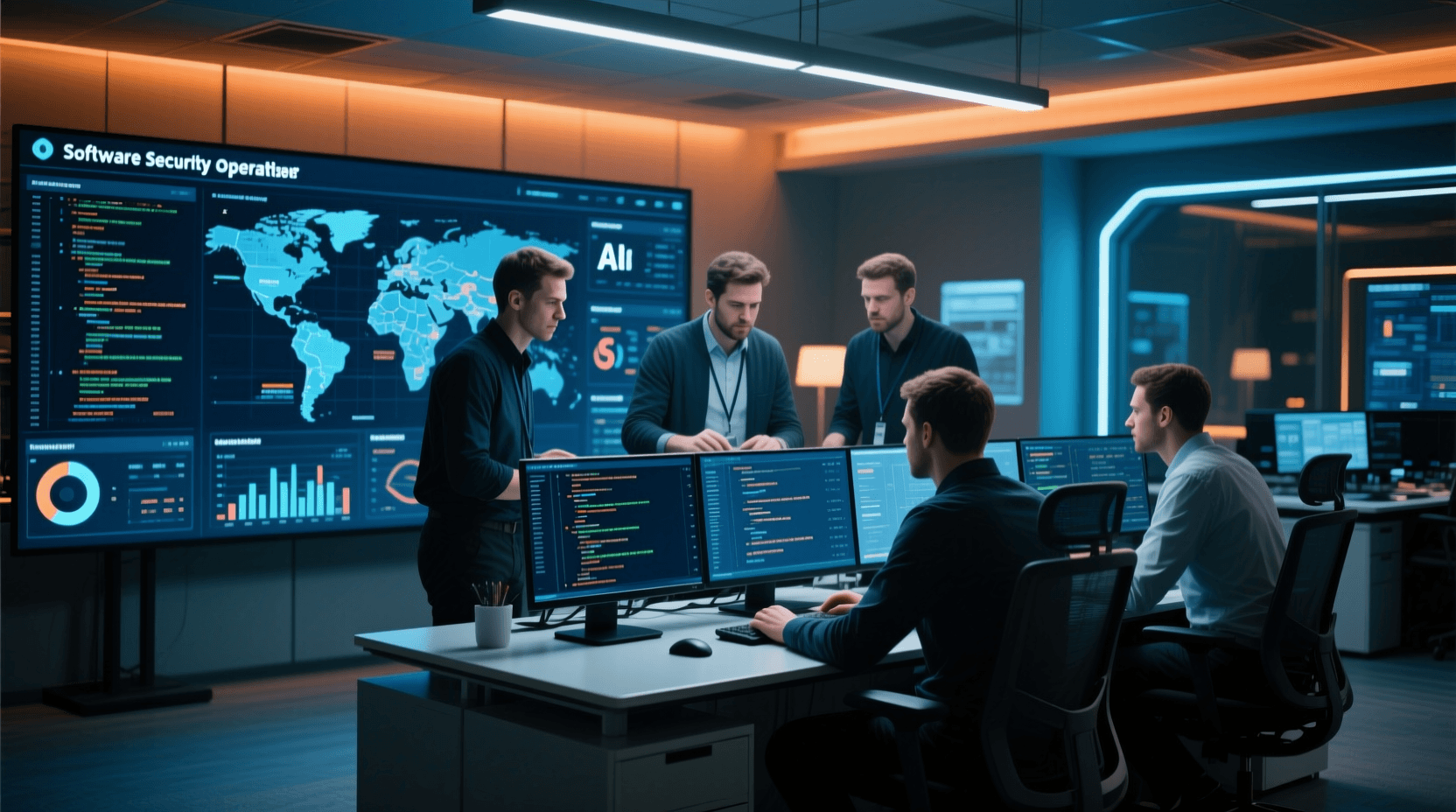
The newest battleground in AI is no longer just chat quality, coding benchmarks, or who has the most impressive demo. It’s security operations.
As major AI labs push deeper into software development, they’re also moving into a more consequential promise: finding weaknesses in code before attackers do. That shift matters because the next wave of AI adoption won’t be judged only by productivity gains. It will be judged by whether these systems can help teams ship faster without multiplying risk.
Security is becoming a first-class AI workflow
For the last two years, AI tooling has mostly been framed as an accelerator for writing code, drafting content, and automating repetitive work. But acceleration has a dark twin: every faster release cycle can also mean faster propagation of vulnerabilities, misconfigurations, and insecure dependencies.
That’s why security-oriented AI is becoming one of the most important categories to watch. A capable security agent doesn’t just answer questions about best practices. It can reason about codebases, identify likely attack paths, prioritize the most dangerous exposures, and help teams remediate issues before they become incidents.
This is a meaningful change in posture. Instead of waiting for pentests, bug bounty reports, or production alerts, organizations are starting to expect AI to operate as a continuous adversarial reviewer embedded in the development lifecycle.
For users of platforms like OpenAI, this signals a broader evolution: foundation model providers are no longer competing only on model intelligence. They’re competing on how effectively that intelligence can be turned into operational systems that reduce real-world business risk.
The real opportunity is not “AI finds bugs”
The headline appeal of AI security products is obvious: more vulnerabilities found, more quickly. But that’s not the deepest opportunity.
The real breakthrough is triage.
Most engineering teams are not suffering from a total lack of security signals. They’re suffering from too many of them. Static analysis tools, dependency scanners, cloud posture systems, code review bots, and external reports all generate noise. What teams need is not another dashboard full of theoretical issues. They need systems that can explain which risks are exploitable, which attack chains matter, and what should be fixed first.
This is where AI agents could outperform traditional tooling. If an agent can connect code context, infrastructure assumptions, known exploit patterns, and business criticality, it can act more like a security engineer than a scanner. That distinction is huge.
Developers don’t want fifty warnings. They want one clear recommendation with evidence.
That same demand for useful output over raw volume is visible outside security too. Tools like ClaudeKit succeed because they don’t just generate text; they help creators move from blank page to usable draft faster. Security AI will be judged by the same standard: not how much it says, but how much friction it removes.
AI security will reward evidence, not confidence
There’s also a trust problem that every vendor in this category must solve.
In ordinary content workflows, a slightly wrong answer is inconvenient. In cybersecurity, a slightly wrong answer can be expensive. False positives waste remediation time. False negatives create blind spots. Overconfident AI explanations are especially dangerous when they persuade teams to ignore edge cases or assume a patch is complete.
That means the winners in AI security won’t be the systems with the boldest claims. They’ll be the ones that can produce verifiable evidence, reproducible findings, and transparent reasoning chains that security teams can audit.
This is why the broader market should pay attention not just to model branding, but to workflow design. Can the system show how it reached a conclusion? Can it validate exploitability? Can it map a vulnerability to a realistic attack path? Can it integrate with remediation processes developers already use?
That’s also where specialized tools may have an advantage. A platform like Serversage, for example, reflects a practical direction for the market: AI that emulates real adversaries, validates defenses, and helps teams prove whether a fix actually worked. That emphasis on adversarial realism is likely to become the standard, not the niche.
What this means for developers right now
Developers should expect security review to become more continuous, more automated, and more opinionated.
In practice, that means AI won’t just suggest code completions or explain stack traces. It will increasingly interrupt workflows with warnings about insecure logic, exposed secrets, risky dependencies, weak authentication flows, and exploitable architectural assumptions. The best implementations will feel like having a security-minded reviewer available at every stage of the build process.
But teams should resist the temptation to hand over judgment entirely. AI can help narrow the search space, simulate attacker thinking, and draft remediation steps. It should not become a black box that silently decides what is safe.
The healthiest model is collaborative: AI for discovery and prioritization, humans for approval and accountability.
The bigger industry shift
The more interesting story here is that AI vendors are converging on a new thesis: the most valuable AI products may be the ones that prevent losses, not just create gains.
That changes the buying conversation. It’s easier to justify an AI budget when the tool can reduce breach exposure, shorten remediation cycles, and give leadership more confidence in release velocity. Security has always had budget gravity; AI is now trying to tap into it.
So while the market may frame this as one lab answering another, the more important takeaway is broader. AI is moving from assistant to operator, and security is one of the first domains where that transition will be tested under real pressure.
If these systems can reliably surface meaningful risks, validate fixes, and integrate into how teams actually build software, they won’t be optional add-ons for long. They’ll become part of the default modern development stack.