Why Anthropic’s Momentum Is Rewriting How the AI Market Prices Trust
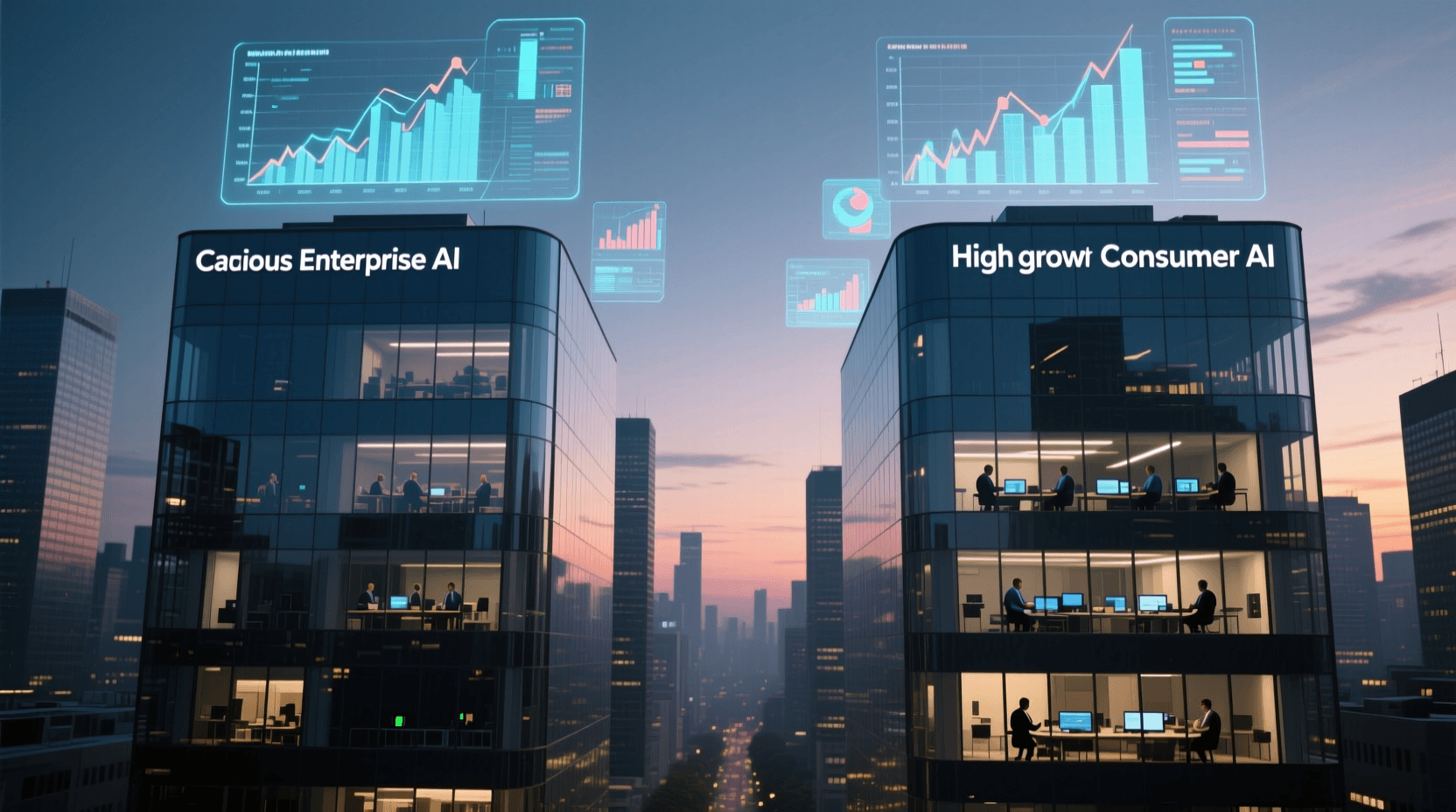
The most interesting part of the latest investor anxiety around AI is not that one company may be overpriced and another may be underpriced. It’s that the market is starting to treat trust, controllability, and enterprise fit as valuation drivers in their own right.
That shift matters far beyond venture capital. If you build with AI, buy AI, or invest in AI-adjacent products, the changing perception around Anthropic and OpenAI signals a deeper transition in what the next phase of the market will reward.
The AI race is no longer just about who is smartest
For the last two years, the dominant narrative in generative AI has been simple: bigger models, faster releases, more users, more hype. That framing favored whoever could capture attention and demonstrate raw capability at internet scale.
But markets eventually mature. When they do, buyers start asking different questions:
- Which models can be governed safely?
- Which vendors are easiest to deploy in regulated environments?
- Which systems are predictable enough for mission-critical workflows?
- Which provider will still make sense when margins tighten?
That is where Anthropic’s rise becomes strategically important. The company’s brand has become closely associated with reliability and alignment, not just performance. In a speculative market, that might sound like a soft advantage. In an enterprise market, it can become a hard one.
If investors are reevaluating relative value between Anthropic and OpenAI, they may really be reevaluating what customers are likely to pay for over the next five years.
Reliability is becoming a product category
Developers used to think of model choice primarily in terms of benchmark scores, context windows, and price per token. Those still matter. But as AI moves into legal review, healthcare workflows, finance operations, software deployment, and internal knowledge systems, reliability starts to look less like a feature and more like infrastructure.
That creates a favorable narrative for Anthropic, whose positioning has consistently emphasized steerability and interpretable behavior. It also creates pressure on OpenAI, not because OpenAI lacks technical leadership, but because category leaders are judged against a higher standard. When you are the default choice, customers scrutinize consistency, governance, and pricing discipline more aggressively.
The lesson for AI tool users is straightforward: the best model is no longer always the one with the loudest launch cycle. It is the one that minimizes downstream operational risk.
Developers should expect a two-vendor world
One likely outcome of this investor recalibration is that enterprises become even more committed to multi-model strategies. That is good news for developers who have built abstraction layers, routing systems, and evaluation pipelines.
Instead of betting everything on one provider, teams are increasingly mixing vendors by use case:
- one model for coding,
- another for customer support,
- another for compliance-sensitive summarization,
- and fallback providers for uptime and pricing leverage.
In that world, the rivalry between Anthropic and OpenAI is less about total winner-take-all dominance and more about who owns the most valuable workloads.
For builders, this means portability is now a competitive advantage. If your product depends on a single model provider without easy switching, you are taking platform risk. If your stack can evaluate and route between OpenAI and Anthropic, you are better positioned to negotiate cost, performance, and trust.
Valuation pressure will eventually hit product pricing
Whenever investors begin questioning whether AI leaders justify their private-market prices, the downstream effect is usually felt in product strategy. Companies under valuation pressure often need to prove they can convert prestige into durable revenue.
That can lead to:
- more aggressive enterprise packaging,
- tighter API monetization,
- premium pricing for advanced capabilities,
- and a stronger push toward sticky ecosystem products.
This matters for startups building on top of foundation models. If the economics of frontier AI providers become more demanding, API customers may face more volatility in pricing or feature access. The safest response is to design products with margin resilience from day one.
That is also where the broader AI economy becomes interesting. As capital floods into model providers, users may start looking for opportunities in the surrounding ecosystem rather than only the model layer itself. Platforms like Openvest, while not an AI model company, reflect a parallel trend: more people want access to sophisticated financial opportunities without traditional gatekeeping. The same democratization impulse shaping AI adoption is shaping how people think about investing in the infrastructure around it.
What this means for the next phase of AI competition
The market is beginning to separate “famous” from “defensible.” Those are not the same thing.
OpenAI still has enormous advantages: distribution, consumer mindshare, developer adoption, and a strong record of turning research into products people actually use. Anthropic, meanwhile, appears to be benefiting from a different kind of strength: it feels increasingly legible to enterprises that want powerful AI with fewer surprises.
That distinction could define the next era of the industry. The winners may not be the companies with the most dazzling demos, but the ones that become trusted defaults inside serious workflows.
For AI users, the practical takeaway is to evaluate vendors like infrastructure partners, not just model vendors. For developers, the opportunity is to build products that are model-flexible, evaluation-driven, and optimized for real business constraints. For investors, the message is even clearer: in AI, trust is no longer a side narrative. It may be the premium multiple itself.