Why Anthropic’s Washington Rebound Matters More Than One Company’s Politics
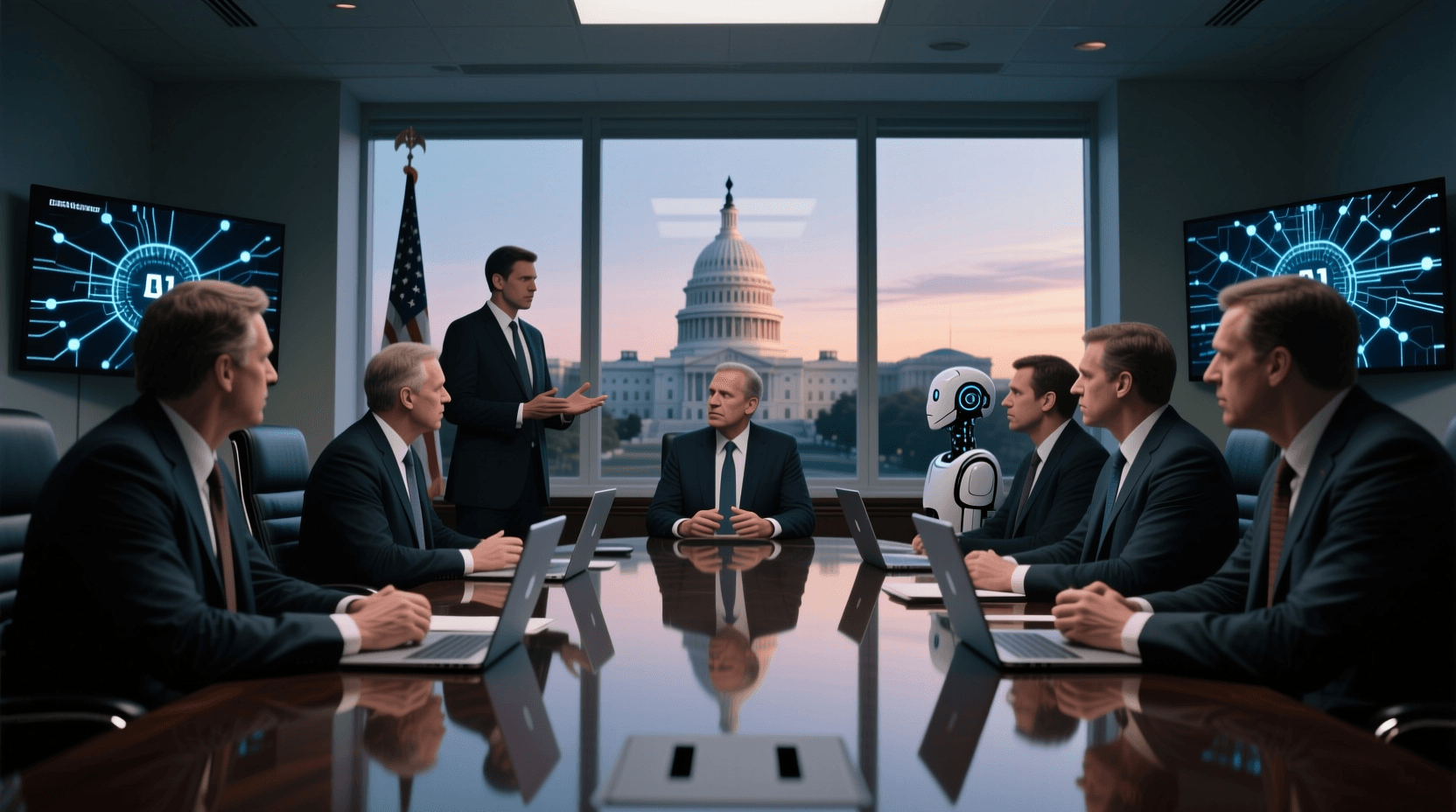
The most important part of any apparent warming between Anthropic and the Trump orbit is not the political theater. It’s the signal that AI policy in the U.S. is entering a more pragmatic phase: governments may criticize, investigate, or restrict AI vendors in one context while still courting them in another.
For AI builders, enterprise buyers, and startups trying to choose platforms, that’s a reminder that political friction is no longer a side story. It is becoming part of the product landscape.
AI companies are now geopolitical infrastructure
A few years ago, many people still treated frontier model labs as software companies with unusually large cloud bills. That framing no longer works. Today, firms like Anthropic and OpenAI sit much closer to the center of national capability: defense procurement, supply-chain resilience, cybersecurity posture, and industrial policy.
That means governments will hold contradictory views at the same time. An administration or agency may consider a company risky in one procurement channel while seeing it as strategically essential in another. To outsiders, that can look inconsistent. In reality, it’s what happens when AI becomes too important to ignore and too powerful to treat like ordinary SaaS.
The practical takeaway is simple: if your product depends on a foundation model provider, you are indirectly exposed to policy volatility. Not just regulation, but procurement decisions, export controls, cloud partnerships, and national security reviews.
The new competitive edge is political durability
For developers, model quality still matters. Latency, context windows, evals, and price all matter. But there’s a new factor rising fast: political durability.
Can a provider maintain working relationships across changing administrations? Can it survive scrutiny from defense, competition, and privacy authorities at the same time? Can it keep enterprise customers confident while navigating headline risk?
This is where the market may start rewarding companies that can project both technical excellence and institutional maturity. Reliability is no longer only about uptime or benchmark performance. It also means being governable, legible to regulators, and credible in front of public-sector buyers.
That framing has long been core to Anthropic, which has emphasized reliable and steerable AI. If its relationship with political power centers is improving, the broader implication is that “AI safety” may be evolving from a branding distinction into a market access strategy.
Developers should stop thinking in single-model terms
If the policy environment can shift quickly, developers should respond architecturally, not emotionally. Betting everything on one model vendor is increasingly risky.
This doesn’t mean avoiding frontier providers. It means designing for optionality. Teams should build abstraction layers, maintain fallback providers, and separate business logic from model-specific prompting as much as possible. If one vendor faces procurement barriers, pricing changes, or sudden compliance complications, your roadmap should not collapse.
That applies whether you lean toward OpenAI, Anthropic, or a broader multi-provider stack. The winners over the next two years may not be the teams using the single best model on paper, but the ones that can adapt fastest when the policy and vendor landscape changes.
Public-sector AI is becoming a separate market
Another underappreciated trend is that “government AI” is starting to diverge from “consumer AI” and even from general enterprise AI. The requirements are different: auditability, data controls, deployment flexibility, and political trust all matter more.
If Anthropic is finding warmer conversations in Washington despite prior tension, that suggests the public-sector market is still very much up for grabs. No single label — safe, risky, open, closed — will permanently define a vendor. These categories are negotiated continuously through relationships, contracts, and real-world performance.
For startups building AI applications, this matters because the government stack often influences the enterprise stack. Compliance standards, security expectations, and approved vendor patterns tend to flow outward. What becomes acceptable in defense or federal environments can shape what large regulated industries buy next.
Even marketing tools will feel this shift
It’s tempting to think this only affects foundation model labs and Beltway insiders. It doesn’t. The effects will reach downstream tools, including AI-powered content and workflow platforms.
Take Antwork, an AI social media agent built around brand voice and cross-platform publishing. Tools like this may look far removed from Washington politics, but they still depend on the broader trust environment around AI: what enterprises are comfortable deploying, what compliance teams permit, and which underlying model ecosystems remain stable.
If political détente helps normalize a provider in the eyes of enterprise buyers, downstream products built on AI infrastructure benefit too. If tensions rise, those same products may need to explain vendor choices, data handling, and fallback options much more clearly.
What AI users should watch next
The key question is not whether one company is “in” or “out” with one administration. The bigger issue is whether U.S. AI policy is maturing into a system that balances rivalry, oversight, and dependence.
That would create a more complex but more investable market. Companies could face criticism without being excluded entirely. Governments could demand safeguards without freezing innovation. And buyers could evaluate vendors less on headlines and more on whether they can operate through turbulence.
For AI users, that means choosing tools based on resilience as much as raw capability. For developers, it means building products that can survive a shifting policy map. And for model labs, it means the next competitive frontier may not just be intelligence — it may be trust that holds up under political pressure.