Why Apple’s Next Chapter Could Redefine the AI App Economy
Apple leadership transitions rarely feel dramatic in the moment. That’s by design. The company has spent decades turning succession into a product feature: controlled, polished, and engineered to signal continuity. But the next CEO won’t just be inheriting a hardware empire. He’ll be inheriting a collision between platform power and AI-native software.
That matters far beyond Cupertino. If the market is seriously entertaining the idea that an AI coding platform like Cursor could command a staggering valuation, it tells us something important: the center of gravity in tech is shifting from devices and apps to interfaces and workflows. The winners in the next cycle may not be the companies with the most screens. They may be the ones that become the default layer between users and intelligence.
The real Apple question isn’t hardware
Apple’s traditional playbook has been straightforward: own the premium device, shape the operating system, curate the developer ecosystem, and monetize trust. That formula still works. But AI is changing what users value.
In the pre-AI era, the operating system was the environment. In the AI era, the assistant may become the environment.
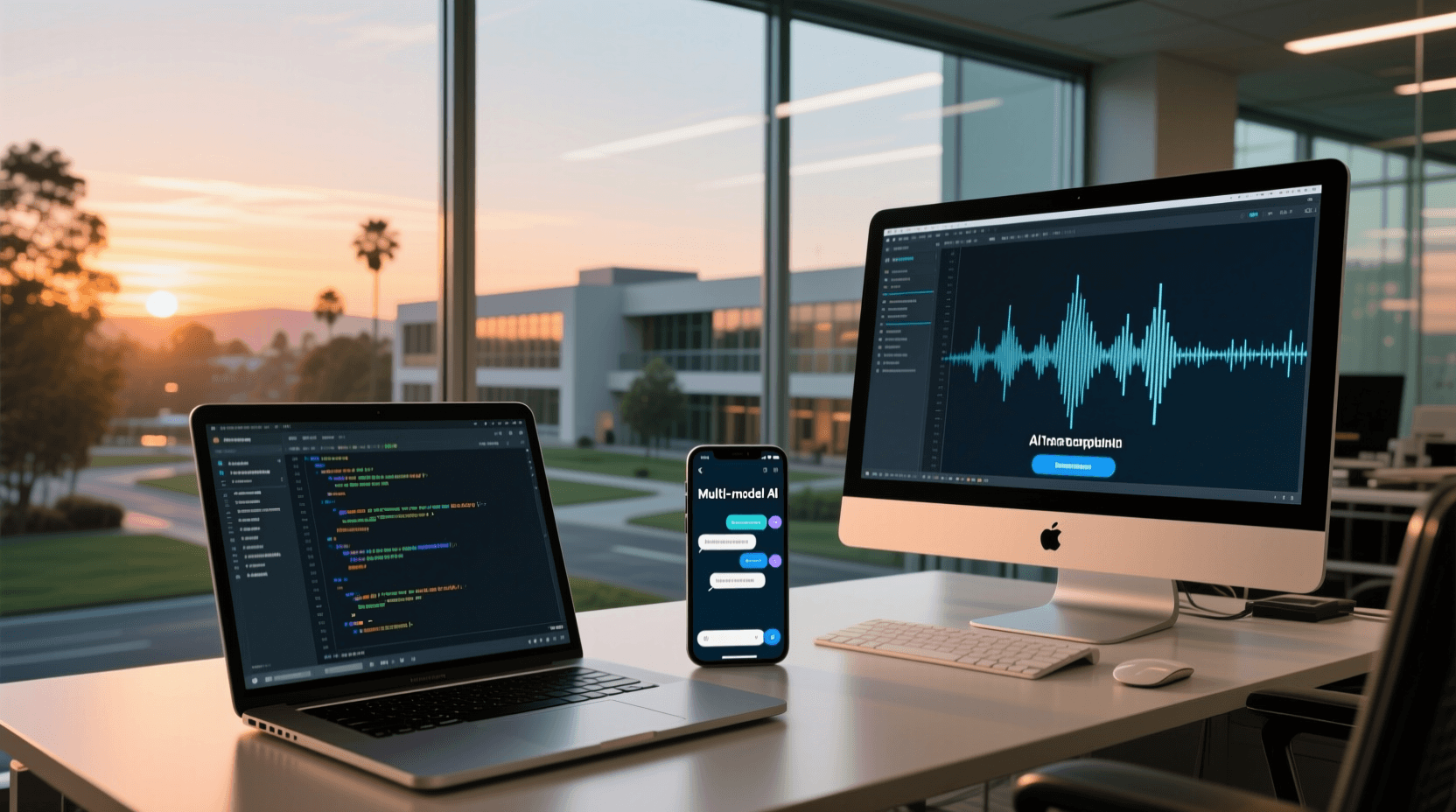
That’s a subtle but profound shift. If users increasingly begin their work inside an AI code editor, a multi-model chat hub, or a voice-first capture tool, then the OS becomes less visible. It still matters, but it matters more as infrastructure than as experience. Apple has historically excelled when the experience is inseparable from the platform. AI threatens to loosen that bond.
For developers and tool builders, this creates a strategic opening. The next generation of software doesn’t have to win by replacing the operating system. It can win by becoming the user’s default starting point.
Why Cursor represents more than an editor
The fascination with Cursor - The AI Code Editor isn’t really about code completion. It’s about workflow capture.
Developers don’t just want a smarter IDE. They want a system that understands intent, predicts edits, navigates large codebases, and turns natural language into useful action. That’s a much bigger category than “editor.” It’s a control surface for software creation.
If investors or acquirers are willing to think in the tens of billions about a company like Cursor, they’re making a bet that AI-native interfaces will absorb more of the value chain. Not just writing code, but planning architecture, managing refactors, coordinating agents, and eventually orchestrating entire engineering teams.
That should get Apple’s attention. Historically, Apple benefited when ambitious software companies built on its platforms. In the AI era, some of those companies may become primary destinations in their own right. The platform owner still matters, but the user relationship may increasingly belong to whoever mediates the work.
Multi-model access is becoming a consumer expectation
Another shift Apple’s next CEO will have to confront is that users no longer want loyalty to a single model vendor. They want optionality.
That’s why products like ChatXOS are so interesting. The appeal isn’t just convenience or price. It reflects a new user mindset: different models are good at different things, and people want one place to access all of them.
This is a challenge for any platform company hoping to make its own AI feel central. Consumers are already being trained to compare models side by side, switch based on task, and treat intelligence as modular. That weakens the old platform instinct to lock users into one default experience.
For developers, this is good news. It means the future likely belongs to tools that are model-flexible, not model-dependent. Build for orchestration, not exclusivity. Assume your users will want Claude for writing, GPT for structured tasks, Gemini for ecosystem integration, Grok for real-time flavor, and whatever comes next for niche workflows.
On-device AI may become Apple’s strongest card
If Apple wants to shape the next phase of AI without winning the frontier-model race outright, privacy and on-device performance are the obvious levers. But those advantages only matter if they produce tools people actually use daily.
That’s where products like Hush Touch | Voice-to-Text for MacOS point to a compelling direction. Offline, on-device voice transcription is not flashy in the way a general assistant is flashy. But it solves a real problem with a trust model users can understand immediately.
This is the kind of AI experience Apple should care about: fast, local, useful, and tightly integrated into everyday workflows. Not every breakthrough needs to look like a chatbot. Some of the most durable AI products will be invisible utilities that save time without asking users to change behavior.
What this means for AI builders now
The biggest takeaway from this moment is that AI value is moving upward in the stack. Devices still matter. Foundation models still matter. But the most defensible businesses may emerge in the layer that translates human intent into action.
That includes code editors, voice interfaces, model routers, agent workspaces, and vertical copilots. In other words: products that become habitual.
Apple’s next CEO will have to decide whether the company wants to own that layer, enable it, or quietly tax it through the platform. Meanwhile, ambitious buyers circling AI-native software are signaling that this layer may be where the next great software franchises are born.
For users, that means more choice and faster innovation. For developers, it means the opportunity is no longer just building an app for a device. It’s building the interface people trust to think, create, and work with AI every day.