Why Auto-Deleting AI Chats Could Redefine Trust in Consumer Assistants
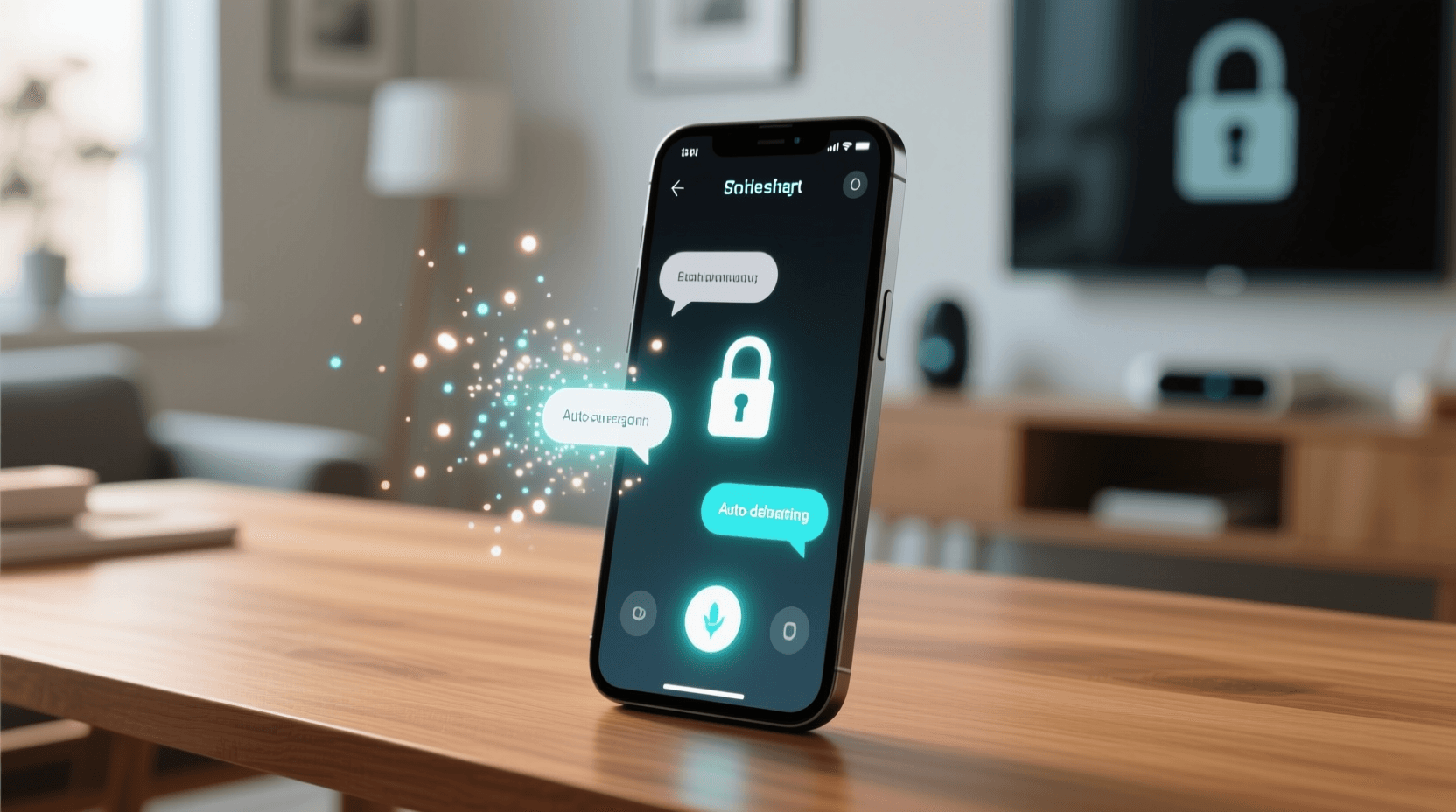
Apple’s reported push to make privacy central to Siri’s next chapter matters for a reason that goes beyond branding: retention is becoming one of the most important product decisions in AI.
For the last two years, the AI industry has mostly competed on model quality, context windows, and flashy multimodal demos. But as assistants move closer to handling scheduling, messages, purchases, work notes, and health-adjacent questions, a harder question emerges: should an AI remember everything by default?
If Siri moves toward auto-deleting chats, it would signal a shift from the “collect now, optimize later” logic that shaped much of the app economy. That is a big deal for both users and developers because memory is not just a feature. It is a liability, a compliance burden, and increasingly a trust bottleneck.
The next AI battleground is retention, not just intelligence
Most people want two contradictory things from an assistant: they want it to remember enough to be useful, but not so much that it feels like a surveillance archive. That tension has been easy to ignore while AI tools were mostly used for brainstorming and coding. It becomes much more serious when assistants live inside personal communications.
An auto-delete model suggests a new default: ephemeral intelligence. In other words, the assistant can be helpful in the moment without turning every conversation into long-term stored data. That approach aligns more closely with how humans often expect private conversations to work. We don’t assume every passing thought should become permanent memory.
This is where privacy-first assistants may gain an advantage. Tools like PrivatClaw already position privacy as part of the value proposition, not just a settings page. If users are interacting with AI across Telegram, Slack, Discord, and WhatsApp, the question is no longer whether the assistant is capable. It is whether the assistant can operate without creating a permanent shadow profile of the user.
Auto-delete is good product design, but only if users control memory
There is a catch. Auto-deleting chats sounds reassuring, but deletion alone does not solve the real product challenge. Users still need selective memory.
A genuinely useful assistant should be able to forget routine conversation history while preserving explicit, user-approved preferences and tasks. For example:
- Delete casual chats after a short window
- Keep calendar actions and reminders the user asked to save
- Retain stable preferences only when the user opts in
- Separate “temporary context” from “long-term memory” in a visible way
That distinction matters for assistants that automate real workflows. OpenClaw, for instance, sits in the category of personal AI tools that manage email, calendars, and messaging across platforms. In these environments, memory should behave less like a hidden transcript vault and more like a structured permissions system. Users need to know what is transient, what is stored, and why.
If Apple gets this right, it could pressure the rest of the market to stop treating memory as an opaque backend function. Developers may need to expose memory controls as a core UI layer, not an afterthought.
Privacy is becoming a competitive feature, not just a compliance checkbox
For years, “privacy” in consumer tech often translated into legal disclosures and vague assurances. In AI, that will not be enough. People are now asking whether their prompts train models, whether chat logs are reviewed, whether assistants can access inboxes, and whether sensitive conversations can be recovered later.
That shift creates an opening for products that make model access more flexible without locking users into one company’s data practices. ChatXOS is a good example of a different kind of value: it gives users access to multiple leading models in one iOS app. As consumers become more privacy-aware, multi-model access may matter not only for cost and convenience, but also for control. Users will increasingly want the freedom to choose which model handles which task, depending on sensitivity, quality, and context.
That is where the market is heading: not one assistant that stores everything forever, but a layered AI stack where users route tasks according to trust.
What developers should learn from this moment
If Apple frames the future of Siri around privacy, developers should pay attention even if they are not building a mobile assistant.
The lesson is simple: every AI product now needs a memory strategy.
That means answering questions like:
- What data is stored by default?
- For how long?
- Is deletion automatic or manual?
- Can users inspect saved memory?
- Can they separate operational data from conversational history?
- Is retention necessary for the product to work, or just useful for analytics?
The winners in the next phase of AI may not be the products with the longest memory. They may be the ones with the best boundaries.
The real opportunity: trustworthy AI that feels lighter
There is a broader cultural shift underneath all this. Consumers are tiring of software that accumulates endless history in exchange for marginal convenience. AI risks amplifying that fatigue if every assistant becomes a permanent recorder.
Auto-deleting chats points toward a healthier model: assistants that are powerful, context-aware, and useful, but not infinitely persistent. That could make AI feel less invasive and more ambient, which is exactly what mainstream adoption needs.
For users, this means privacy may soon be something you can feel, not just something you are promised. For developers, it means trust is becoming a product surface. And for AI tool builders across messaging, productivity, and mobile, the future may belong to assistants that know when to forget.