Why Billion-Dollar Bets on Self-Learning AI Could Reshape the Entire Tool Stack
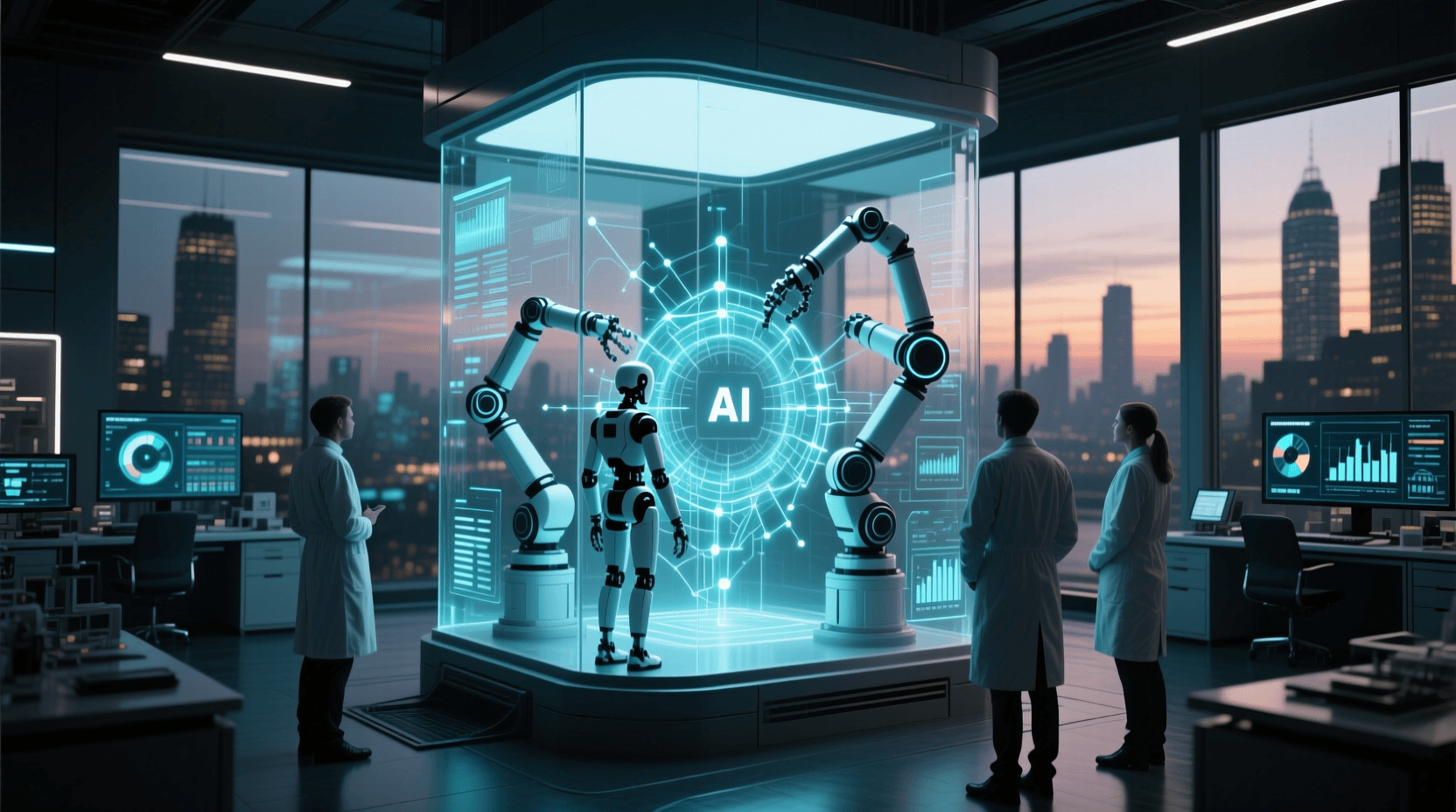
The latest billion-dollar wager on AI is not really about building a better chatbot. It is about trying to change the raw ingredients intelligence is made from.
For the last few years, the AI industry has largely been powered by a simple formula: collect vast amounts of human-created data, train giant models on it, then wrap those models in products that help people write, code, search, design, and analyze. That approach has been wildly successful, but it also has an obvious ceiling. Human data is finite, expensive, noisy, legally risky, and often backward-looking.
A company pursuing AI that can learn with far less dependence on human-generated examples is making a bet that the next leap forward will come from systems that discover structure on their own. If that works, the implications for AI tool users and developers are much bigger than one startup valuation.
The industry may be moving from imitation to experimentation
Most current AI products are excellent imitators. They remix patterns from language, images, code, and behavior that humans have already produced. That is useful, but it creates a subtle limitation: tools trained mostly on historical human output tend to inherit human bottlenecks.
A self-learning paradigm points in a different direction. Instead of asking AI to absorb the internet and mimic it, the goal is to create systems that can probe environments, test hypotheses, simulate outcomes, and improve through interaction. In other words, less autocomplete, more discovery engine.
For users, that could eventually mean AI tools that do more than generate polished answers. They may become better at finding strategies humans have not already documented, especially in domains like logistics, scientific research, cybersecurity, robotics, and complex decision support.
For developers, this changes the product question. The future winner may not be the app with the biggest prompt library. It may be the platform with the best feedback loops, simulation environments, and reinforcement signals.
Why this matters for AI tool builders right now
Even if fully self-learning systems are still early, the direction of travel is clear: AI products will increasingly be judged not just by how well they respond, but by how well they adapt.
That means builders should start thinking in three layers:
- Foundation intelligence: what the model knows.
- Environment design: where the model can test and refine behavior.
- Operational feedback: how real-world outcomes improve the system over time.
This is where many teams will need to level up. Companies that only know how to call an API and add a chat interface may find themselves exposed if the market shifts toward systems that learn from workflows, user behavior, enterprise data, and synthetic environments.
That is also why training and implementation support matter more than ever. Teams trying to move from AI experimentation to production need practical guidance, not just inspiration. MasteringAI is relevant here because the real competitive gap in AI is increasingly organizational. The companies that can train teams to redesign processes around adaptive AI will move faster than those still debating prompt etiquette.
Synthetic data is becoming a strategic asset
If human data becomes less central, synthetic data becomes far more important. But synthetic data is not magic. Bad synthetic data just creates cleaner-looking mistakes.
The next generation of AI companies will need systems for generating, validating, and stress-testing machine-created training signals. They will need to know when a model is discovering something useful versus reinforcing a closed loop of its own assumptions.
That makes analysis platforms especially valuable. DeepSeek, for example, fits into this emerging workflow because advanced data exploration is no longer just about dashboards. It is about interrogating how models learn, what patterns they surface, and whether those patterns hold up under scrutiny. As AI systems become more autonomous, observability becomes a core product feature rather than a technical afterthought.
Expect a boom in AI ambition, but not all of it will be durable
Big financing rounds also create a psychological effect across the ecosystem. They tell founders, enterprises, and investors that the market is ready to fund AI beyond content generation and office productivity. That will spark a new wave of startups claiming to build self-improving agents, autonomous researchers, and machine scientists.
Some of that energy will be real progress. Some of it will be branding.
This is why market watchers should pay attention to platforms that help people understand the broader AI shift rather than just chase headlines. Super AI Boom speaks to that larger moment: the AI market is expanding from tools that assist human tasks to systems that may increasingly create new knowledge and strategies. That is a much bigger frontier than “write me an email faster.”
What users should watch over the next 18 months
If you use AI tools in business, do not wait for some future self-learning super-system to arrive before adapting your stack. Watch for products that show these traits now:
- They improve from usage data in measurable ways.
- They can operate inside simulations or structured environments.
- They expose confidence, uncertainty, and evaluation metrics.
- They integrate with proprietary business data safely.
- They optimize toward outcomes, not just outputs.
That last point is the key. The AI market is slowly shifting from generating plausible responses to achieving measurable results.
The bigger takeaway
A billion-dollar investment in self-learning AI is really a statement that the first era of generative AI may not be the final architecture of the industry. If the next breakthrough comes from systems that learn more independently, then the winners will not simply be those with access to the most scraped content. They will be the ones that can build closed-loop learning systems tied to real environments, real incentives, and real evaluation.
For developers, that means rethinking product design. For enterprises, it means building AI readiness beyond pilots. And for users, it means the most valuable tools of the next few years may be the ones that do not just sound smart, but actually get smarter in use.