Why Conversational YouTube Search Could Reshape AI Discovery
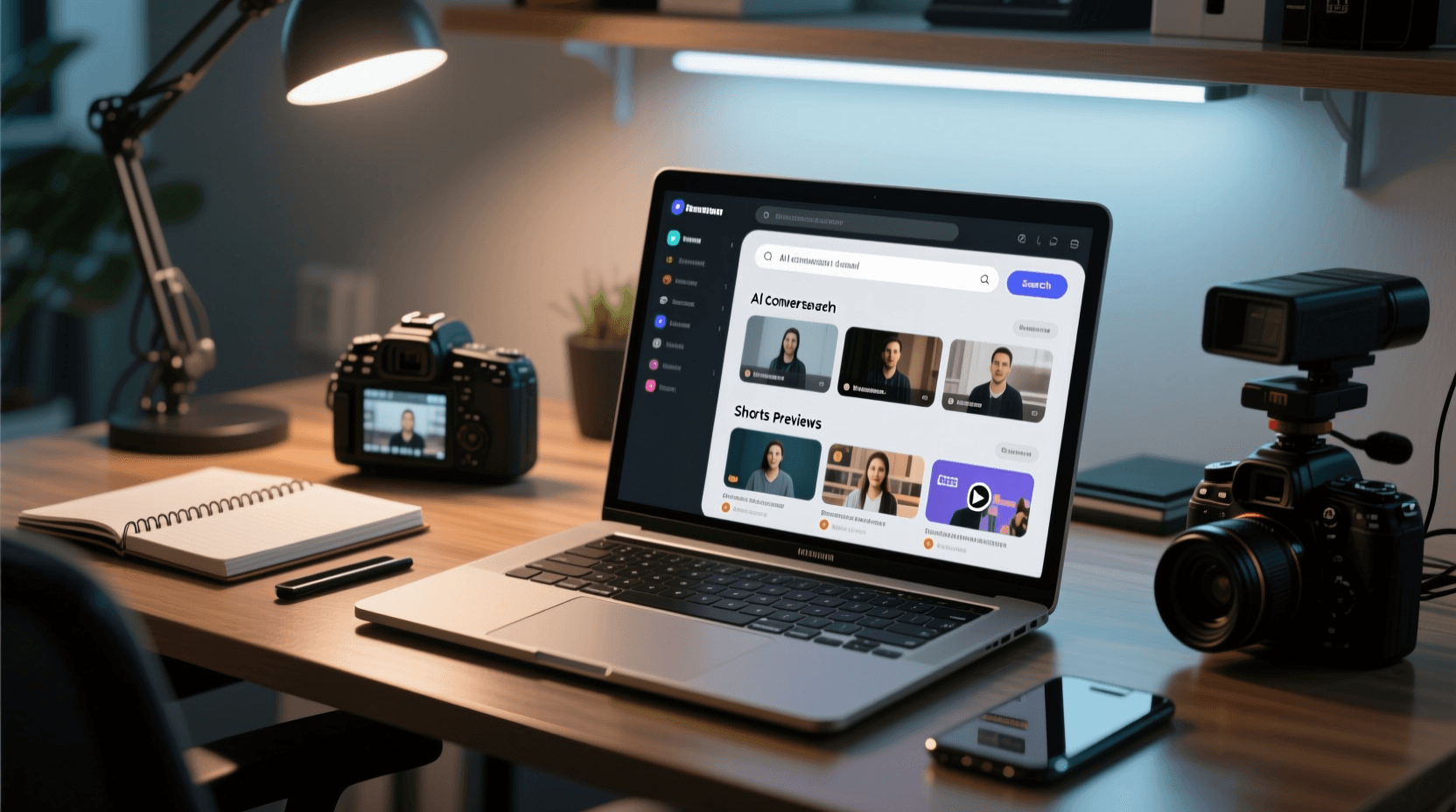
YouTube has spent years acting like a search engine disguised as a video platform. If conversational search becomes a native part of that experience, the implications go far beyond easier video lookup. It signals a shift in how people will discover expertise, compare products, and decide what content is worth their time.
For AI users and developers, this matters because YouTube is not just entertainment. It is one of the web’s largest libraries of tutorials, reviews, lectures, demos, and personal authority-building content. Turning that library into a chatbot-style interface changes the economics of visibility.
The real change is not search, but mediation
Traditional YouTube search asks users to scan thumbnails, titles, view counts, and channels. A conversational interface inserts an AI layer between the user and the creator. That layer can interpret intent, compress options, and recommend a path instead of just returning a list.
That sounds convenient, but it also means creators and brands may no longer compete only for clicks. They will compete to be selected, synthesized, or cited by the interface itself.
This is the same pattern we are seeing across the web: search is becoming answer-first, and discovery is becoming mediated by AI. On YouTube, that could be even more consequential because video has always had a friction problem. Users often know what they want to learn, but not which 18-minute video is actually worth watching. A conversational layer can remove that friction fast.
The opportunity is obvious: better intent matching, less wasted time, and more useful discovery. The risk is also obvious: fewer direct relationships between creators and audiences if the AI becomes the primary navigator.
What this means for AI tool users
For users, conversational YouTube search could become a powerful research shortcut. Instead of trying five keyword variations, people may ask layered questions such as: Which beginner tutorials explain this clearly? Show me short explainers first, then deep dives. Compare two tools and prioritize recent videos.
That behavior is much closer to how people use ChatGPT, Claude, and Gemini today. The expectation is no longer “help me find content.” It is “help me decide.”
That creates a new kind of workflow. A user might discover a topic via AI search, watch a few clips, then convert the best learning material into structured notes using YouTube to Mind Map. That combination is especially compelling for students, professionals, and self-learners who don’t just want content surfaced—they want it organized into something they can retain and act on.
In other words, conversational discovery will likely increase the value of tools that sit one step downstream from content search: summarization, note-making, insight extraction, and workflow automation.
What this means for creators and brands
If YouTube moves toward AI-mediated recommendations, creators will need to optimize for machine interpretation, not just human curiosity. Thumbnail strategy and title hooks will still matter, but they may matter less than clarity, topical structure, recency, and semantic relevance.
Brands should pay close attention here. If AI systems increasingly decide which videos represent a topic, then brand presence becomes a cross-platform visibility problem. It’s no longer enough to rank in Google Search or trend on YouTube independently. You need to understand how your brand is being surfaced across both classic search and AI answer environments.
That is where a tool like quickseo.ai becomes strategically relevant. As AI interfaces blur the line between search engine, assistant, and recommendation layer, unified visibility analytics are becoming more important than raw rankings. The question is shifting from “Where do I rank?” to “Where am I being mentioned, recommended, or omitted?”
Developers should prepare for multimodal intent
For developers building AI products, this experiment is another sign that multimodal search is becoming the default expectation. Users want to ask natural-language questions and receive a mix of formats: clips, Shorts, longform videos, text context, and likely eventually generated summaries.
That has two major product implications.
First, retrieval systems need to understand intent at a deeper level. A query for “best laptop for video editing” is not just a keyword match problem. It involves freshness, reviewer credibility, budget sensitivity, and format preference. Second, AI products will need to design for decision support, not just information access.
That same trend is visible in career tools. Candidates no longer want static prep materials; they want adaptive, conversational guidance that responds in real time. Tools like Interviews Chat fit this new expectation well: users increasingly prefer AI systems that help them practice, refine, and respond dynamically rather than just present a bank of generic advice.
The next battleground is trust
The biggest unanswered question is not whether conversational YouTube search is useful. It almost certainly will be. The real question is whether users will trust the system’s framing of what is worth watching.
Video is persuasive. If an AI layer starts steering attention, it also starts shaping authority. That raises familiar issues: bias toward larger creators, over-reliance on engagement signals, weak source transparency, and the possibility that nuanced content gets compressed into simplistic recommendations.
For users, the best habit will be to treat conversational search as a guide, not a final judge. For creators and developers, the challenge will be building content and products that remain legible, credible, and useful inside AI-mediated ecosystems.
Why this matters now
This is not just a YouTube feature test. It is another sign that the interface layer of the internet is being rewritten. Search boxes are becoming conversations. Results pages are becoming recommendations. And platforms with massive content libraries are racing to make AI the front door.
The winners will not just be those with the biggest content inventories. They will be the ones who understand how AI systems interpret intent, assign relevance, and influence action.