Why Data Center Transparency Is Becoming the Next AI Battleground
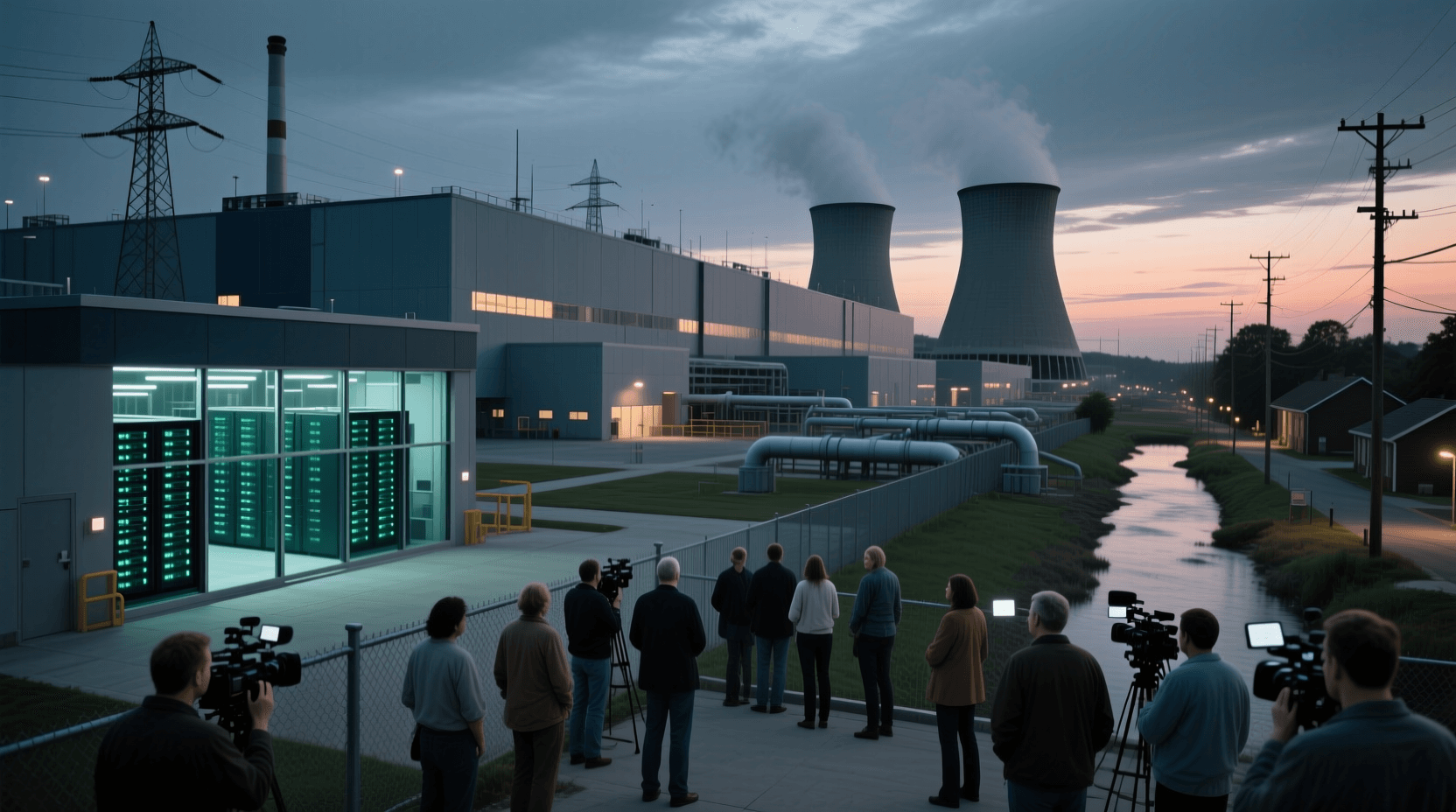
AI has spent the last two years selling a story about magic: smarter copilots, autonomous agents, instant content, and models that seem to know everything. But the physical reality behind that story is impossible to ignore now. Every chatbot reply, every image generation, every agent workflow runs through power-hungry infrastructure that sits somewhere in the real world, drawing electricity, consuming water, and reshaping local communities.
That is why growing pressure around data center secrecy matters far beyond environmental politics. It signals the start of a more uncomfortable phase for the AI industry: the moment when users, regulators, developers, and nearby residents all begin asking the same question—what exactly is happening behind the curtain?
AI infrastructure is no longer an abstract cloud
For years, the term “cloud” helped tech companies avoid talking about geography. It made compute feel weightless. But AI has changed the scale of the conversation. Large model training and inference require enormous facilities, specialized chips, backup power systems, cooling systems, and land. These are not invisible services. They are industrial operations.
As public scrutiny grows, secrecy becomes a liability. If a company cannot clearly explain how much energy it uses, where its water comes from, how it handles grid stress, or what emergency planning exists for surrounding communities, people will assume the worst. In 2026, opacity is not a neutral posture. It is a trust deficit.
That matters for AI adoption because enterprise buyers are becoming more sophisticated. They are no longer evaluating tools only on model quality and price. They are asking whether vendors can survive regulatory pressure, reputational risk, and procurement audits tied to sustainability and privacy.
The next trust layer in AI is operational disclosure
We usually talk about AI trust in terms of model behavior: hallucinations, bias, safety guardrails, and data governance. Those issues remain critical. But infrastructure transparency is becoming a parallel trust layer.
In practice, this means AI companies may soon need to disclose more than uptime and SOC 2 reports. Customers will want evidence of energy sourcing, emissions accounting, cooling strategy, local impact mitigation, and incident response. Governments may demand it. Communities certainly will.
This creates a strategic opening for AI products that build transparency into their identity rather than treating it as a compliance afterthought. Tools like GreenPT point toward that future. A privacy-friendly AI chat platform powered by renewable energy is not just a branding choice; it is a signal that infrastructure decisions can become product features. As more buyers look for sustainable and transparent AI vendors, “cleaner compute” may become as marketable as “faster inference.”
Privacy and infrastructure are starting to converge
There is another reason this conversation matters: secrecy around physical infrastructure often mirrors secrecy around digital practices. When companies are vague about where workloads run, how systems are secured, or how data moves across environments, users should pay attention.
The AI stack is becoming more interconnected, with prompts flowing through APIs, vector databases, orchestration layers, agent frameworks, and third-party tools. That complexity increases the attack surface and makes clear disclosure more important, not less. Users need to know not only what a model can do, but where their data goes and how long it persists.
That is where privacy-first tools gain relevance. Burn After Reading, for example, reflects a growing appetite for ephemeral communication and reduced data residue. In an era when every interaction risks becoming stored, indexed, or repurposed, products that minimize retention are not niche—they are a rational response to a more suspicious market.
Developers should treat environmental scrutiny like a product requirement
Many AI developers still see environmental concerns as a corporate affairs issue for hyperscalers to handle. That is shortsighted. Even if you are building on top of someone else’s infrastructure, your users will increasingly hold you accountable for the choices embedded in your stack.
That means developers should start asking practical questions now:
- Which providers can document renewable energy usage?
- What regions are available, and what are the local resource implications?
- Can workloads be routed more efficiently to reduce waste?
- Are there retention controls and privacy safeguards by default?
- What security verification exists across the chain?
Security is especially important because pressure for rapid AI deployment often leads to sloppy architecture. As data centers and AI platforms face more public attention, attackers will see opportunity in the complexity. Tools like RedVeil, which offers on-demand penetration testing powered by agentic AI, represent the kind of continuous validation developers should take seriously. If your AI product depends on opaque infrastructure and weak security assumptions, transparency debates can quickly become breach headlines.
The AI market is moving from novelty to accountability
The bigger shift here is cultural. AI is exiting its honeymoon phase. The industry can no longer assume that dazzling demos will outweigh concerns about resource use, local impact, privacy, or resilience. Accountability is becoming part of product-market fit.
That does not mean every AI company must become an energy company or publish perfect real-time environmental dashboards tomorrow. But it does mean the old playbook—say as little as possible, centralize control, and hope users focus on features—will age badly.
The winners in the next phase of AI may not be the companies with the biggest models alone. They may be the ones that can prove their systems are understandable, defensible, and responsible from chip to chatbot.
The real competitive advantage: showing your work
AI users are getting smarter. Developers are under more scrutiny. Regulators are circling. Communities are paying attention. In that environment, secrecy stops looking like strategy and starts looking like risk.
The industry’s next credibility test is simple: not whether AI can generate impressive outputs, but whether the companies behind those outputs are willing to show their work. Data centers are no longer backstage infrastructure. They are part of the product story now—and increasingly, part of the trust equation.