Why Google’s Austria Data Center Signals a New Phase for European AI Infrastructure
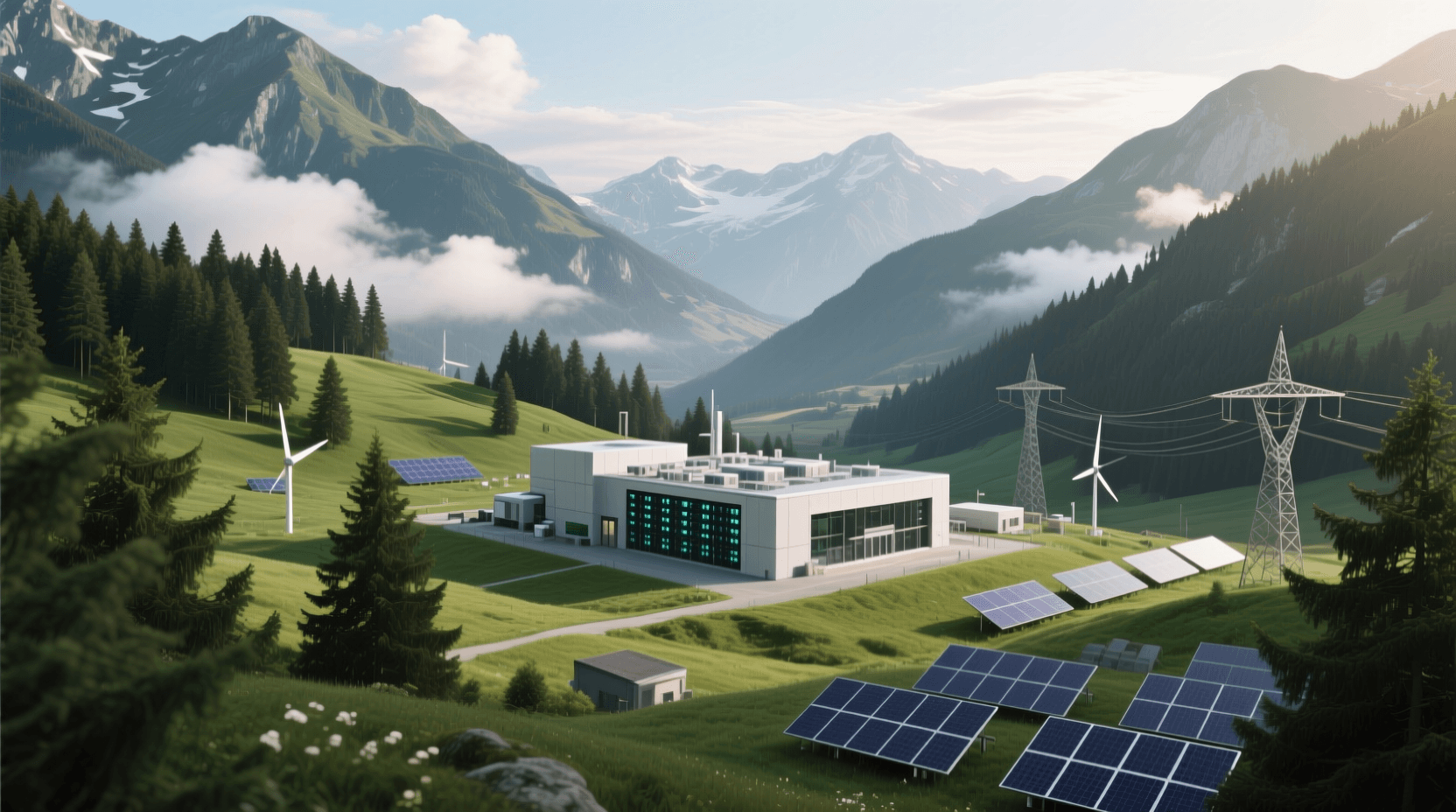
Google’s decision to build its first data center in Austria is more than a regional expansion story. It’s another sign that AI infrastructure is becoming geographically strategic, not just technically impressive. For AI builders, enterprise buyers, and startups trying to compete in Europe, this matters because the next wave of advantage may come from where compute lives, not only from which model you use.
For years, the AI conversation has been dominated by foundation models, chat interfaces, and benchmark wars. But underneath all of that is a harder truth: AI adoption depends on physical infrastructure. Data centers determine latency, compliance options, resilience, energy access, and the practical cost of deploying AI at scale. When a major cloud provider places new capacity in a country like Austria, it changes the map for local enterprises and sends a message to neighboring markets as well.
The infrastructure race is getting local
AI used to feel borderless. In practice, it increasingly isn’t. Enterprises in regulated industries want more control over where their data is processed. Governments want digital sovereignty. Developers want lower latency for inference-heavy applications. And everyone wants reliability when demand spikes.
That’s why new regional data center investments matter. They reduce the distance between AI services and the businesses that depend on them. That can improve application performance, but it also helps with procurement decisions. Many organizations that were hesitant to expand AI programs because of data residency or operational concerns may now revisit those plans.
Austria is an especially interesting location because it sits at a crossroads of Central Europe. A facility there is not just about serving one national market. It can strengthen a broader regional AI footprint and make nearby ecosystems more attractive for startups, enterprise software vendors, and platform teams.
AI adoption is shifting from experimentation to operations
The biggest implication for users is simple: AI is moving out of pilot mode. New infrastructure gets built when providers expect sustained demand, not just curiosity. That suggests cloud vendors see enterprise AI workloads becoming recurring, business-critical, and expensive enough to justify local capacity.
For developers, this means architecture choices are becoming more consequential. If your product depends on real-time inference, retrieval pipelines, customer data integrations, or agentic workflows, proximity to compute can influence both user experience and operating cost. A few hundred milliseconds may not matter for image generation as much as it matters for copilots, customer support automation, or AI features embedded inside transactional software.
This is where enterprise platforms will gain leverage. Tools like Einstein 1 Platform are well positioned in this environment because they connect generative AI directly to business workflows and CRM data. As more regional infrastructure comes online, enterprise buyers will expect AI systems not just to be smart, but to be compliant, responsive, and deeply integrated into the software they already use.
The real story is power, cooling, and edge readiness
There’s also a less glamorous but more important angle: AI growth is now constrained by physical realities. Power availability, cooling efficiency, land, permitting, and network connectivity are becoming competitive differentiators. In that sense, every new data center announcement is also a statement about who can actually support the next generation of AI workloads.
This opens the door for more specialized infrastructure players. Companies don’t always need to wait for hyperscalers to solve every deployment challenge. In edge-heavy or capacity-constrained environments, modular infrastructure can be a faster path. That’s why solutions like ModulEdge are worth watching. Custom-fit modular data centers can help organizations bring AI compute closer to where workloads are generated, especially in industrial, remote, or high-demand settings where traditional builds are too slow or rigid.
In other words, the future of AI infrastructure may be hybrid: hyperscale cores combined with modular and edge extensions.
Visibility in AI will matter as much as access to AI
There’s another downstream effect that often gets overlooked. As AI infrastructure expands, more companies will launch AI-powered products and assistants into regional markets. That means competition for discovery will intensify. Being technically capable won’t be enough if your brand or product is invisible inside AI-driven search and answer engines.
This is where AI distribution strategy starts to matter. Tools like Algomizer reflect a growing need for GEO and AEO optimization, helping businesses improve how they appear in AI search environments. If Europe gets more localized AI capacity, we should expect more localized AI experiences too, including region-specific assistants, commerce flows, and enterprise copilots. Businesses will need to think about discoverability inside those systems from day one.
What developers and buyers should do next
For AI developers, now is the time to revisit assumptions about deployment geography. If you serve European customers, infrastructure location should be part of product strategy, not just DevOps. For enterprise buyers, this is a reminder to evaluate vendors on operational maturity: where they run, how they handle data, and whether their AI features can scale beyond demos.
Google’s Austria move is not important because one facility suddenly changes AI overnight. It’s important because it confirms the next chapter of AI will be built as much with concrete, power, and regional planning as with models and prompts. The companies that win will be the ones that understand both layers: intelligence at the application level and infrastructure at the physical level.
That’s the real elevation story here.