Why Google’s Disco-Ball Design Push Signals a Bigger Shift in AI Interfaces
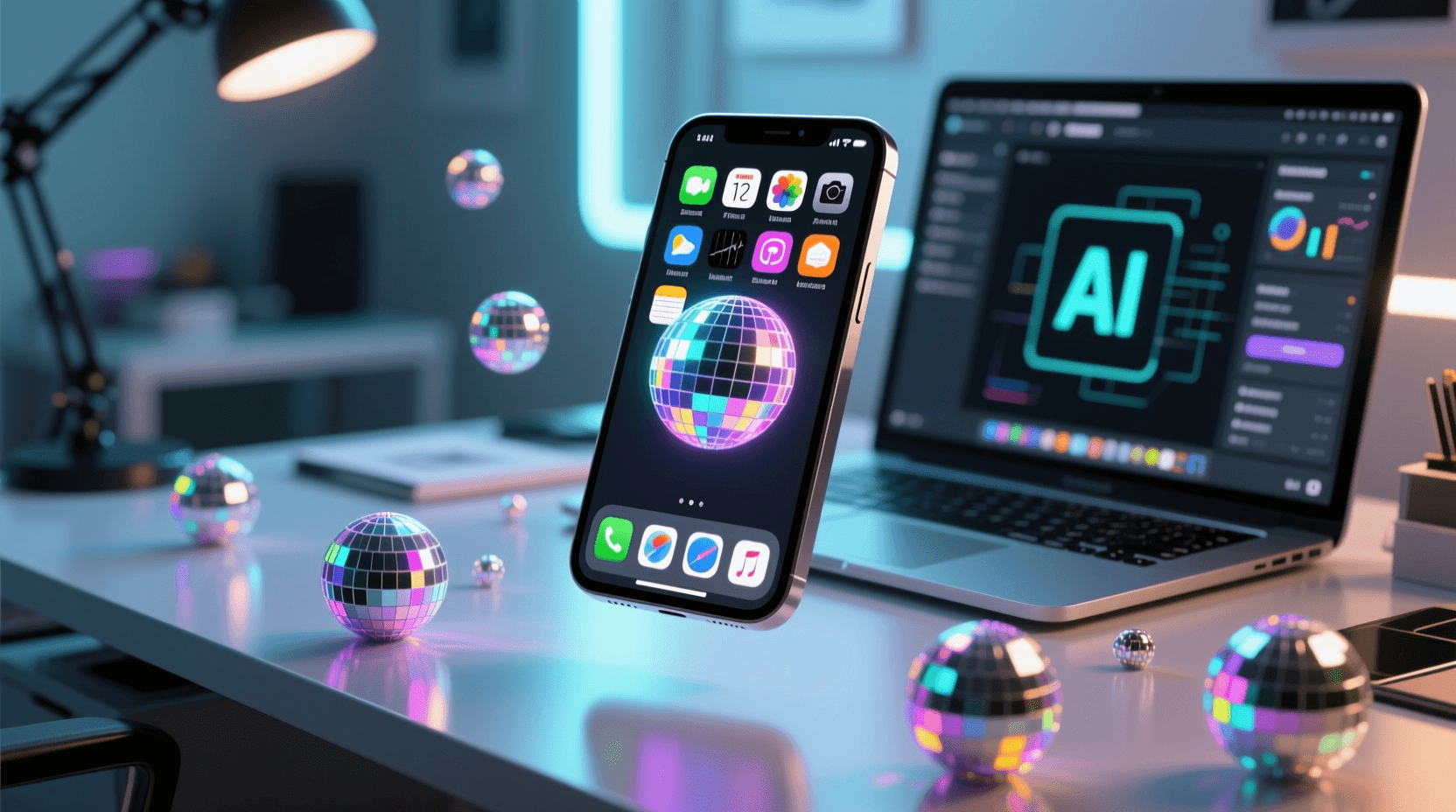
Google’s latest push to let Pixel users “disco ball-ify” their home screens is easy to laugh at. It’s shiny, a little chaotic, and tailor-made for screenshots that invite equal parts delight and secondhand embarrassment. But beneath the glitter is a serious product signal: consumer tech companies are re-learning that visual identity matters again.
For a while, AI product design drifted toward the same bland default. White chat panels. Rounded cards. Soft gradients. A polite, vaguely futuristic sameness. The assumption was that intelligence would carry the experience, and interface style was secondary. That era is ending.
The AI era won’t be won by utility alone
As AI tools mature, users are no longer impressed just because something can generate text, images, code, or 3D assets. Capability is becoming table stakes. What stands out now is taste, emotional resonance, and the feeling of using a product that knows what kind of experience it wants to create.
That’s why a seemingly frivolous design move from Google matters. When a platform company experiments with maximalist, expressive visual language, it gives permission to the rest of the market to stop pretending that every interface needs to look like enterprise middleware.
For AI builders, this is a reminder that product trust and product personality are not opposites. A tool can be useful and playful. It can feel premium without becoming sterile. In fact, as AI systems become more agentic and autonomous, users may increasingly want stronger visual cues that help them understand what kind of “entity” they’re interacting with.
Aesthetic differentiation is becoming a product moat
The next wave of AI competition won’t just be model-vs-model. It will be workflow-vs-workflow and vibe-vs-vibe.
That may sound superficial, but it isn’t. Design language shapes user expectations. A minimal interface suggests precision. A glossy, expressive one suggests creativity and experimentation. A home-design AI should not feel like a tax dashboard. A 3D generation platform should not look like a generic chatbot with a file uploader bolted on.
This is where teams should pay attention to tools that make aesthetic iteration faster. Products like sleek-ui point toward a practical future for AI apps: instead of rebuilding front ends from scratch, developers can rapidly re-skin products and test different visual identities with far less friction. That matters because AI UX is still unsettled. Teams need to experiment, not commit too early to one “safe” look that gets lost in a sea of similar apps.
If every AI product uses the same design kit and the same interaction patterns, users stop remembering brands. They remember categories. That is dangerous for startups.
Visual AI products especially need stronger interface storytelling
The design question becomes even more important for visual-generation platforms. If your product creates spaces, objects, or characters, your interface is already part of the creative promise.
Take interiordeco.ai, which focuses on AI-powered virtual home staging and photorealistic interior visualization. A product in that category is not just selling output quality; it’s selling aspiration. Users want to feel possibility, not administrative efficiency. The interface should support imagination.
The same goes for Pixal3D, which helps creators and developers generate production-ready 3D assets without local setup. When users are evaluating 3D generation workflows, they care about technical specs like GLB output, PBR textures, and reconstruction quality. But they also care whether the product experience makes them feel in control of a creative pipeline. Good design can make advanced functionality feel legible instead of intimidating.
That’s the hidden lesson in Google’s disco-ball moment: decorative choices are not merely decorative when they influence confidence, curiosity, and retention.
Personalization is becoming the default expectation
Another signal here is that users increasingly expect software to adapt to them aesthetically, not just functionally. We’ve spent years optimizing AI around personalized recommendations, custom outputs, and context-aware assistance. Visual personalization is the next logical layer.
This creates an opportunity for developers building AI products: don’t think of theming as a cosmetic afterthought. Think of it as part of onboarding, identity, and long-term engagement. Give users modes, moods, skins, and visual presets that align with why they’re using the product. A researcher, marketer, game developer, and interior designer may all want the same core model capability wrapped in very different environments.
In that world, the companies that win are not necessarily the ones with the flashiest effects. They’re the ones that understand that interface design is part of the model experience.
The real risk isn’t being too bold
The internet’s first reaction to glitter-heavy design is usually mockery. But the bigger risk for AI product teams is not overexpression. It’s caution. It’s shipping another competent, forgettable interface that tells users nothing about the product’s point of view.
Google can afford to be weird in public. Smaller AI companies should take a more strategic lesson from that: memorable design is not fluff if it helps users instantly understand what your product is for and why it feels different.
The AI market is entering its brand era. Not branding in the old logo-and-tagline sense, but brand as experience system: visuals, motion, tone, trust, and emotional fit. Disco-ball icons may not be everyone’s taste, but they point to a future where software is allowed to have one.
And for AI builders, that may be the most valuable signal of all.