Why Google’s Enterprise Agent Bet Signals a More Technical Future for AI Automation
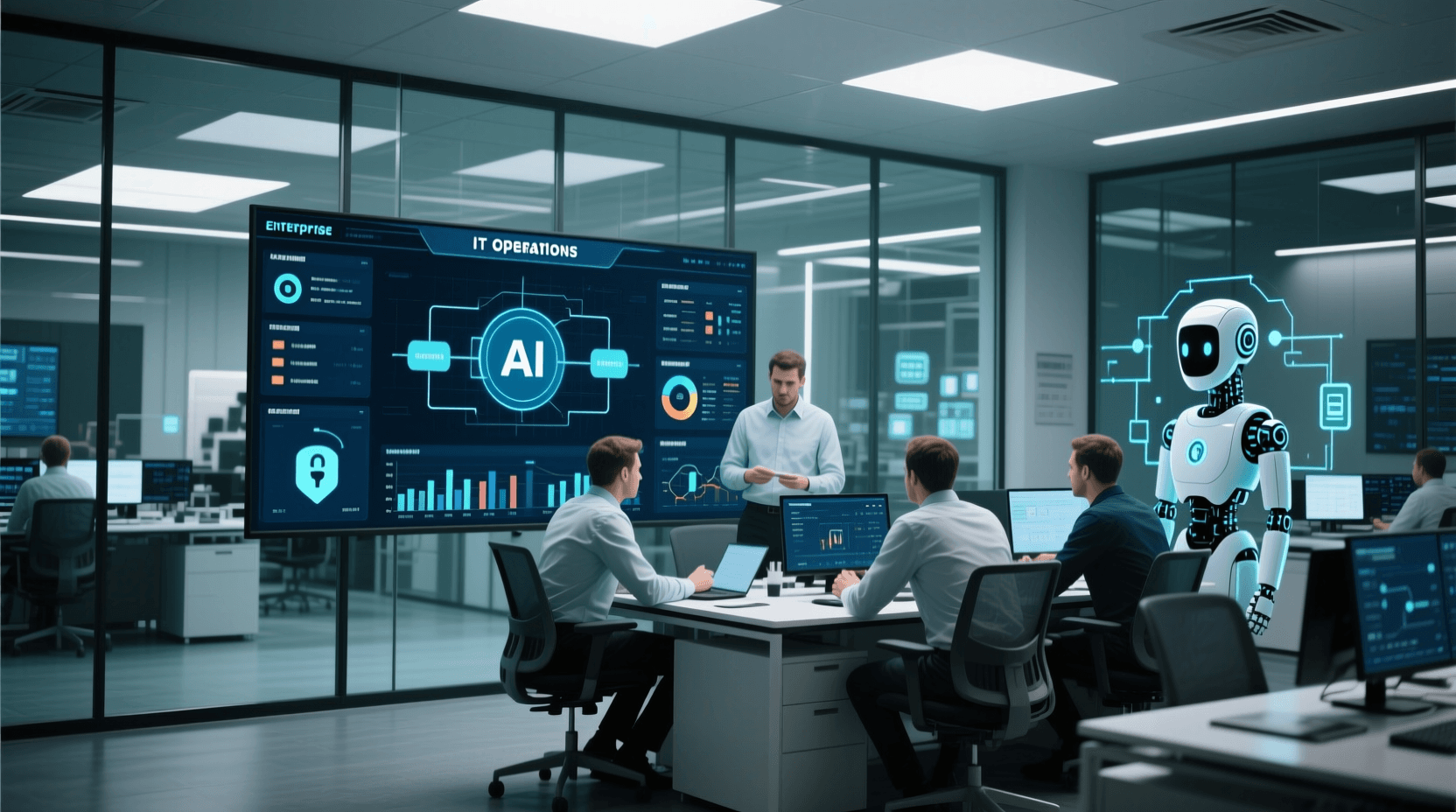
Google’s latest move in enterprise agents points to a shift that many AI buyers have been quietly expecting: the era of “just chat with your data” is giving way to the era of governed, tool-connected, IT-managed automation.
That matters because the biggest blocker to enterprise AI adoption was never raw model intelligence. It was trust, control, and integration. A flashy assistant can impress a team in a demo. An agent that can safely interact with internal systems, follow policies, log its actions, and survive procurement review is what actually gets deployed.
The enterprise agent market is growing up
For the past two years, AI vendors have sold a simple dream: anyone in the company can build powerful assistants with natural language alone. That message worked well for experimentation, but it ran into a hard wall inside large organizations.
Enterprises don’t just want agents that sound smart. They want agents that can connect to identity systems, work across sanctioned apps, respect permissions, and fit into existing IT operations. That naturally shifts power away from pure no-code experimentation and back toward technical teams.
Google’s choice to orient its enterprise agent tooling toward IT and technical users reflects this reality. It suggests that the next competitive battleground in AI won’t be who has the most charming chatbot interface. It will be who can provide the most reliable agent infrastructure.
In other words, enterprise AI is becoming less like consumer software and more like cloud architecture.
Why this is good news for serious AI deployments
Some will see a technical-first agent platform as a step backward for business users. I think it’s the opposite.
When AI tools are too easy to launch without oversight, organizations end up with a sprawl problem: duplicate agents, unclear data access, inconsistent prompts, and no real lifecycle management. That may be acceptable in a pilot phase, but it becomes dangerous at scale.
A more IT-centered approach can create the foundation that business teams actually need. If security, connectors, observability, and governance are built in from the start, then department-level users can build on top of something stable rather than improvising from scratch.
This is where advanced foundation models matter. Tools like Gemini are increasingly relevant because enterprise agents need more than conversation quality. They need strong tool use, multimodal understanding, and the ability to act across workflows with precision. The more agentic the model becomes, the more important it is that the surrounding platform treats it like operational software instead of a novelty interface.
The real divide: AI assistant versus AI system
A lot of the market still talks about agents as if they are simply better assistants. But enterprises are starting to distinguish between two categories:
- assistants that help individuals think and write
- systems that perform work across applications and teams
That second category is much harder to deploy. It requires orchestration, permissions, auditability, exception handling, and integration logic. It also requires customization.
That’s why a workflow-oriented layer remains essential. A tool like Gemini shows how customizable assistants and workflow automation can extend the usefulness of AI beyond generic chat. Enterprises don’t just want a model endpoint; they want repeatable business processes that can be adapted to their environment.
This is also why open ecosystems remain important even as big vendors push integrated stacks. Activepieces is a good example of how the market is evolving: users want zero-code accessibility, but developers and technical operators still need flexibility to wire agents into real business systems. The future is not no-code versus developer tooling. It’s layered automation where both coexist.
What developers should pay attention to now
If Google’s direction is a signal, developers building AI products should rethink what enterprise buyers value.
The old pitch was: “Our AI can answer your questions.”
The new pitch is: “Our AI can operate safely inside your environment.”
That changes product priorities. Developers should invest more in:
- role-based access controls
- connector reliability
- audit logs and traceability
- human-in-the-loop approvals
- environment-specific customization
- monitoring for agent failures and drift
The winners in enterprise AI may not be the ones with the most dramatic demos. They may be the ones with the best admin panel, the cleanest deployment model, and the strongest integration story.
What AI tool users should expect next
For AI tool users, especially operations teams, analysts, and internal builders, this trend means the self-serve AI gold rush is likely to cool. But that’s not necessarily bad.
Instead of dozens of isolated bots, companies will move toward a smaller number of sanctioned agent frameworks connected to approved systems. Users may lose some freedom at the edges, but they’ll gain reliability, support, and better access to high-value workflows.
Expect more enterprises to standardize around platforms that combine powerful models, workflow automation, and governance. In practice, that means the most useful AI stack may include a frontier model such as Gemini, a customizable assistant layer like Gemini, and an automation fabric such as Activepieces to connect actions across tools.
The bigger takeaway
Google’s enterprise agent strategy highlights a broader truth: AI is leaving the experimental phase and entering the infrastructure phase.
That’s a less glamorous story than consumer AI hype, but it’s the one that will define real adoption. Enterprises are not asking whether agents can be built. They’re asking who gets to build them, how they are governed, and whether they can be trusted with meaningful work.
The companies that answer those questions well will shape the next chapter of AI automation.