Why Hidden Malware Indicators Matter More in the Age of AI-Generated Code
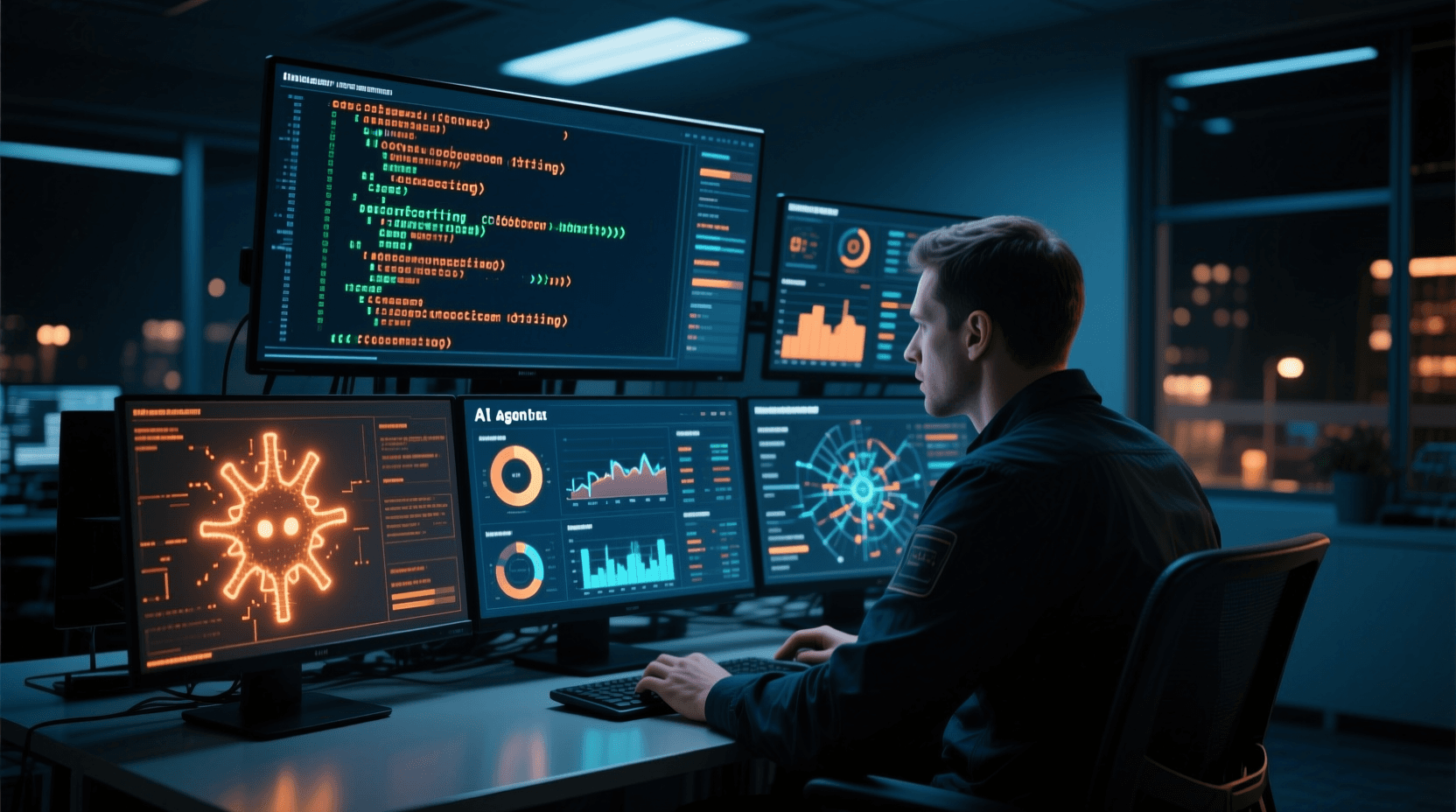
AI-assisted development is accelerating software creation, but it’s also changing the shape of security work. One of the biggest shifts is that defenders can no longer rely on obvious clues. Malware authors have long hidden indicators of compromise inside binaries using tricks that defeat classic string extraction. What’s new is the environment around that problem: faster code generation, more experimental apps, and a flood of “good enough” builds created by teams that may not have deep reverse-engineering expertise.
That matters because the next security bottleneck in AI development won’t be writing code. It will be understanding what code actually does once it’s compiled, packaged, deployed, or copied into a project by an agent.
The real lesson: security visibility has to go deeper
Hidden strings in malware are not just a reverse-engineering curiosity. They represent a broader truth about modern software risk: the most important signals are often deliberately concealed, dynamically assembled, or context-dependent.
For AI tool users, this is especially relevant in two scenarios:
- Vibe-coded internal tools that move from prototype to production too quickly
- Agent-built workflows that pull in dependencies, scripts, binaries, and wrappers with limited review
In both cases, traditional scanning often catches only the obvious layer. If a suspicious binary stores command-and-control domains, file paths, mutex names, or payload markers in obfuscated form, a basic strings pass may tell you very little. That’s not a niche malware problem anymore. It’s a practical issue for any team shipping AI-enabled software at speed.
This is why deeper binary analysis should be part of the AI development conversation, not something reserved for elite malware labs.
AI coding has expanded the attack surface for “unknown unknowns”
The rise of code generation has created a subtle security paradox. AI can help developers move faster, but speed also increases the odds that teams will inherit opaque components they don’t fully inspect. A generated installer, bundled executable, helper DLL, or third-party utility may look harmless in source control because the dangerous behavior isn’t visible in plain text.
That creates a blind spot for startups and solo builders in particular. Many are comfortable reviewing Python, JavaScript, or TypeScript. Far fewer are equipped to inspect a Windows PE file or identify when strings are being constructed on the stack, decoded at runtime, or hidden behind lightweight obfuscation.
The result is an ecosystem where attackers don’t need sophisticated zero-days to succeed. They just need defenders to trust surface-level inspection.
What this means for builders of AI tools
If you build AI products, especially tools that execute code, automate workflows, or integrate with user-supplied files, your security model needs to assume that malicious artifacts will try to look boring.
That means investing in layered analysis instead of one-shot scanning. A practical starting point is using tools designed for fast-moving projects. Vuln0x is particularly relevant here because it targets vibe-coded environments where security debt accumulates quickly. Its parallel scanner approach and risk scoring can help teams identify issues before experimental code becomes production infrastructure.
But scanning code and packages is only one layer. Availability also matters. If your AI product is exposed publicly, attackers may pair malware delivery attempts with disruption campaigns. Wafler is worth considering for teams that need affordable DDoS protection and real-time mitigation without adding unnecessary operational complexity. Security is not just about finding hidden indicators inside binaries; it’s also about keeping systems reachable while you investigate threats.
Then there’s observability, which becomes critical once LLMs and agents are in the loop. Static analysis can tell you whether an artifact looks suspicious, but runtime visibility tells you what your AI system actually did with it. Fallom fits this emerging need well by giving teams AI-native observability for LLMs and agents. That’s increasingly important because many security failures now happen through chains of decisions, tool calls, and external interactions rather than a single obvious exploit.
The next frontier is combining reverse engineering with AI telemetry
The most interesting opportunity isn’t merely better malware analysis. It’s connecting low-level artifact inspection with high-level AI system behavior.
Imagine a workflow where:
- a suspicious binary is flagged for hidden indicators,
- the related app session is traced through agent logs,
- downstream API calls are correlated with unusual behavior,
- and infrastructure protections automatically tighten in response.
That kind of joined-up defense is where AI security is heading. Reverse engineering tools reveal concealed intent. Observability platforms reveal executed behavior. Perimeter protection reduces blast radius. The winners will be teams that connect all three.
Security maturity now means questioning the compiled layer
For years, many software teams treated binaries as a downstream concern. In the AI era, that’s no longer safe. Generated code, copied snippets, community packages, and autonomous build pipelines all increase the chance that risky artifacts enter your stack with minimal scrutiny.
The takeaway for developers is simple: if your security process ends at source code review, you’re missing part of the threat model.
The takeaway for AI tool users is even simpler: ask vendors how they inspect compiled components, how they monitor agent behavior, and how they protect uptime during incidents. If the answer is vague, that’s a signal in itself.
As AI lowers the barrier to building software, it also lowers the barrier to shipping software you don’t fully understand. Hidden malware indicators are a reminder that attackers thrive in that gap. The teams that close it fastest will be the ones that treat binary analysis, observability, and resilience as core product features—not optional security extras.