Why Human-Centric Vision Models Could Reshape the Next Wave of AI Products
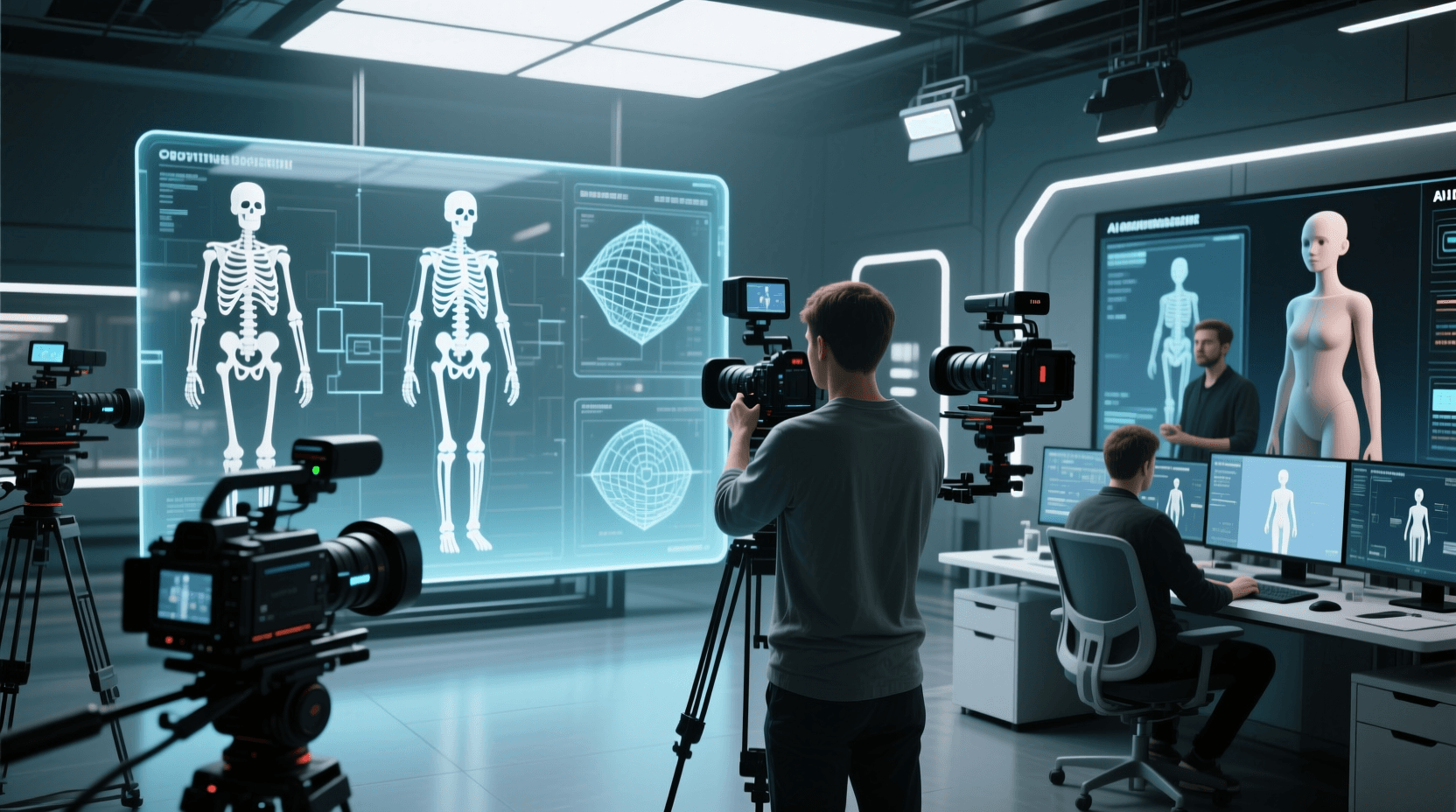
Human-centered AI is entering a new phase. For the last two years, most public attention has gone to text generation, chat interfaces, and image synthesis. But some of the most commercially important progress is happening in a less flashy layer of the stack: models that understand people in images and video with far greater precision.
That matters because the next generation of AI products will not just generate humans. They will need to track, interpret, and reconstruct them reliably across cameras, lighting conditions, body positions, and motion. A stronger human-vision backbone changes what developers can build in media, gaming, telepresence, retail, fitness, and robotics.
The real shift: from narrow perception tasks to unified human understanding
Historically, developers pieced together separate models for pose estimation, segmentation, depth-like geometry, and surface understanding. That worked, but it also created brittle pipelines. Every added model increased latency, integration complexity, and failure points.
A high-resolution, human-focused foundation model signals something more important than a benchmark win: the consolidation of multiple perception tasks into a shared representation. That is a big deal for product teams.
When one backbone can support body pose, person segmentation, surface normals, point mapping, and appearance-related properties, developers gain a more coherent view of the human subject. In practical terms, that means fewer awkward handoffs between models and better alignment between what the system thinks a person’s body is doing and what their visual surface actually looks like.
For AI builders, this is the difference between a demo and infrastructure.
Why this matters for digital humans and avatar systems
The clearest downstream impact will be in digital human platforms. Tools like Omnihuman AI already show how compelling AI-generated characters can be when lip-sync, expression, and motion feel believable. But realism is not just about generation quality. It depends on perception quality too.
If your model misunderstands shoulder rotation, hand placement, clothing boundaries, or facial orientation, the generated output starts to feel uncanny. Better human-centric vision models can improve motion transfer, body-aware animation, and more accurate compositing of synthetic characters into real scenes.
That has implications for creators building virtual presenters, training simulations, customer support avatars, and localized video content. The future digital human stack will likely combine language reasoning from providers like OpenAI with increasingly sophisticated human perception and rendering layers. In other words, conversation alone is no longer enough. Embodiment is becoming part of the product.
Consistency is becoming the new battleground
One of the biggest pain points in AI-generated media is consistency across frames, poses, and viewpoints. It is easy to make a striking single image. It is much harder to preserve identity and structure over time.
That is where human-centric vision progress intersects with tools like Consistent Character AI. For storytellers, game developers, and marketing teams, consistent characters are not a nice-to-have. They are the baseline requirement for usable production workflows.
As vision models get better at understanding body geometry and surface appearance, they can help solve a problem that has haunted generative AI from the start: drift. A character whose proportions, posture, clothing edges, or body orientation subtly change from scene to scene breaks immersion and increases editing costs. Better human understanding can reduce that drift, especially in pipelines where generated assets need to remain stable across multiple outputs.
This is where the market is heading: not just “generate a person,” but “generate this person, consistently, from many angles, in motion, with controllable structure.”
Developers should pay attention to the hidden product benefits
The immediate excitement around advanced human vision often focuses on AR/VR, but the opportunity is broader.
For ecommerce, better segmentation and surface understanding can improve virtual try-on and apparel visualization. For fitness apps, more precise pose estimation can make feedback systems less frustrating and more personalized. For film and advertising, cleaner human masks and geometry estimates can speed up editing and reduce manual rotoscoping. For robotics, more accurate human scene understanding can improve safety and interaction.
The common thread is reliability. Users do not care whether a model predicts normals or point maps. They care whether the product works smoothly. Stronger human-centric perception improves the invisible layer that determines whether AI feels magical or broken.
The strategic takeaway: multimodal AI is becoming physically grounded
The broader AI industry is moving from abstract intelligence toward grounded intelligence. Language models can explain a workout pose, write a character biography, or script a training video. But to participate in human environments, AI also needs to understand bodies, motion, surfaces, and spatial context.
That is why advances in human-centric vision deserve more attention than they usually get. They are not side quests to generative AI. They are part of the foundation for embodied interfaces, creator tools, and interactive media systems.
For AI tool users, expect better avatar quality, smoother editing workflows, and more believable character-driven content. For developers, expect pressure to move beyond stitched-together perception pipelines toward unified multimodal systems.
The next wave of AI products will not win on text quality alone. They will win by understanding humans well enough to represent them, animate them, and respond to them in ways that feel natural. That is a much bigger shift than a single model release—and it is one the entire AI tooling ecosystem should be watching closely.