Why India’s AI Image Boom Could Reshape the Next Wave of Creative Tools
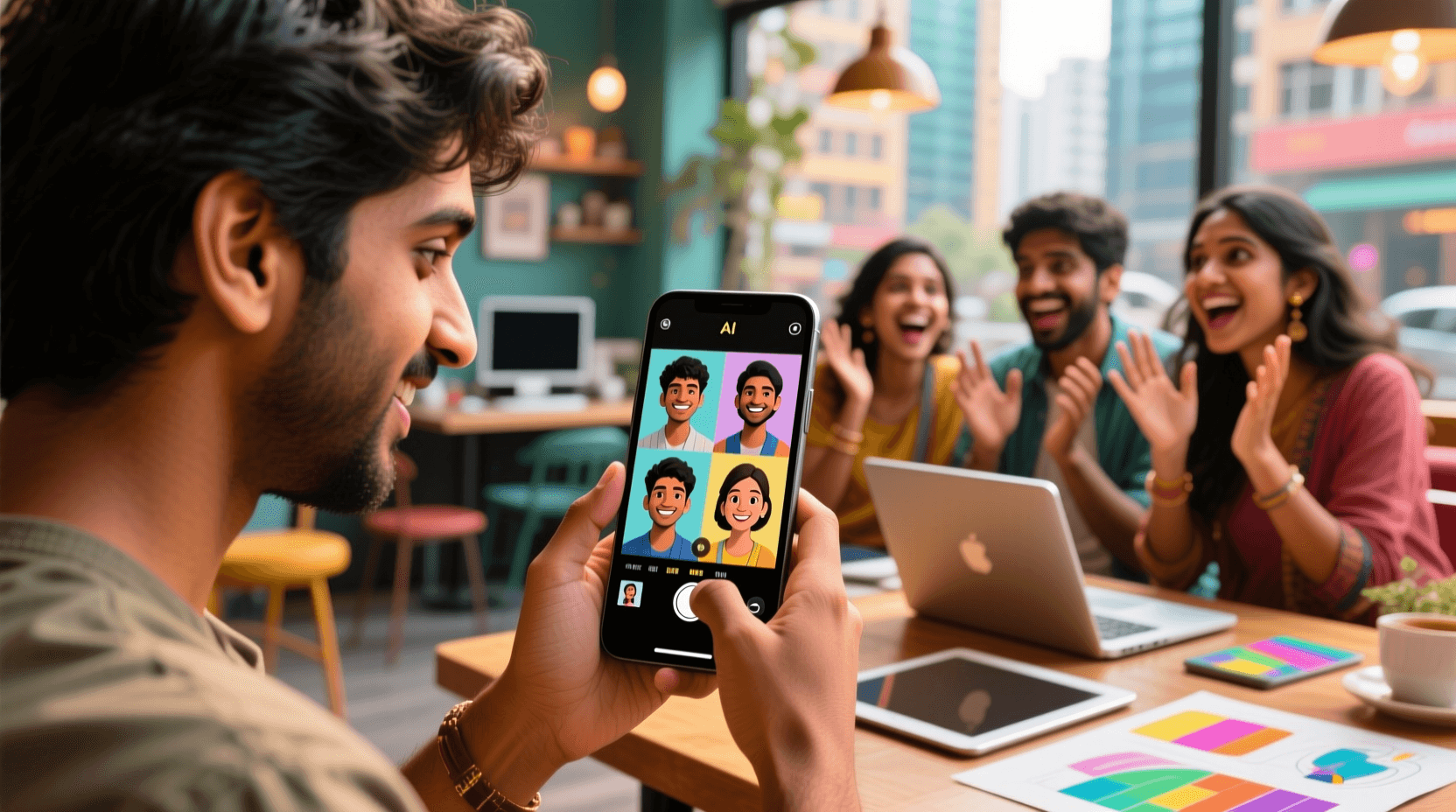
India’s strong early enthusiasm for AI image creation is more than a regional usage story. It may be a preview of where consumer AI is headed next: fast, personal, mobile-first, and deeply tied to identity, status, and self-expression.
What stands out is not simply that people are generating portraits, avatars, and stylized personal images. It’s that image AI appears to be finding product-market fit when it behaves less like a “design suite” and more like an always-available creative companion. That distinction matters for both developers building AI products and users deciding which tools deserve a place in their workflow.
The real signal: AI images become everyday media
For years, many AI image products were marketed around spectacle: surreal artwork, fantasy scenes, concept art, and one-click wow moments. Those use cases were useful for demos, but they were not always sticky habits.
What we’re seeing now is a shift toward practical vanity, social identity, and lightweight creativity. People don’t need a huge campaign budget or professional design skills to want a polished profile image, a cinematic portrait, a festive family visual, or a stylized post for messaging apps and social platforms. In a market where mobile usage is dominant and visual communication is constant, AI image generation stops being a novelty and starts becoming infrastructure.
India is especially important here because it often rewards products that are intuitive, affordable, and shareable. If a tool can turn a casual prompt into something worth posting, forwarding, or using as a profile picture, adoption can move quickly. That’s a lesson many AI startups still underestimate.
Why this pattern matters more than global averages
A tool does not need to win everywhere at once to matter. In AI, regional intensity often predicts future mainstream behavior better than broad but shallow adoption.
Developers should pay attention to where users are most engaged, not just where press coverage is loudest. If one market is using AI images for daily self-expression while others are still experimenting, that market becomes a testing ground for better UX, monetization, and feature priorities.
This has implications for product design:
- Users want results in seconds, not a creative workflow maze.
- Personalization beats generic outputs.
- Mobile-friendly editing and sharing are essential.
- Local aesthetics, languages, and cultural moments are not edge cases; they are growth levers.
That is why lightweight tools with low friction may outperform feature-heavy platforms for large segments of the market.
What AI tool users should look for now
For users, this trend means the best image tools are no longer just the ones with the most dramatic benchmark examples. The winners will be the ones that fit everyday creative behavior.
If you need quick visuals without signup friction, GPT Image 2 is a strong example of where the category is heading: fast image generation and editing, 2K outputs, and a streamlined experience without login barriers, watermarks, or limits. That kind of accessibility matters when users want to create in the moment rather than commit to a complex platform.
For marketers and teams, image AI is also becoming less about isolated art generation and more about repeatable brand production. GPT Image 2 points in that direction with 4K visuals, multilingual text support, and on-brand campaign creation. In markets where language diversity and rapid content iteration matter, those features are not just nice extras; they are a competitive advantage.
And for users who want more control over transformations, reference-based editing, and upscaling, GPT Image 2 reflects another important shift: people increasingly expect one tool to handle generation, refinement, and reuse rather than forcing them into a fragmented workflow.
The next battleground is not image quality alone
Most AI image conversations still focus too much on realism and not enough on utility. Yes, quality matters. But once outputs cross a certain threshold, other factors become more important: speed, consistency, editing flexibility, multilingual support, cultural relevance, and cost.
That is where many global AI products may still be underperforming. A model can be technically impressive and still fail to become habit-forming if it ignores the contexts where people actually create. Users are not always trying to make “art.” Often they’re trying to make something usable right now.
Developers should also notice that personal image generation creates a bridge between consumer and business use. The same user who makes an avatar today may want product mockups, event posters, ad creatives, and branded social visuals tomorrow. Consumer fun can become professional workflow surprisingly fast.
A preview of the broader AI market
The bigger takeaway is that AI adoption will not unfold evenly. Some regions will reveal winning use cases earlier than others, especially where digital expression is already social, visual, and mobile-native.
India’s response to AI image tools suggests that the next phase of generative AI may be less about universal blockbuster launches and more about concentrated pockets of intense usage that teach the rest of the industry what people actually value.
For AI builders, that means watching behavior over headlines. For users, it means choosing tools that remove friction and match real creative habits. And for the broader ecosystem, it’s a reminder that the future of AI may be decided not by the flashiest demo, but by the tools people reach for every day to make themselves seen.