Why Longer AI-Generated Songs Could Reshape Music Apps, Devices, and Creator Workflows
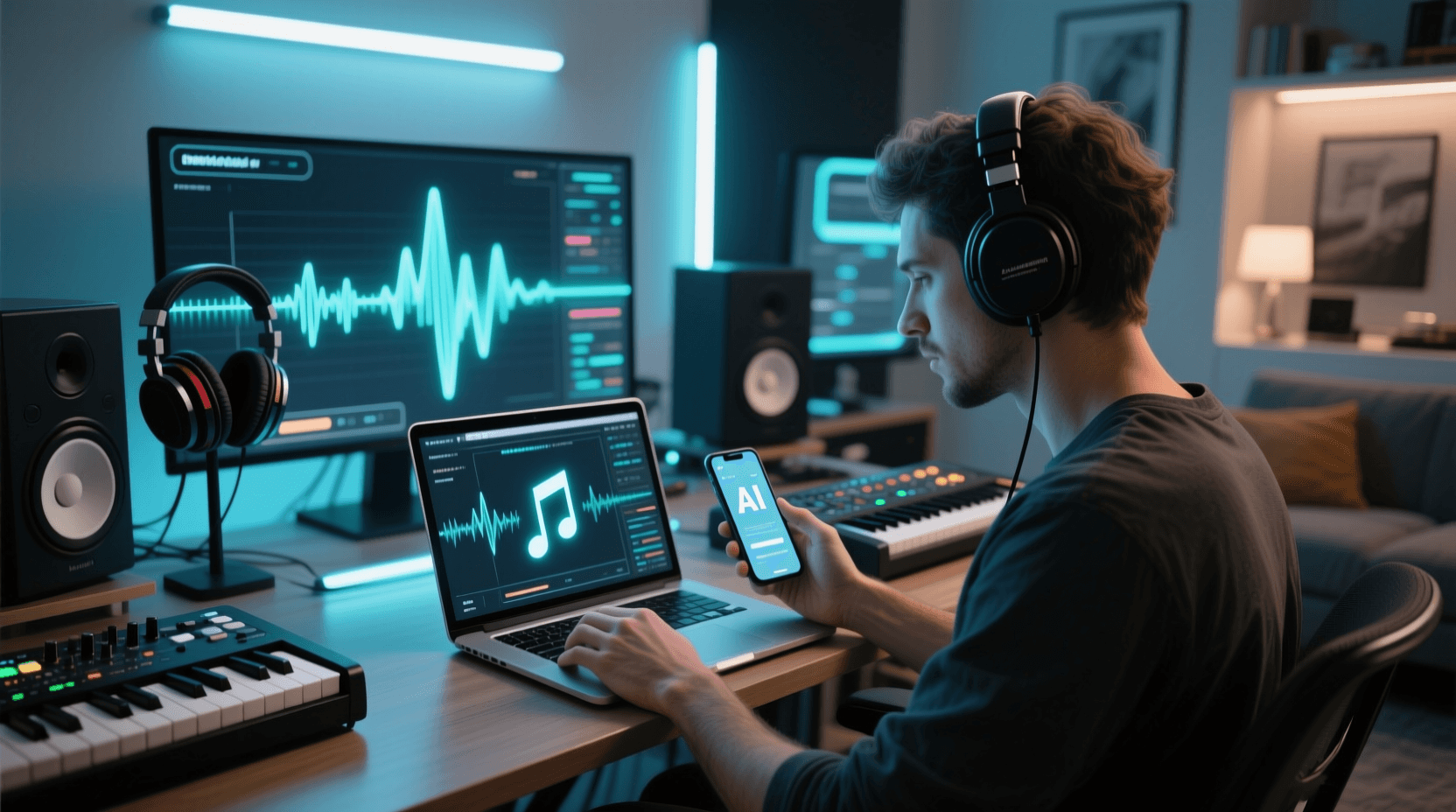
The next phase of generative audio is not just about making better clips. It is about making complete musical experiences that are long enough to feel usable in the real world.
For AI music, duration has quietly been one of the biggest constraints. Short generations are impressive in demos, but they often break down when creators try to use them in podcasts, game soundtracks, social campaigns, demos, or even casual listening. Once models can generate multi-minute songs reliably—and especially if they can do it efficiently enough to run on-device—the conversation changes from novelty to product design.
Why song length matters more than most people think
A six-minute generation target, or even a dependable two-minute on-device track, signals something bigger than a spec sheet upgrade. It suggests AI audio is moving closer to the structure of real music workflows.
Most creators do not need a five-second sonic experiment. They need a beginning, development, transitions, and an ending. They need material that can support a scene, a stream, a game loop, a product trailer, or a full song draft. Longer outputs create room for musical memory: recurring motifs, verse-chorus patterns, tension and release, and emotional pacing.
That matters because users judge music differently than they judge images. A flawed AI image can still be useful. A flawed song becomes painful over time. Repetition, drift, awkward transitions, and empty arrangement choices become more obvious the longer a listener stays engaged. So if models are improving at longer-form structure, that is a meaningful technical and commercial milestone.
On-device audio could be the real story
The most interesting part of this shift may not be song length at all. It may be portability.
When audio models become small enough to run on-device, AI music stops being only a cloud feature and starts becoming a native capability. That has major implications for app builders and hardware companies.
Imagine music tools embedded directly into phones, editing suites, DJ apps, games, or creator platforms. Instead of waiting for a server response, users could generate background music locally, remix stems privately, or iterate on ideas without sending audio prompts to the cloud. For developers, this opens up lower-latency experiences, reduced infrastructure costs, and stronger privacy positioning.
This is especially relevant for mobile-first creators. The next generation of AI music products may not look like standalone web apps. They may look like features tucked inside short-form video editors, livestream software, meditation apps, fitness platforms, and educational tools.
The opportunity for AI music tools is shifting from generation to control
As longer outputs become easier to produce, the competitive edge will move away from raw generation and toward controllability.
Users will ask practical questions:
- Can I lock the chorus and regenerate only the verses?
- Can I keep the melody but change the singer?
- Can I extend a track by 90 seconds without losing coherence?
- Can I export stems for mixing, licensing, or sync work?
- Can I generate in a style that is commercially useful without sounding generic?
That is where consumer-facing tools can stand out. A tool like Song AI is appealing because it lowers the barrier to making complete songs with lyrics, vocals, and music in one flow. For users who care less about model architecture and more about output speed, that all-in-one experience is what matters.
Meanwhile, AI Music Generator points toward another important trend: prompt-driven music creation that feels fast enough for iteration. As longer-form generation improves, tools like this become more valuable for marketers, indie creators, and app teams that need usable drafts in minutes rather than days.
And AI Song Maker highlights the accessibility side of the market. Features like rap and beat generation matter because AI music is not only competing for professional musicians. It is expanding the pool of people who can participate in music creation at all.
Developers should prepare for a new kind of user expectation
Longer AI tracks will raise the bar for product quality. Once users can generate full songs, they will stop being impressed by mere existence and start evaluating musical usefulness.
For developers, that means investing in:
- better prompt guidance and genre templates
- editability after generation
- arrangement controls and timeline tools
- licensing clarity
- audio consistency across long outputs
- personalization based on prior generations
There is also a discoverability angle. If every platform can generate infinite music, curation becomes essential. The winners may not be the tools with the largest models, but the ones that help users find, refine, and reuse the right outputs quickly.
What this means for the AI music market
We are moving from “Can AI make music?” to “Where does AI-made music fit best?”
The answer is likely not a single destination. It will show up in creator software, gaming, advertising, fan content, productivity apps, and personalized media. Longer generation makes AI music more commercially relevant because it reduces the gap between demo output and deployable asset.
That does not mean human musicians become irrelevant. It means the stack around music creation gets wider. AI will increasingly handle ideation, rough composition, alternate versions, and utility music, while humans remain central for taste, narrative intent, performance identity, and final polish.
For users, the practical takeaway is simple: expect AI music tools to become less like toys and more like creative infrastructure. For developers, the message is even clearer: if your product still treats music generation as a one-click gimmick, the market is about to move past you.
Longer songs are not just a feature. They are a signal that AI audio is becoming something people can actually build with.