Why Low-Latency AI Translation Could Become the Next Default Interface
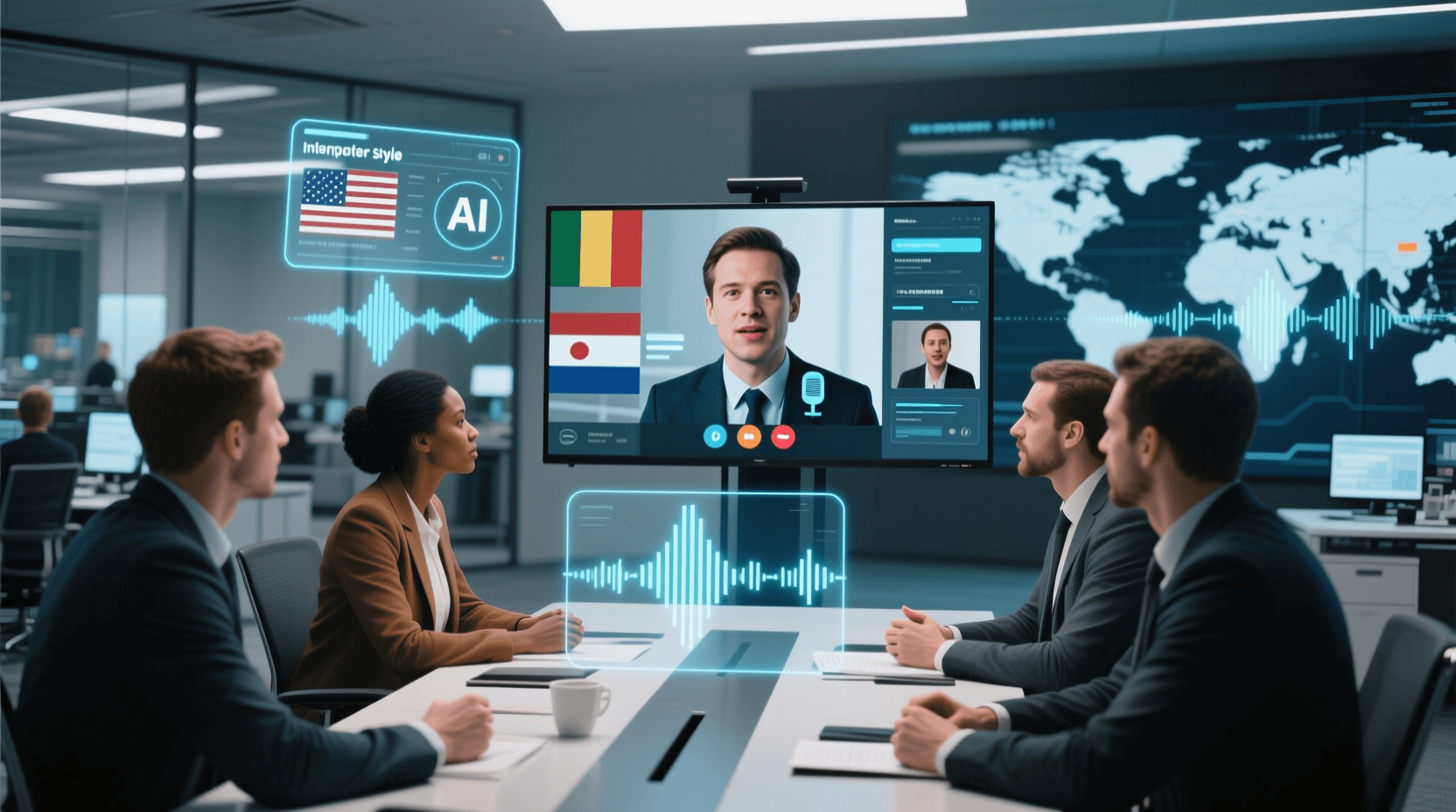
Real-time translation is starting to look less like a feature and more like infrastructure.
The significance of Alibaba Qwen’s latest live translation push is not just that it can handle many languages quickly. The bigger story is that multimodal, low-latency interpretation is turning language itself into a software layer that can be inserted between people, products, and workflows without forcing anyone to stop and adapt.
That matters for far more than meetings.
Translation is moving from app category to platform primitive
For years, AI translation lived in familiar boxes: subtitle tools, document translation, call-center software, travel apps. Useful, but compartmentalized. What changes when latency drops low enough and multimodal understanding improves enough is that translation stops feeling like a separate task.
Instead, it becomes ambient.
If a model can listen to speech, read on-screen text, infer context from video, and respond quickly enough to preserve conversational rhythm, then translation can be embedded into nearly everything: video conferencing, telehealth, online education, global sales demos, creator livestreams, customer support, and even collaborative design reviews.
The practical threshold is not perfection. It is conversational continuity. Once an AI system is good enough that participants stop waiting on it and start trusting it to keep pace, adoption accelerates.
That is why this kind of release matters to AI developers. It suggests the next generation of language tooling will not be judged only on benchmark accuracy, but on whether it can disappear into the interaction itself.
Multimodal context is the real upgrade
The most important idea here is not translation alone. It is context fusion.
Human interpreters do not rely only on words. They watch lips, slides, body language, interfaces, product labels, and shared screens. AI systems that can combine audio with visual cues are much closer to handling real-world communication instead of clean lab conditions.
For tool builders, this opens a new design space. A translation layer that understands what is on a presentation slide, what button a user is pointing at, or what product packaging appears in frame can produce outputs that are materially more useful than plain speech-to-speech conversion.
This could reshape how developers think about international UX. Rather than localizing every asset statically in advance, teams may begin to build products that localize dynamically at the moment of interaction.
That creates interesting opportunities for visual content pipelines too. Marketing teams producing multilingual assets can pair live translation workflows with image-generation tools like Qwen-Image-2.0, which is especially relevant for posters, infographics, and slide-style visuals with native text rendering. If your sales call, webinar, or product demo is being interpreted in real time, the next obvious step is generating supporting visuals that match each audience’s language and context just as quickly.
Voice cloning raises the bar for user experience — and risk
One of the more consequential shifts in live interpretation is the move toward preserving speaker identity. When translated speech carries some approximation of the original speaker’s voice, communication feels less robotic and more personal.
That is a big deal for executives, educators, creators, and support teams. Tone is part of meaning. A flat translated voice can strip away confidence, urgency, warmth, or humor.
But this also pushes developers into a more sensitive trust environment. Voice cloning in translation products will require stronger consent, provenance, and disclosure mechanisms. Enterprises may welcome voice-preserving interpretation for internal meetings, while public-facing deployments may face tighter scrutiny.
In other words, the technical breakthrough is only half the product challenge. The other half is governance.
Domain-specific language is where monetization happens
General translation is impressive. Specialized translation is where budgets appear.
The ability to configure keywords and terminology points toward a future where the most valuable live translation products are not generic communication tools, but vertical systems for medicine, law, manufacturing, finance, and enterprise software.
A hospital does not just need Spanish or Arabic output. It needs correct medical phrasing, awareness of drug names, and consistency under pressure. A global SaaS company does not just need translated demos. It needs product terminology preserved across onboarding, support, and training.
This is where startups and API builders should pay attention. The winning products may not be the broadest translators. They may be the ones that wrap real-time translation with domain memory, compliance controls, glossary management, and workflow integrations.
Global content creation gets a new feedback loop
There is also a less obvious implication for creators and marketers: real-time translation will collapse the gap between producing content and testing it internationally.
A team can imagine running a livestream, webinar, or product launch across multiple regions at once, then instantly turning the strongest audience responses into localized creative assets. Tools like Qwen Image and Qwen Image fit naturally into that loop by helping teams generate photoreal visuals for region-specific campaigns, social posts, and promotional materials without waiting on a traditional production cycle.
When translation, image generation, and distribution all become near-instant, global experimentation speeds up dramatically. That changes how smaller teams compete. You no longer need a country-by-country content operation to act like a global brand.
The next interface may be language-agnostic
The long-term takeaway is simple: AI is making language less of a product boundary.
As live multimodal translation improves, users will increasingly expect software, media, and services to meet them in their own language by default. Not as a premium feature. Not as a delayed localization project. Immediately.
For developers, that means building for a world where the interface is not just translated text, but translated conversation, translated visuals, and translated intent.
The companies that benefit most will be the ones that stop thinking of translation as an afterthought and start treating it as a core interaction layer across voice, video, and content creation.
Once that happens, the most interesting question is no longer how we translate software for the world.
It is how we design software for a world where translation is always on.