Why Massive Agent Swarms Could Change AI Coding Workflows Faster Than Better Chatbots
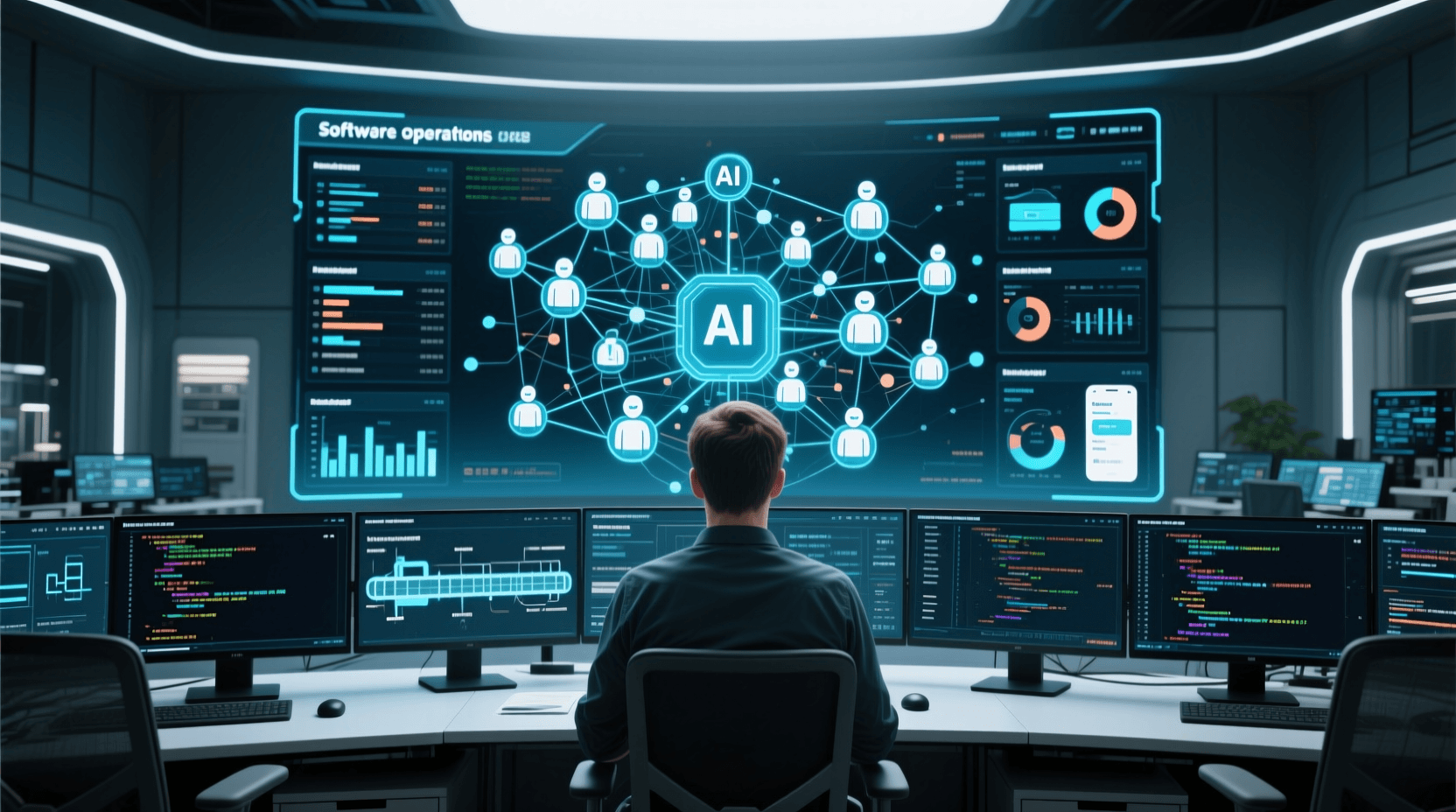
The next big shift in AI development may not be a smarter chatbot. It may be a better project manager.
As AI labs race to improve reasoning, a more practical frontier is emerging: systems that can stay on task for hours, split work across many specialized agents, and coordinate thousands of steps without collapsing into confusion. That matters far more to developers than another benchmark jump. Real software projects are messy, multi-stage, and full of dependencies. They require planning, retries, testing, handoffs, and context management.
That is why the latest wave of agentic model releases deserves attention. The headline is not just "better coding." It is the growing belief that AI can move from answering programming questions to actually running software workstreams.
From single prompts to software operations
For the past two years, most AI coding tools have behaved like very talented interns: fast, helpful, and often impressive, but still dependent on frequent human steering. They can write functions, explain errors, and scaffold apps, yet they tend to lose coherence on larger jobs.
Long-horizon agents aim to fix that. Instead of treating coding as a sequence of isolated prompts, they treat it as an operational process. One agent plans architecture. Another writes components. Another runs tests. Another debugs failures. Another checks whether the output matches the original spec. If this sounds less like a chatbot and more like a software team, that is exactly the point.
For users of tools like Gemini, this trend is especially important. Gemini’s positioning around native tool use and agentic workflows suggests where the market is heading: models are becoming orchestration layers, not just text generators. The winning systems will not simply know more. They will coordinate better.
The real bottleneck is coordination, not intelligence
When people imagine advanced AI coding, they often focus on raw model capability. But in production environments, the harder problem is coordination failure.
A single strong model can still drift off spec, repeat failed strategies, overwrite working code, or waste tokens re-discovering earlier decisions. Scaling to many agents does not automatically solve this. In fact, it can make things worse unless there is a reliable system for role assignment, memory, task decomposition, and conflict resolution.
This is why the idea of large agent swarms is so consequential. If an AI system can coordinate hundreds of sub-agents across thousands of steps, it begins to resemble a managed compute fabric for knowledge work. The model is no longer just generating code; it is allocating cognition.
That opens a new design space for developers. Instead of asking, "Which model writes the best Python?" teams may start asking, "Which agent architecture can ship a feature with the fewest human interventions?"
Open-source ecosystems are about to get more interesting
This is also good news for open-source builders. Once the industry accepts that orchestration is the core product, model quality becomes only one layer of the stack. The surrounding agent framework, memory system, tool integrations, and evaluation loop become equally valuable.
That is where projects like EvoAgentX stand out. A self-evolving ecosystem of AI agents points toward a future where agent teams are not statically configured but continuously improved. In practice, that could mean coding agents that learn which debugging strategies work best, which planning structures reduce regressions, or which role combinations deliver the fastest completion times.
For less technical teams, Activepieces represents another important part of this story. If agentic workflows are going mainstream, orchestration cannot remain limited to research labs and advanced engineering teams. No-code and low-code automation platforms will become the bridge between frontier agent systems and everyday business users who want AI to actually do work across apps, APIs, and internal processes.
What this means for AI tool users
For buyers and builders, the practical takeaway is simple: stop evaluating AI tools as if they are only chat interfaces.
Ask tougher questions:
- Can the system maintain state over long tasks?
- Can it recover from failure without starting over?
- Can it delegate work to specialized tools or sub-agents?
- Can it verify its own outputs before handing them to a human?
- Can it operate inside real workflows, not just demo environments?
The tools that matter in 2026 will likely be the ones that combine strong base models with durable orchestration. In that sense, Gemini, EvoAgentX, and Activepieces each reflect a different piece of the same industry transition: better model capability, better multi-agent evolution, and better workflow automation.
The new competitive edge: autonomous throughput
There is a larger business implication here. AI is moving from a productivity multiplier for individuals to a throughput engine for teams.
A company that can run dozens of parallel AI agents on product specs, QA cycles, documentation, internal tooling, and front-end generation will not just move a little faster. It may operate on a different curve entirely. The advantage is not that one agent is brilliant. The advantage is that the organization can spin up coordinated cognitive labor on demand.
That does not eliminate humans. It changes their role. Developers become reviewers, system designers, and escalation points rather than manual producers of every artifact. The highest-value skill shifts from writing every line to structuring environments where autonomous work can succeed.
Expect the next platform war to be about agent management
The next phase of AI competition will likely center on who provides the best agent management layer: planning, memory, delegation, safety, observability, and cost control. Models will still matter, but the product battle is expanding upward.
That is why releases focused on long-horizon autonomy are more important than they first appear. They signal that the market is no longer chasing isolated moments of intelligence. It is chasing sustained execution.
And for AI tool users, that is the difference between software that helps with work and software that starts to own the workflow.