Why Mobile Coders Should Pay Attention to OpenAI’s Next Move
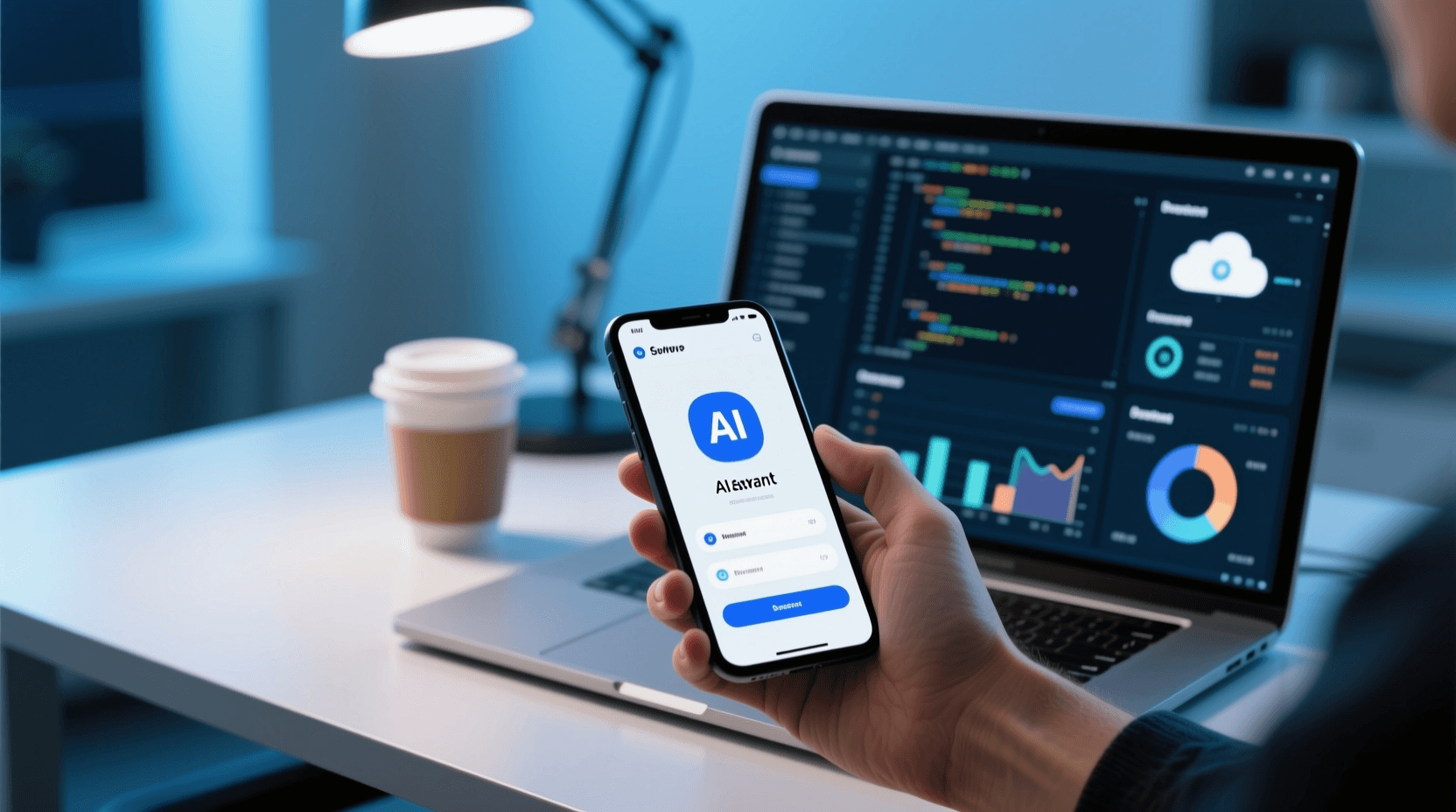
OpenAI bringing Codex-style capabilities into the mobile experience is more than a convenience update. It signals a bigger shift in how AI coding tools will be used: less as destination products on laptops, and more as always-available copilots that follow users across devices, contexts, and workflows.
For AI tool users and developers, that matters because the next competitive battleground is no longer just model quality. It’s interface design, workflow integration, and how quickly an AI assistant can move from idea to action when you’re away from your desk.
The real story is ambient software development
For years, coding assistants were built around a desktop assumption: you sit down, open an IDE, and ask for help while writing code. But real software work doesn’t happen only in that setting. Product ideas appear in meetings, bug reports arrive while commuting, and deployment anxieties show up at dinner.
A mobile version of an AI coding assistant changes the timing of software work. Instead of waiting until you’re back at your machine, you can triage, draft, inspect, and delegate from your phone. That doesn’t mean serious engineering suddenly becomes a thumb-typing exercise. It means the “first response” layer of development is becoming mobile.
That first response layer is valuable. A developer can review a stack trace, ask for a quick fix strategy, generate a test case outline, or prepare a patch plan before ever touching a keyboard. Teams that adopt this habit will move faster not because the phone replaces the workstation, but because idle time becomes productive time.
Chat interfaces are becoming operating systems for work
This is also another step toward the chat app becoming the front door to everything. The old model was simple: one app for messaging, one for coding, one for docs, one for task management. AI companies increasingly want the chat layer to orchestrate all of it.
That helps explain why tools like ChatGPT keep expanding beyond basic question-answering. What started as a writing and brainstorming assistant is evolving into a control surface for knowledge work. Once users get comfortable asking an AI to explain, draft, and organize, the next logical step is asking it to inspect code, propose changes, and trigger actions.
For users, this is convenient. For developers building AI products, it’s a warning: if your tool only shines in a narrow desktop workflow, platform-level assistants may absorb your core use case.
Multi-model access is becoming a practical advantage, not a luxury
OpenAI’s push into mobile coding comes at a moment when users are more aware than ever that no single model is best at everything. Some developers prefer one model for architecture discussions, another for debugging, and another for concise code generation.
That’s why products like ChatXOS are interesting in this moment. A native iOS app that gives access to Claude, GPT, Gemini, Grok, and DeepSeek in one place reflects how people actually use AI now: they compare outputs, switch models based on the task, and optimize for speed and value rather than loyalty to one vendor.
If mobile becomes a serious surface for coding assistance, multi-model access could become even more important. On a desktop, users may tolerate opening several tabs and subscriptions. On a phone, they want one streamlined interface. The winner may not be the company with the single best model, but the one that makes model choice invisible and workflow continuity effortless.
Enterprise buyers will care more about control than novelty
There’s another angle here: mobile coding tools are not just for solo developers. They’re also a test of whether AI can fit into enterprise development practices without creating chaos.
A company may love the idea of engineers responding to incidents from anywhere, but it will also worry about permissions, auditability, code exposure, and accidental actions on production systems. That means mobile AI coding assistants will need strong boundaries. Enterprises won’t just ask, “Can it write code?” They’ll ask, “Can it operate safely inside our stack?”
This is where OpenAI and its peers face a harder challenge than shipping a flashy feature. The real work is proving that mobile AI can be governed. If they solve that, mobile coding assistance becomes sticky infrastructure rather than a demo-worthy add-on.
The next phase of AI coding is less about generation and more about delegation
The most important implication is that coding assistants are moving beyond autocomplete economics. The future product isn’t just a model that writes functions. It’s an agent that can understand a task, break it down, interact with tools, and report back clearly.
On mobile, that delegation model becomes even more compelling. People don’t want to manually code on a phone; they want to assign work from a phone. That’s a subtle but huge distinction. The winning mobile AI experience will feel less like “programming on your phone” and more like “managing software work from anywhere.”
For builders, that means designing around approvals, summaries, checkpoints, and handoffs. For users, it means learning a new skill: not prompting for snippets, but directing workflows.
What users should watch next
The key question isn’t whether mobile coding AI is possible. It is. The question is whether it becomes trustworthy and useful enough to change habits.
Watch for three things: how well these tools preserve context across devices, whether they can safely connect to real developer environments, and how easily users can switch between models and assistants depending on the job.
If those pieces come together, the smartphone won’t replace the laptop for software development. But it may become the place where software work starts, gets routed, and stays in motion. That would be a much bigger change than simply putting Codex in an app.