Why Open Agent Runtimes Could Reshape the AI Tool Stack
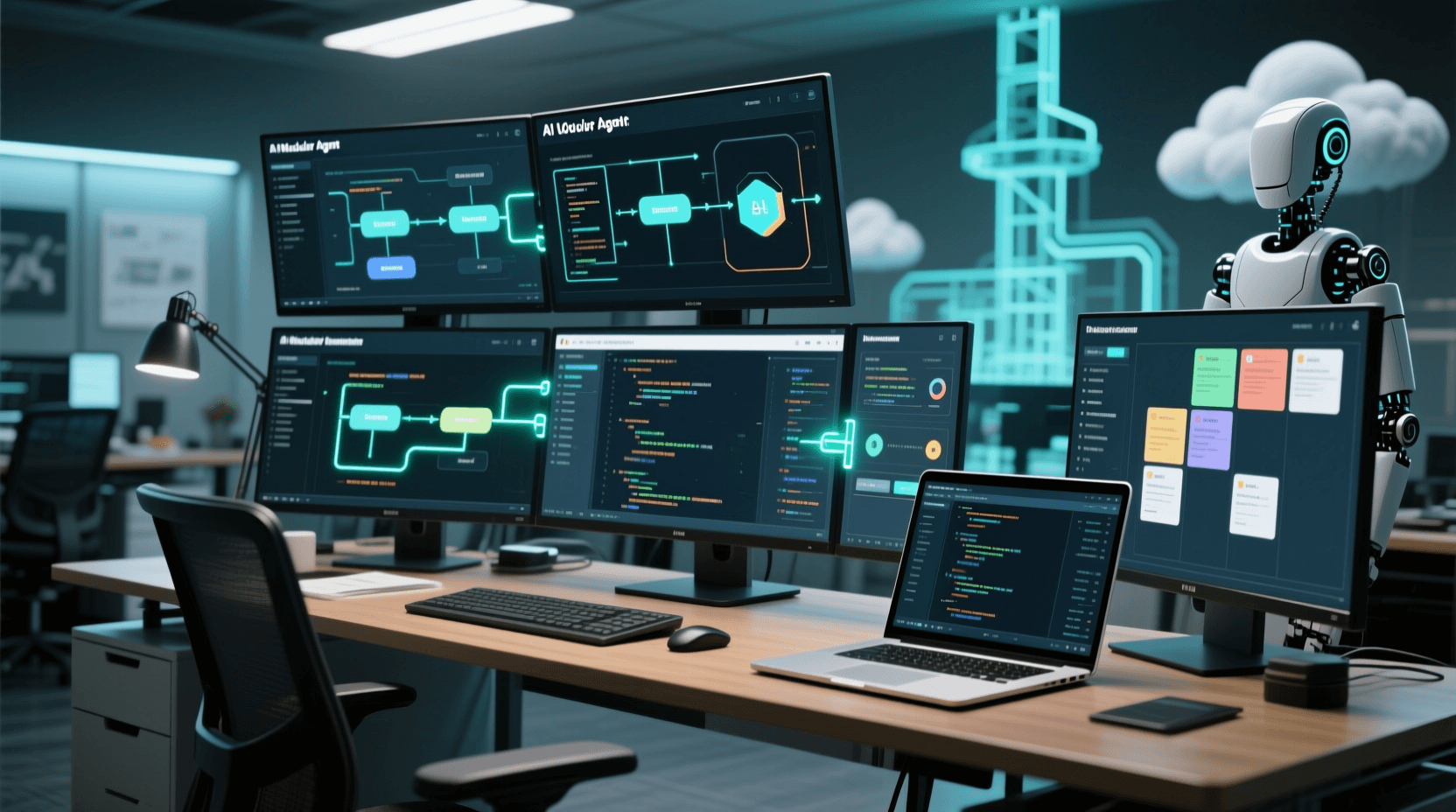
The most important part of the latest agent-platform news is not a benchmark score or a product rename. It’s the architectural shift underneath it: agent companies are starting to separate the runtime from the interface.
That matters more than it sounds.
When an AI coding assistant, CLI, kanban board, browser automation layer, and IDE extension all run on the same underlying engine, the product stops being “just an app.” It becomes infrastructure. And once that runtime is open, developers get something much more valuable than a polished demo: they get a foundation they can inspect, modify, and embed into their own workflows.
The real trend: agents are becoming composable systems
For the past two years, a lot of AI products have looked impressive on the surface while hiding brittle internals. You could ask an agent to plan tasks, edit files, use tools, maybe even recover from errors—but every vendor implemented that loop differently, often in ways users couldn’t see or control.
Open agent runtimes change the conversation. They suggest that the future of AI agents won’t be defined by one killer interface, but by a modular stack:
- model abstraction
- tool and connector layers
- memory and checkpointing
- scheduling and background execution
- multi-agent orchestration
- observability and recovery
That stack is where the real product differentiation will happen.
For users, this means AI agents may become more reliable and portable. For developers, it means less time building the same orchestration plumbing from scratch.
Why this is good news for developers
The biggest bottleneck in agent development today is not model access. It’s runtime engineering.
Anyone can call an LLM API. The hard part is everything around it: retries, state management, subagent delegation, task scheduling, context handoff, tool permissions, and safe execution over long-running jobs. If open-source runtimes mature, they can do for agents what web frameworks did for websites: standardize the boring but critical layers.
That could accelerate a new class of developer tools.
For example, browser control is one of the most practical capabilities an agent can have, but it’s often awkward to wire up reliably. A tool like Playwriter fits neatly into this emerging stack because it gives agents a concrete way to operate Chrome through CLI or MCP. In a world of open runtimes, browser automation stops being a special feature and starts becoming a reusable capability that any agent can plug into.
That’s a major shift. It means developers can spend more time designing workflows and less time reinventing execution environments.
The next battle won’t be model quality alone
Benchmarks will keep getting headlines, but they are becoming an incomplete way to judge agent platforms.
A strong benchmark score matters, of course. But enterprise and power users increasingly care about different questions:
- Can the agent resume from failure?
- Can I inspect what happened?
- Can I swap models without rewriting my app?
- Can I run tasks on a schedule?
- Can I connect internal tools through MCP?
- Can multiple agents collaborate without turning into chaos?
Those are runtime questions, not model questions.
This is why open agent frameworks are strategically important. They move competition away from pure chat quality and toward execution quality. The winners may not be the companies with the flashiest demos, but the ones with the most dependable orchestration layer.
What this means for AI tool users
If you’re an end user rather than a developer, open runtimes still matter to you—possibly even more than they matter to engineers.
Why? Because they can lead to agents that are:
- more transparent
- easier to customize
- less locked into one interface
- more likely to integrate with your existing stack
- better at handling long, multi-step work
This is especially relevant for teams building repeatable content, research, and marketing workflows. Tools like ClaudeKit already point toward a future where AI is not just answering prompts, but accelerating production pipelines. As agent runtimes become more modular, content teams will likely gain richer automations: scheduled drafting, revision chains, browser-based source gathering, and specialized subagents for tone, SEO, or fact-checking.
The user experience could become far more proactive. Instead of opening one app to ask for help, you may soon operate a network of agents that monitor tasks, trigger actions, and coordinate across tools in the background.
Marketplaces for agent skills are about to get more important
One of the most underrated implications of open runtimes is the rise of portable agent skills.
If the runtime becomes standardized enough, developers won’t just build full agents—they’ll build reusable capabilities that can be installed into many agents. That creates a much bigger opportunity for marketplaces, interoperability, and rapid experimentation.
This is where platforms like Agensi become especially interesting. If users can add new skills to their coding agents in seconds, and those skills can operate across a growing set of runtimes and interfaces, then the center of gravity shifts from monolithic assistants to modular ecosystems.
That’s likely where the agent economy is headed: not one super-agent that does everything, but a shared market of specialized abilities that can be composed on demand.
The bigger takeaway
The AI industry is slowly learning the same lesson software learned decades ago: platforms win when they separate core infrastructure from surface-level experiences.
An open agent runtime is a sign that the market is maturing. It suggests that agent builders are moving beyond novelty and toward standardization, portability, and ecosystem growth.
For developers, that means faster iteration and less duplicated plumbing. For users, it means more capable agents that can persist across interfaces and workflows. And for the broader AI tooling ecosystem, it means the next wave of innovation may come less from isolated chat apps and more from interoperable runtimes, skill layers, and execution tools working together.
The age of the standalone AI assistant is fading. The age of the agent stack is beginning.